THE CLASSIC COLLECTION✦Lost NellieCLASSIC FREE BOOKS
Lost Nellie
Pansy
THE CLASSIC COLLECTION · 1879
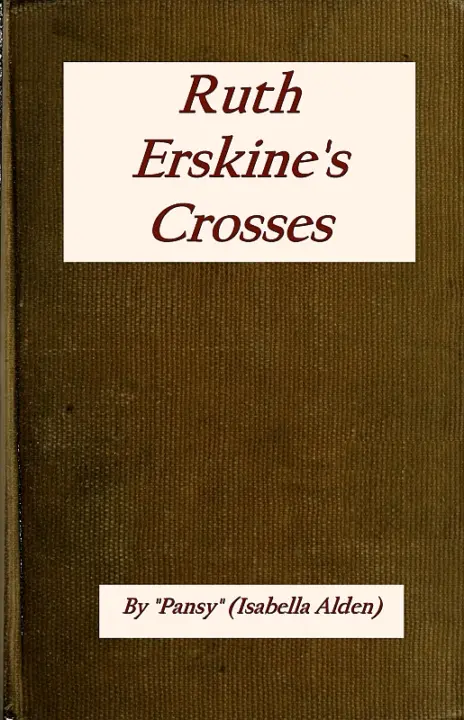
"Ruth Erskine's Crosses" by Pansy is a novel written in the late 19th century. The story follows Ruth Erskine, who is confronted with the sudden changes in her family life after her father, Judge Erskine, remarries, bringing a new wife and sister into their home. Ruth's struggles with her feelings of resentment, responsibility, and the complexities of her new family dynamic are central themes as she grapples with the emotional weight of her situation. The opening of the novel introduces Ruth at a particularly poignant moment; she is waiting anxiously to meet her new mother and sister for the first time. The narrative delves into her conflicting emotions, revealing her sense of betrayal and grief over her father’s unexpected decisions, which have disrupted her previously stable life. As she stands in the hall, contemplating how to greet these strangers who now claim a place in her life, the internal turmoil and bitterness of her situation become apparent. Her observations of her new sister Susan and their emotionally charged first interactions set the stage for the challenges and trials that Ruth will face as she seeks to navigate this complicated new reality.
Introduction adapted from the source catalogue; source summaries may be automatically generated.
Free to read · English · 82,586 words · No account needed
MAKE TIME FOR A GOOD BOOK
On by default. Untick to stop anonymous reading totals. Each page counts after 10 seconds in view. How this works.
Anonymous counting is on unless you have switched it off.
“Why,” he said, wriggling and trying to get away from his own sense of degradation, “they had good care; at least I supposed it was. During their childhood their mother’s sister lived there, and took the sole charge of them. She was a kind-hearted woman enough, and did her duty by them.”
“But she died, you told me, when they were still children.”
“Yes, that was when I was abroad. You see when I went I expected to return in a year at most, but I staid on, following one perplexing tangle after another in connection with my business affairs, until four or five years slipped away. Meantime their aunt died, and the old housekeeper, who had lived with their family since the last century sometime, took her place, and managed for them as well as she could. I didn’t realize how things were going. I imagined everything would come out right, you know.”
“I don’t see how they could,” Ruth said, coldly, and Judge Burnham
answered nothing.
“Didn’t they attend school?”
“Why, yes, they went to the country school out there, you know, when there was one. It is too near the city to secure good advantages, and yet too far away for convenience. I meant, you see, to have them in town, when I came home, at the best schools, and boarding with me, but I found it utterly impracticable—utterly so. You have no conception of what five years of absence will do for people.”
“I can imagine something of what five years of neglect would do.”
Ruth said it icily—as she could speak. Then he would say, “Oh, Ruth!” in a tone which was entreating and almost pitiful. And he would start up and pace back and forth through the room for a moment, until brought back by one of her stabbing questions.
“How have they lived since your return?”
“Why, right there, just where they always have lived. It is the only home they have ever known.”
“And they are entirely alone?”
“Why, no. The housekeeper, of whom I told you, had a daughter, a trustworthy woman, and when her mother died this daughter moved to the house, with her family, and has taken care of them.”
“And so, Judge Burnham, your two daughters have grown to young ladyhood, isolated from companionship, and from education, and from refinements of every sort, even from their own father, and have been the companions of ignorant hirelings!”
“I tell you, Ruth, you must see them before you can understand this thing,” he would exclaim, in almost despair.
Your reading position is saved on this browser. Take it to another device with a library code. Reading pages adapt to text, rather than matching a printed edition.
Pansy
Pansy
Pansy
Pansy & C. M., Mrs. Livingston
BEHIND THE BOOK
This eBook is for the use of anyone anywhere in the United States and most other parts of the world at no cost and with almost no restrictions whatsoever. You may copy it, give it away or re-use it under the terms of the Project Gutenberg License included with this eBook or online at www.gutenberg.org. If you are not located in the United States, you will have to check the laws of the country where you are located before using this eBook. Read the source licence.
The original source file, including credits and licence, is retained by this library. Request an original-format copy at no charge. Please include the book title and Project Gutenberg identifier #54078.
KEEP YOUR CURIOSITY GOING
Coulson Kernahan

Maurice Baring
Frances Wright
Cécile Tormay

Frederic Jesup Stimson

W. H. P. (William Henry Pope) Jarvis