THE CLASSIC COLLECTION✦The House with the Mezzanine and Other StoriesCLASSIC FREE BOOKS
The House with the Mezzanine and Other Stories
Anton Pavlovich Chekhov
THE CLASSIC COLLECTION · 1915
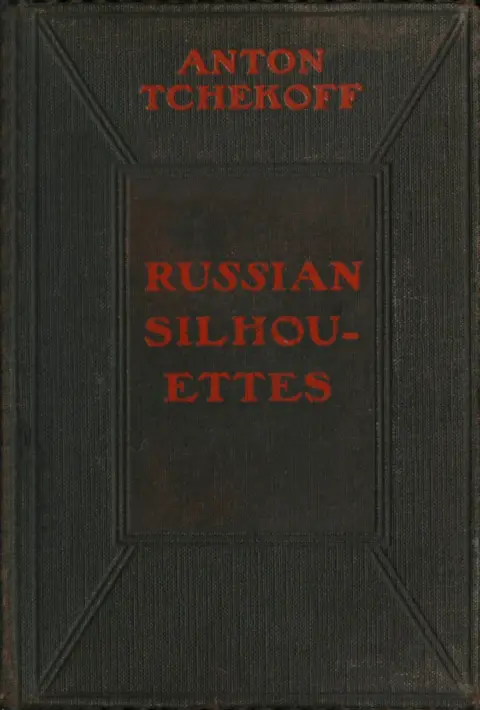
"Russian Silhouettes: More Stories of Russian Life" by Anton Pavlovich Chekhov is a collection of short stories written in the late 19th century. The book explores various aspects of Russian life, particularly through the eyes of children and family dynamics, offering insights into the social fabric and emotional undercurrents of the time. At the start of the collection, the reader is introduced to a vibrant family atmosphere filled with excitement as young Volodia returns home. The chaotic yet joyful reunion highlights both warmth and tension, particularly through the lens of two boys, Volodia and his friend Tchetchevitsin, who dream of adventure and planning a fantastical escape to America. The children are depicted with all their youthful innocence and ambition, engaged in whimsical conversations about wild animals and treasure, revealing their dreams and the realities of their upbringing. This opening sets a tone of nostalgia, exploration of childhood, and the gentle humor characteristic of Chekhov's storytelling.
Introduction adapted from the source catalogue; source summaries may be automatically generated.
Free to read · English · 79,395 words · No account needed
MAKE TIME FOR A GOOD BOOK
On by default. Untick to stop anonymous reading totals. Each page counts after 10 seconds in view. How this works.
Anonymous counting is on unless you have switched it off.
“What does this mean?” he asked himself, gazing about. He saw a dingy ceiling, a two-pronged oven fork, and a stove with a huge oven mouth gaping at him.
“Ma-a-m-ma!” he wailed.
“Now! Now!” his nurse called to him. “Be good!”
The cook set a bottle, two glasses, and a pie on the table. The two women and the man with the shiny buttons touched glasses and each had several drinks. The man embraced alternately the cook and the nurse. Then all three began to sing softly.
Grisha stretched his hand toward the pie, and they gave him a piece. He ate it and watched his nurse drinking. He wanted to drink, too.
“Give, nursie! Give!” he begged.
The cook gave him a drink out of her glass. He screwed up his eyes, frowned, and coughed for a long time after that, beating the air with his hands, while the cook watched him and laughed.
When he reached home, Grisha explained to mamma, the walls, and his crib where he had been and what he had seen. He told it less with his tongue than with his hands and his face; he showed how the sun had shone, how the horses had trotted, how the terrible oven had gaped at him, and how the cook had drunk.
That evening he could not possibly go to sleep. The soldiers with their sticks, the great cats, the horses, the bits of glass, the basket of oranges, the shiny buttons, all this lay piled on his brain and oppressed him. He tossed from side to side, chattering to himself, and finally, unable longer to endure his excitement, he burst into tears.
“Why, he has fever!” cried mamma, laying the palm of her hand on his forehead. “What can be the reason?”
“The stove!” wept Grisha. “Go away, stove!”
“He has eaten something that has disagreed with him,” mamma concluded.
And, shaken by his impressions of a new life apprehended for the first time, Grisha was given a spoonful of castor-oil by mamma.
Nikolai Ilitch Belayeff was a young gentleman of St. Petersburg, aged thirty-two, rosy, well fed, and a patron of the race-tracks. Once, toward evening, he went to pay a call on Olga Ivanovna with whom, to use his own expression, he was dragging through a long and tedious love-affair. And the truth was that the first thrilling, inspiring pages of this romance had long since been read, and that the story was now dragging wearily on, presenting nothing that was either interesting or novel.
Not finding Olga at home, my hero threw himself upon a couch and
prepared to await her return.
Your reading position is saved on this browser. Take it to another device with a library code. Reading pages adapt to text, rather than matching a printed edition.
BEHIND THE BOOK
This eBook is for the use of anyone anywhere in the United States and most other parts of the world at no cost and with almost no restrictions whatsoever. You may copy it, give it away or re-use it under the terms of the Project Gutenberg License included with this eBook or online at www.gutenberg.org. If you are not located in the United States, you will have to check the laws of the country where you are located before using this eBook. Read the source licence.
The original source file, including credits and licence, is retained by this library. Request an original-format copy at no charge. Please include the book title and Project Gutenberg identifier #66790.
KEEP YOUR CURIOSITY GOING
Coulson Kernahan

Maurice Baring
Frances Wright
Cécile Tormay

Frederic Jesup Stimson

W. H. P. (William Henry Pope) Jarvis