THE CLASSIC COLLECTION✦The House with the Mezzanine and Other StoriesCLASSIC FREE BOOKS
The House with the Mezzanine and Other Stories
Anton Pavlovich Chekhov
THE CLASSIC COLLECTION · 1915
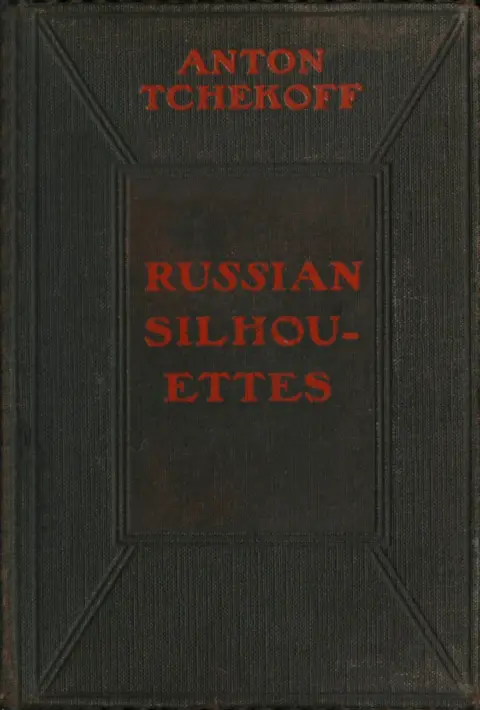
"Russian Silhouettes: More Stories of Russian Life" by Anton Pavlovich Chekhov is a collection of short stories written in the late 19th century. The book explores various aspects of Russian life, particularly through the eyes of children and family dynamics, offering insights into the social fabric and emotional undercurrents of the time. At the start of the collection, the reader is introduced to a vibrant family atmosphere filled with excitement as young Volodia returns home. The chaotic yet joyful reunion highlights both warmth and tension, particularly through the lens of two boys, Volodia and his friend Tchetchevitsin, who dream of adventure and planning a fantastical escape to America. The children are depicted with all their youthful innocence and ambition, engaged in whimsical conversations about wild animals and treasure, revealing their dreams and the realities of their upbringing. This opening sets a tone of nostalgia, exploration of childhood, and the gentle humor characteristic of Chekhov's storytelling.
Introduction adapted from the source catalogue; source summaries may be automatically generated.
Free to read · English · 79,395 words · No account needed
MAKE TIME FOR A GOOD BOOK
On by default. Untick to stop anonymous reading totals. Each page counts after 10 seconds in view. How this works.
Anonymous counting is on unless you have switched it off.
Pasha violently snatched a gold watch, a cigarette-case, and a set of studs out of the drawer and flung up her arms, exclaiming:
“Now I am cleaned out! Look for yourself!”
Her visitor sighed. With trembling hands she wrapped the trinkets in her handkerchief, and went out without a word, without even a nod.
The door of the adjoining room opened and Kolpakoff came out. His face was pale and his head was shaking nervously, as if he had just swallowed a very bitter draught. His eyes were full of tears.
“I’d like to know what you ever gave me!” Pasha attacked him vehemently. “When did you ever give me the smallest present?”
“Presents—they are a detail, presents!” Kolpakoff cried, his head still shaking. “Oh, my God, she wept before you, she abased herself!”
“I ask you again: what have you ever given me?” screamed Pasha.
“My God, she—a respectable, a proud woman, was actually ready to fall on her knees before—before this—wench! And I have brought her to this! I allowed it!”
He seized his head in his hands.
“No,” he groaned out, “I shall never forgive myself for this—never! Get away from me, wretch!” he cried, backing away from Pasha with horror, and keeping her off with outstretched, trembling hands. “She was ready to go down on her knees, and before whom?—Before you! Oh, my God!”
He threw on his coat and, pushing Pasha contemptuously aside, strode to
the door and went out.
Pasha flung herself down on the sofa and burst into loud wails. She already regretted the things she had given away so impulsively, and her feelings were hurt. She remembered that a merchant had beaten her three years ago for nothing, yes, absolutely for nothing, and at that thought she wept louder than ever.
This is what generally follows a grand loss at cards or a drinking-bout, when his indigestion begins to make itself felt. Stepan Jilin wakes up in an uncommonly gloomy frame of mind. He looks sour, ruffled, and peevish, and his grey face wears an expression partly discontented, partly offended, and partly sneering. He dresses deliberately, slowly drinks his vichy water, and begins roaming about the house.
“I wish to goodness I knew what br-rute goes through here leaving all the doors open!” he growls angrily, wrapping his dressing-gown about him and noisily clearing his throat. “Take this paper away! What is it lying here for? Though we keep twenty servants, this house is more untidy than a hovel! Who rang the bell? Who’s there?”
“Aunty Anfisa, who nursed our Fedia,” answers his wife.
Your reading position is saved on this browser. Take it to another device with a library code. Reading pages adapt to text, rather than matching a printed edition.
BEHIND THE BOOK
This eBook is for the use of anyone anywhere in the United States and most other parts of the world at no cost and with almost no restrictions whatsoever. You may copy it, give it away or re-use it under the terms of the Project Gutenberg License included with this eBook or online at www.gutenberg.org. If you are not located in the United States, you will have to check the laws of the country where you are located before using this eBook. Read the source licence.
The original source file, including credits and licence, is retained by this library. Request an original-format copy at no charge. Please include the book title and Project Gutenberg identifier #66790.
KEEP YOUR CURIOSITY GOING
Coulson Kernahan

Maurice Baring
Frances Wright
Cécile Tormay

Frederic Jesup Stimson

W. H. P. (William Henry Pope) Jarvis