
Transplanted
Gertrude Franklin Horn Atherton
THE CLASSIC COLLECTION · 1904
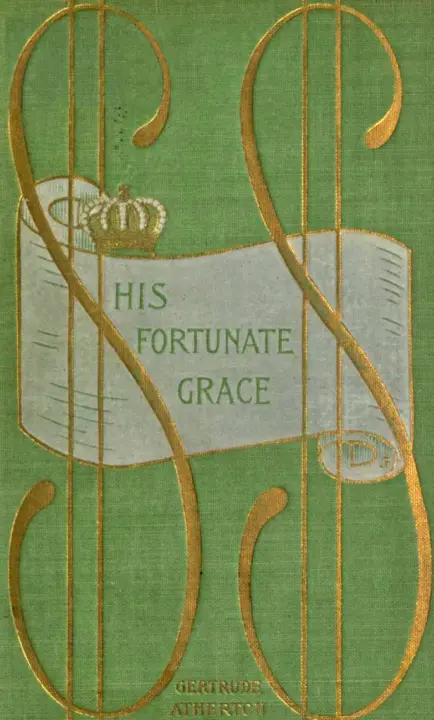
"Rulers of Kings" by Gertrude Franklin Horn Atherton is a novel written in the early 20th century. The book delves into the life of Fessenden Abbott, a young man struggling with the challenges of wealth, expectations, and identity. Set against a backdrop that blends personal ambition with broader historical dynamics, it explores themes of power, personal growth, and the intricacies of destiny. The opening of the story introduces Fessenden Abbott as he learns of his immense fortune, an inheritance of four hundred million dollars that plunges him into a deep discouragement rather than joy. As the narrative unfolds, we gain insights into his upbringing in a rugged wilderness and the values instilled in him by his father, Mr. Abbott. The father-son dynamic sets the stage for Fessenden’s internal conflicts and aspirations, particularly as he grapples with his identity amidst the burdens of his legacy. The chapter moves through his youthful ambitions, the influence of nature, and early relationships, hinting at a complex journey of self-discovery that is tied to larger societal themes.
Introduction adapted from the source catalogue; source summaries may be automatically generated.
Free to read · English · 129,206 words · No account needed
MAKE TIME FOR A GOOD BOOK
On by default. Untick to stop anonymous reading totals. Each page counts after 10 seconds in view. How this works.
Anonymous counting is on unless you have switched it off.
“You are no patriot,” said his old friend, whose eye, as it followed his, twinkled with some malice. “I insist that you give up Vienna and Paris this winter and remain here as my private cabinet.”
“You may need help,” he murmured, and he looked at Ranata.
“And we? Are we to wear Hungarian costumes, too?” asked Alexandra.
“By all means,” answered Ranata for the Princess. “I have already designed mine; the skirts and apron will be of white lace, and the bodice of black velvet.”
“That will be your second stroke of diplomacy,” murmured Alexandra. “But it seems to me that I should be a screaming absurdity in an ancient Hungarian costume.”
“Not if--not if--” muttered Zrinyi.
“Why not make it a fancy-dress ball, everybody to be a personage of the court of Matthias Corvinus, during whose reign Hungary reached the height of its splendor and power and prosperity?” asked the Countess Piroska Zápolya. She looked full at the Archduchess with innocent blue eyes which were too widely opened for frankness. She was excessively pretty, and her mouth pouted like a spoiled child’s. She was a descendant of that Stephen Zápolya, vayvode of Transylvania, who, in 1526, after the terrible battle of Mohács, when Hungary was threatened with annihilation by the Turks, and her king lost his life, was elected to rule over the distracted country by the faction which believed in a native dynasty and peaceful relations with the enemy. Another powerful faction elected Ferdinand of Austria, and in spite of the occupations of the Turks, which gave the Hapsburg as little authority as his rival, his dynasty kept its grasp upon the shadow until it became substance; while the son of the trooper who had been raised to a position of such power and magnificence by Matthias that his ambition knew no bounds, was unable to extend his rule beyond Transylvania, and his dynasty ended in his son. His descendants, powerful magnates as they were, had two enduring grievances: their inferior descent as compared with that of the magnates whose line ran back unbroken to Árpád and haunted the mists beyond, and the ancient victory of the Hapsburgs. The first grievance was little discussed, but no Zápolya permitted himself or others to forget that his right to the throne was as great as the Austrian’s. Impoverished, and knowing little of the world beyond Budapest, the present generation was even fiercer in pride than the majority of their order, and bitterer in their hatred of the Hapsburgs. They were wise enough, however, to know that Hungary had not the strength for a native dynasty, even could one be established without devastating civil wars, and the father and brother of the clever little maid of honor had been the first to fling open the gates and drive out the wild waters of unrest towards William of Germany. Count von Königsegg had advised the selection of Piroska, for he believed she would be hostile and a willing spy, and Sarolta had acquiesced because she believed that herself and Ranata would be more than a match for any disaffected young woman. Outwardly the Countess was irreproachable. Her manners were high-bred and charming; five centuries of intermarriage with the best blood of Roumania and Hungary had obliterated all characteristics of John Zápolya except his ambition. She was lively and cultivated, and there was nothing in her manner to betray her hostility. She was the only enemy in camp. The other maid of honor, Countess Vilma Festetics, although proud and reserved, had loved the dead Elizabeth and had transferred her large measure of passionate loyalty, since unclaimed, to the princess who, in her great beauty and greater isolation, seemed to her the most romantic figure on earth. Without humor or more logic than the larger division of her sex, she was capable of martyrdom for her ideals, however narrow. But she was bright and shrewd, and never having trusted Piroska Zápolya, suspected that she might be too high in the favor of Ranata’s enemies. In appearance the young Countess was of a type more often seen in Hungary than described; she had neither the sparkling blond nor the voluptuous brunette beauty which, with their womanly figures and happy animation, have made the women of that romantic country so famous. She was small and slender, and her coloring was drab; under the hauteur of her delicately cut pale face were the tense lines of tragedy. Her breeding helped her to control a high and intolerant temper. Of the most ancient blood in Hungary, poor, high-spirited, and proud, she had seen nothing of the world, but her high accomplishments and qualities, and the affection which she had inspired in the Queen while a child, had induced Sarolta to select her for what the cynical elder believed to be a temporary post. She was also glad to give the girl a few months of light-hearted luxury, and would have included many like her had it been possible.
Your reading position is saved on this browser. Take it to another device with a library code. Reading pages adapt to text, rather than matching a printed edition.
Gertrude Franklin Horn Atherton

Gertrude Franklin Horn Atherton
Gertrude Franklin Horn Atherton
Gertrude Franklin Horn Atherton
BEHIND THE BOOK
This eBook is for the use of anyone anywhere in the United States and most other parts of the world at no cost and with almost no restrictions whatsoever. You may copy it, give it away or re-use it under the terms of the Project Gutenberg License included with this eBook or online at www.gutenberg.org. If you are not located in the United States, you will have to check the laws of the country where you are located before using this eBook. Read the source licence.
The original source file, including credits and licence, is retained by this library. Request an original-format copy at no charge. Please include the book title and Project Gutenberg identifier #69460.
KEEP YOUR CURIOSITY GOING
Coulson Kernahan

Maurice Baring
Frances Wright
Cécile Tormay

Frederic Jesup Stimson

W. H. P. (William Henry Pope) Jarvis