
Transplanted
Gertrude Franklin Horn Atherton
THE CLASSIC COLLECTION · 1904
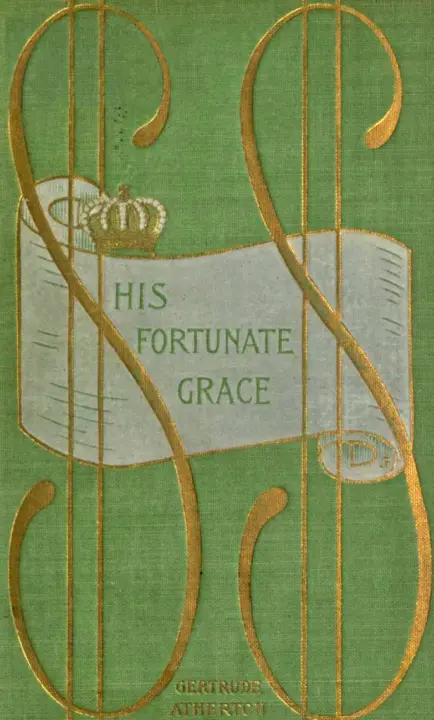
"Rulers of Kings" by Gertrude Franklin Horn Atherton is a novel written in the early 20th century. The book delves into the life of Fessenden Abbott, a young man struggling with the challenges of wealth, expectations, and identity. Set against a backdrop that blends personal ambition with broader historical dynamics, it explores themes of power, personal growth, and the intricacies of destiny. The opening of the story introduces Fessenden Abbott as he learns of his immense fortune, an inheritance of four hundred million dollars that plunges him into a deep discouragement rather than joy. As the narrative unfolds, we gain insights into his upbringing in a rugged wilderness and the values instilled in him by his father, Mr. Abbott. The father-son dynamic sets the stage for Fessenden’s internal conflicts and aspirations, particularly as he grapples with his identity amidst the burdens of his legacy. The chapter moves through his youthful ambitions, the influence of nature, and early relationships, hinting at a complex journey of self-discovery that is tied to larger societal themes.
Introduction adapted from the source catalogue; source summaries may be automatically generated.
Free to read · English · 129,206 words · No account needed
MAKE TIME FOR A GOOD BOOK
On by default. Untick to stop anonymous reading totals. Each page counts after 10 seconds in view. How this works.
Anonymous counting is on unless you have switched it off.
“I have certain inherited instincts. And is not the capacity to rise to an emergency also a part of my inheritance? It is true that I have taken little interest in politics. My books, my music, my out-door life, my brilliant American friend sufficed me. Being uninvited, I could not meddle in affairs of state without bringing one more calamity upon this unfortunate house; and this dynasty, I do assure you solemnly, has all the loyalty and the fealty of my soul. With this sudden idea of mine politics have nothing whatever to do. I know the current history of Europe and I know William, God forbid that I should be expected to talk politics with these Hungarians. It would be to turn the palace into bedlam, and I am accustomed to the repose of stellar voids. My only idea is to make them love me, to win to myself what they gave to Rudolf, to increase--I am more frank with you than with my father, and choose the word advisedly--the popularity of the dynasty. I shall entertain magnificently and constantly, give them such a winter as they have always claimed to be their right and never have had. I shall travel and make the peasantry merry. I shall give up my studies and throw myself into this programme heart and soul. But it is a purely feminine programme. If there is anything else I can accomplish, I know that your Excellency will instruct me.”
And here she proved the possession of really great talents. Pleading a necessary word with her Obersthofmeisterin, she left him alone for a few moments.
He drew a sharp but silent breath. He had never seen a woman look more like an angel, and he knew no woman in whom he was so convinced the devil made extended sojourns. He understood for the first time why she had disciplined her spirit to rise triumphant above that breadth of jaw, the grand sweeping lines of her body, above her diabolical hair; for he was too astute to question her integrity on this point. In a flash he understood why she would not marry. But ambition?--and a permanent and ever-widening outlet for that tumultuous spirit, that repressed and violent nature? Was she sincere for the moment? Had he been sure of even that he would not have hesitated to give his cordial endorsement to her plan. But he had persuaded the Emperor that unless they could be positive she meditated no act of usurpation upon the succession of her unpopular cousin, she must not be permitted a liberty with which she might even before that event plunge all Europe into war. The Emperor, who asked no more of life but peace, had told him to go to Budapest, investigate the mind of his problematical daughter, and then act in accordance with what his Majesty believed to be an unfailing judgment. What a tool she might be, his Excellency had thought. She looked like anything but a tool. It suddenly rushed upon his brain that he had never seen a woman who looked so surely born to sit upon a throne. Why not? Why not? And if he were her good friend now, if he, whom she knew to be the arbiter of her destiny, if he were the one to place the sceptre within her reach--who so fitted to serve her hereafter? to rise higher and higher in power?--for this woman would take no puppet consort. Might not Europe welcome such a solution of an agitating problem? Not William, perhaps, nor Russia; but by that time William and Russia might be too occupied with each other to scramble for plums in the Austrian pie. And a young and beautiful empress, with an intelligence capable of assimilating all the statecraft her ministers chose to impart, always of imposing dignity, irreproachable, her heart and soul given to her state and people, her beauty the constant inspiration of the artist, would she not be worshipped by her subjects, and appeal to the interest and chivalry of Europe? If she had the tact to appear nobly indifferent to any such result during the lifetime of her father; if the Hungarians, immediately upon the death of their king, arose as one man and proclaimed her queen, she would tower above reproach or criticism, the most picturesque personality in the world, far more certain of holding the Dual Monarchy together than Maria Theresia with the aid of the Pragmatic Sanction; for to-day the majority of nations wanted peace and the preservation of the Austrian Empire. Franz Ferdinand might attempt a struggle for his rights, but it was more likely that the army of Austria would march to this woman than against her. It well might be that she alone could rouse England as well as Europe to defeat the designs of William. With Franz Ferdinand on the throne, war, internal and external, Königsegg believed to be as inevitable as the messenger of death in the palace of kings.
Your reading position is saved on this browser. Take it to another device with a library code. Reading pages adapt to text, rather than matching a printed edition.
Gertrude Franklin Horn Atherton

Gertrude Franklin Horn Atherton
Gertrude Franklin Horn Atherton
Gertrude Franklin Horn Atherton
BEHIND THE BOOK
This eBook is for the use of anyone anywhere in the United States and most other parts of the world at no cost and with almost no restrictions whatsoever. You may copy it, give it away or re-use it under the terms of the Project Gutenberg License included with this eBook or online at www.gutenberg.org. If you are not located in the United States, you will have to check the laws of the country where you are located before using this eBook. Read the source licence.
The original source file, including credits and licence, is retained by this library. Request an original-format copy at no charge. Please include the book title and Project Gutenberg identifier #69460.
KEEP YOUR CURIOSITY GOING
Coulson Kernahan

Maurice Baring
Frances Wright
Cécile Tormay

Frederic Jesup Stimson

W. H. P. (William Henry Pope) Jarvis