THE CLASSIC COLLECTION✦Ewing’s LadyCLASSIC FREE BOOKS
Ewing’s Lady
Harry Leon Wilson
THE CLASSIC COLLECTION · 1915
"Ruggles of Red Gap" by Harry Leon Wilson is a comedic novel written during the early 20th century. The story centers around Ruggles, a British valet in service to the Honourable George Augustus Vane-Basingwell, who becomes embroiled in a cultural and social upheaval when he loses a wager and is "won" by an American family, the Flouds. The narrative promises a humorous exploration of class differences, culture clash, and Ruggles’ journey from a proper English gentleman's servant to a rather reluctant member of an American household. At the start of the novel, Ruggles is preparing the Honourable George for an evening out in Paris, discussing the potential implications of lobster on his complexion while the Honourable George eagerly anticipates a poker game with Americans, hinting at both his gambling misadventures and his complicated character. The opening reveals the tensions between the British and American characters, foreshadowing the comedic chaos that will ensue. Ruggles’ observations about George's flaws and the awkwardness of social interactions set a humorous tone, while his superstitions about a gypsy's prophecy about change on his fortieth birthday suggest an impending upheaval in his orderly life. As the narrative unfolds, Ruggles is pushed into an unexpected adventure filled with unique characters and comedic situations, hinting at the challenges he will face as he navigates his new, unanticipated role in American society.
Introduction adapted from the source catalogue; source summaries may be automatically generated.
Free to read · English · 105,136 words · No account needed
MAKE TIME FOR A GOOD BOOK
On by default. Untick to stop anonymous reading totals. Each page counts after 10 seconds in view. How this works.
Anonymous counting is on unless you have switched it off.
“I certainly thought he had you there once, Jeff,” said Cousin Egbert. “Of all the twisters I ever saw, that outlaw is the worst.”
“Wanted to roll me,” said the other, “but I learned him something.”
It may not be credited, but at this moment I found myself examining the beast and saying: “He’s crocked himself up, sir--he’s gone tender at the heel.” I knew perfectly, it must be understood, that this was silly, and yet I further added, “I fancy he’s picked up a stone.” I mean to say, it was the most utter rot, pretending seriously that way.
“You come away,” said Cousin Egbert. “Next thing you’ll be thinking you can ride him yourself.” I did in truth experience an earnest craving for more of the revolutions and said as much, adding that I rode at twelve stone.
“Let him break his neck if he wants to,” urged the Tuttle person.
“It wouldn’t be right,” replied Cousin Egbert, “not in his condition. Let’s see if we can’t find something gentle for him. Not the roan--I found she ain’t bridle-wise. How about that pheasant?”
“It’s an ostrich, sir,” I corrected him, as indeed it most distinctly was, though at my words they both indulged in loud laughter, affecting to consider that I had misnamed the creature.
“Ostrich!” they shouted. “Poor old Bill--he thinks it’s an ostrich!”
“Quite so, sir,” I said, pleasantly but firmly, determining not to be
hoaxed again.
“Don’t drivel that way,” said the Tuttle person.
“Leave it to the driver, Jeff--maybe he’ll believe him,” said Cousin Egbert almost sadly, whereupon the other addressed the cabby:
“Hey, Frank,” he began, and continued with some French words, among which I caught “vooley-vous, ally caffy, foomer”; and something that sounded much like “kafoozleum,” at which the cabby spoke at some length in his native language concerning the ostrich. When he had done, the Tuttle person turned to me with a superior frown.
“Now I guess you’re satisfied,” he remarked. “You heard what Frank said--it’s an Arabian muffin bird.” Of course I was perfectly certain that the chap had said nothing of the sort, but I resolved to enter into the spirit of the thing, so I merely said: “Yes, sir; my error; it was only at first glance that it seemed to be an ostrich.”
“Come along,” said Cousin Egbert. “I won’t let him ride anything he can’t guess the name of. It wouldn’t be right to his folks.”
“Well, what’s that, then?” demanded the other, pointing full at the
giraffe.
Your reading position is saved on this browser. Take it to another device with a library code. Reading pages adapt to text, rather than matching a printed edition.
Harry Leon Wilson
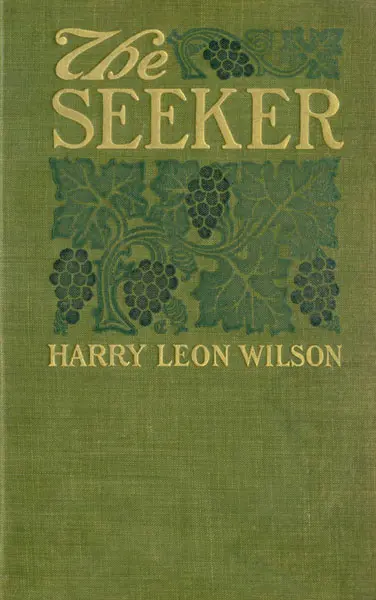
Harry Leon Wilson
Harry Leon Wilson
Harry Leon Wilson
BEHIND THE BOOK
This eBook is for the use of anyone anywhere in the United States and most other parts of the world at no cost and with almost no restrictions whatsoever. You may copy it, give it away or re-use it under the terms of the Project Gutenberg License included with this eBook or online at www.gutenberg.org. If you are not located in the United States, you will have to check the laws of the country where you are located before using this eBook. Read the source licence.
The original source file, including credits and licence, is retained by this library. Request an original-format copy at no charge. Please include the book title and Project Gutenberg identifier #9151.
KEEP YOUR CURIOSITY GOING
Coulson Kernahan

Maurice Baring
Frances Wright
Cécile Tormay

Frederic Jesup Stimson

W. H. P. (William Henry Pope) Jarvis