THE CLASSIC COLLECTION✦Ewing’s LadyCLASSIC FREE BOOKS
Ewing’s Lady
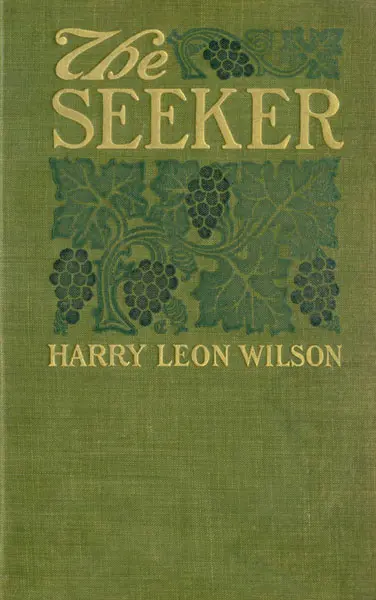
Harry Leon Wilson
THE CLASSIC COLLECTION · 1915
"Ruggles of Red Gap" by Harry Leon Wilson is a comedic novel written during the early 20th century. The story centers around Ruggles, a British valet in service to the Honourable George Augustus Vane-Basingwell, who becomes embroiled in a cultural and social upheaval when he loses a wager and is "won" by an American family, the Flouds. The narrative promises a humorous exploration of class differences, culture clash, and Ruggles’ journey from a proper English gentleman's servant to a rather reluctant member of an American household. At the start of the novel, Ruggles is preparing the Honourable George for an evening out in Paris, discussing the potential implications of lobster on his complexion while the Honourable George eagerly anticipates a poker game with Americans, hinting at both his gambling misadventures and his complicated character. The opening reveals the tensions between the British and American characters, foreshadowing the comedic chaos that will ensue. Ruggles’ observations about George's flaws and the awkwardness of social interactions set a humorous tone, while his superstitions about a gypsy's prophecy about change on his fortieth birthday suggest an impending upheaval in his orderly life. As the narrative unfolds, Ruggles is pushed into an unexpected adventure filled with unique characters and comedic situations, hinting at the challenges he will face as he navigates his new, unanticipated role in American society.
Introduction adapted from the source catalogue; source summaries may be automatically generated.
Free to read · English · 105,136 words · No account needed
MAKE TIME FOR A GOOD BOOK
On by default. Untick to stop anonymous reading totals. Each page counts after 10 seconds in view. How this works.
Anonymous counting is on unless you have switched it off.
“Three rousing cheers!” said Cousin Egbert as we drank once more, and added as an afterthought, “What a beautiful world we live in!”
“Vooley-voos make-um bring dinner!” said the Tuttle person to the cabman, who thereupon spoke at length in his native tongue to the waiter. By this means we secured a soup that was not half bad and presently a stew of mutton which Cousin Egbert declared was “some goo.” To my astonishment I ate heartily, even in such raffish surroundings. In fact, I found myself pigging it with the rest of them. With coffee, cigars were brought from the tobacconist’s next-door, each cabman present accepting one. Our own man was plainly feeling a vast pride in his party, and now circulated among his fellows with an account of our merits.
“This is what I call life,” said the Tuttle person, leaning back in
his chair.
“I’m coming right back here every day,” declared Cousin Egbert
happily.
“What’s the matter with a little drive to see some well-known objects of interest?” inquired his friend.
“Not art galleries,” insisted Cousin Egbert.
“And not churches,” said his friend. “Every day’s been Sunday with me
long enough.”
“And not clothing stores,” said Cousin Egbert firmly. “The Colonel here is awful fussy about my clothes,” he added.
“Is, heh?” inquired his friend. “How do you like this hat of mine?” he asked, turning to me. It was that sudden I nearly fluffed the catch, but recovered myself in time.
“I should consider it a hat of sound wearing properties, sir,” I said.
He took it off, examined it carefully, and replaced it.
“So far, so good,” he said gravely. “But why be fussy about clothes when God has given you only one life to live?”
“Don’t argue about religion,” warned Cousin Egbert.
“I always like to see people well dressed, sir,” I said, “because it makes such a difference in their appearance.”
He slapped his thigh fiercely. “My gosh! that’s true. He’s got you there, Sour-dough. I never thought of that.”
“He makes me wear these chest-protectors on my ankles,” said Cousin Egbert bitterly, extending one foot.
“What’s the matter of taking a little drive to see some well-known objects of interest?” said his friend.
“Not art galleries,” said Cousin Egbert firmly.
“We said that before--and not churches.”
“And not gents’ furnishing goods.”
“You said that before.”
“Well, you said not churches before.”
“Well, what’s the matter with taking a little drive?”
Your reading position is saved on this browser. Take it to another device with a library code. Reading pages adapt to text, rather than matching a printed edition.
Harry Leon Wilson
Harry Leon Wilson
Harry Leon Wilson
Harry Leon Wilson
BEHIND THE BOOK
This eBook is for the use of anyone anywhere in the United States and most other parts of the world at no cost and with almost no restrictions whatsoever. You may copy it, give it away or re-use it under the terms of the Project Gutenberg License included with this eBook or online at www.gutenberg.org. If you are not located in the United States, you will have to check the laws of the country where you are located before using this eBook. Read the source licence.
The original source file, including credits and licence, is retained by this library. Request an original-format copy at no charge. Please include the book title and Project Gutenberg identifier #9151.
KEEP YOUR CURIOSITY GOING
Coulson Kernahan

Maurice Baring
Frances Wright
Cécile Tormay

Frederic Jesup Stimson

W. H. P. (William Henry Pope) Jarvis