THE CLASSIC COLLECTION✦Ewing’s LadyCLASSIC FREE BOOKS
Ewing’s Lady
Harry Leon Wilson
THE CLASSIC COLLECTION · 1915
"Ruggles of Red Gap" by Harry Leon Wilson is a comedic novel written during the early 20th century. The story centers around Ruggles, a British valet in service to the Honourable George Augustus Vane-Basingwell, who becomes embroiled in a cultural and social upheaval when he loses a wager and is "won" by an American family, the Flouds. The narrative promises a humorous exploration of class differences, culture clash, and Ruggles’ journey from a proper English gentleman's servant to a rather reluctant member of an American household. At the start of the novel, Ruggles is preparing the Honourable George for an evening out in Paris, discussing the potential implications of lobster on his complexion while the Honourable George eagerly anticipates a poker game with Americans, hinting at both his gambling misadventures and his complicated character. The opening reveals the tensions between the British and American characters, foreshadowing the comedic chaos that will ensue. Ruggles’ observations about George's flaws and the awkwardness of social interactions set a humorous tone, while his superstitions about a gypsy's prophecy about change on his fortieth birthday suggest an impending upheaval in his orderly life. As the narrative unfolds, Ruggles is pushed into an unexpected adventure filled with unique characters and comedic situations, hinting at the challenges he will face as he navigates his new, unanticipated role in American society.
Introduction adapted from the source catalogue; source summaries may be automatically generated.
Free to read · English · 105,136 words · No account needed
MAKE TIME FOR A GOOD BOOK
On by default. Untick to stop anonymous reading totals. Each page counts after 10 seconds in view. How this works.
Anonymous counting is on unless you have switched it off.
“As to the title,” I continued, “Mr. Egbert has from the first had a curious American tendency to present me to his many friends as ‘Colonel.’ I am sure he means as little by it as when he calls me ‘Bill,’ which I have often reminded him is not a name of mine.”
“Oh, we understand the poor chap is a social incompetent,” said Belknap-Jackson with a despairing shrug.
“Say, look here,” suddenly exclaimed Cousin Egbert, a new heat in his tone, “what I call Bill ain’t a marker to what I call you when I really get going. You ought to hear me some day when I’m feeling right!”
“Really!” exclaimed the other with elaborate sarcasm.
“Yes, sir. Surest thing you know. I could call you a lot of good things right now if so many ladies wasn’t around. You don’t think I’d be afraid, do you? Why, Bill there had you licked with one wallop.”
“But really, really!” protested the other with a helpless shrug to the ladies, who were gasping with dismay.
“You ruffian!” cried his wife.
“Egbert Floud,” said Mrs. Effie fiercely, “you will apologize to Charles before you leave this room. The idea of forgetting yourself that way. Apologize at once!”
“Oh, very well,” he grumbled, “I apologize like I’m made to.” But he added quickly with even more irritation, “only don’t you get the idea it’s because I’m afraid of you.”
“Tush, tush!” said Belknap-Jackson.
“No, sir; I apologize, but it ain’t for one minute because I’m afraid
of you.”
“Your bare apology is ample; I’m bound to accept it,” replied the other, a bit uneasily I thought.
“Come right down to it,” continued Cousin Egbert, “I ain’t afraid of hardly any person. I can be pushed just so far.” Here he looked significantly at Mrs. Effie.
“After all I’ve tried to do for him!” she moaned. “I thought he had
something in him.”
“Darn it all, I like to be friendly with my friends,” he bluntly persisted. “I call a man anything that suits me. And I ain’t ever apologized yet because I was afraid. I want all parties here to get that.”
“Say no more, please. It’s quite understood,” said Belknap-Jackson hastily. The other subsided into low mutterings.
“I trust you fully understand the situation, Ruggles--Colonel
Ruggles,” he continued to me.
“It’s preposterous, but plain as a pillar-box,” I answered. “I can only regret it as keenly as any right-minded person should. It’s not at all what I’ve been accustomed to.”
Your reading position is saved on this browser. Take it to another device with a library code. Reading pages adapt to text, rather than matching a printed edition.
Harry Leon Wilson
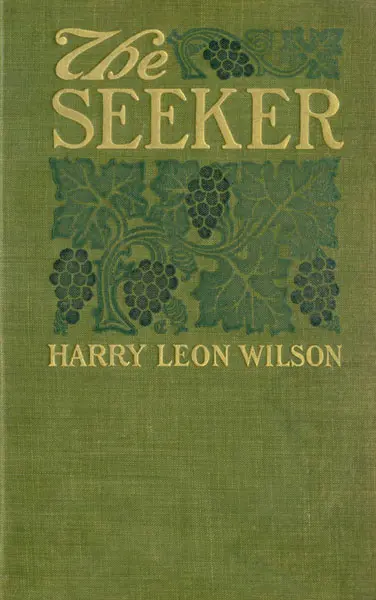
Harry Leon Wilson
Harry Leon Wilson
Harry Leon Wilson
BEHIND THE BOOK
This eBook is for the use of anyone anywhere in the United States and most other parts of the world at no cost and with almost no restrictions whatsoever. You may copy it, give it away or re-use it under the terms of the Project Gutenberg License included with this eBook or online at www.gutenberg.org. If you are not located in the United States, you will have to check the laws of the country where you are located before using this eBook. Read the source licence.
The original source file, including credits and licence, is retained by this library. Request an original-format copy at no charge. Please include the book title and Project Gutenberg identifier #9151.
KEEP YOUR CURIOSITY GOING
Coulson Kernahan

Maurice Baring
Frances Wright
Cécile Tormay

Frederic Jesup Stimson

W. H. P. (William Henry Pope) Jarvis