THE CLASSIC COLLECTION✦My diaries, being a personal narrative of events 1888-1914, Part 2 (1900-1914)CLASSIC FREE BOOKS
My diaries, being a personal narrative of events 1888-1914, Part 2 (1900-1914)
Wilfrid Scawen Blunt
THE CLASSIC COLLECTION · 1894
"Ruby at School" by Minnie E. Paull is a children's novel written in the late 19th century. The story revolves around a spirited young girl named Ruby Harper, who often finds herself in troublesome situations due to her mischievous behavior and bouts of disobedience. When Ruby's mother falls ill, her father's decision to send her away to boarding school is rooted in the hope that it will ease his wife's worries about Ruby's antics while providing the young girl a chance to learn discipline and gain an education. The opening of "Ruby at School" introduces readers to Ruby during one of her many escapades, as she devises a plan to stay outdoors overnight in a makeshift playhouse, inspired by the adventurous tales of the "Swiss Family Robinson." Despite her initial excitement, Ruby's mischief leads to a fire hazard that ultimately prompts concern from her father and results in her mother becoming even more ill with worry. As Ruby grapples with the consequences of her actions, she begins to reflect on her behavior and the impact it has on her family's well-being, setting the stage for her journey of growth and self-discovery as she prepares to leave home for school.
Introduction adapted from the source catalogue; source summaries may be automatically generated.
Free to read · English · 52,084 words · No account needed
MAKE TIME FOR A GOOD BOOK
On by default. Untick to stop anonymous reading totals. Each page counts after 10 seconds in view. How this works.
Anonymous counting is on unless you have switched it off.
"It makes me think of the way papa holds me," she said, but the thought of her papa made two big tears splash down upon the silk handkerchief.
"Shall I tell you where I went with my father when I was a little boy," the old gentleman asked,--without seeming to notice the tears,--and then he began a long story which somehow put the tired little girl fast asleep, and the next thing she knew, Aunt Emma was telling her that it was time for her to think about getting her hat on, for they had almost reached their journey's end.
"Have I boon asleep?" asked Ruby, starting up and rubbing her eyes.
"I should say so," said the old gentleman, looking at his watch. "Guess how long a nap you have taken, little girl."
"Ten minutes?" asked Ruby, who thought she must only have just closed her eyes, since she could not remember having slept at all. The last thing that she remembered was listening to the old gentleman's story, and then it had seemed as if the very next thing was being awakened by Aunt Emma's voice.
"Ten minutes, and ever so much more," the old gentleman answered with a smile. "You have been asleep just two hours."
"Two hours!" and Ruby's eyes were wide open with surprise. "Why, I
never remembered that."
"You were sleeping too sound to remember anything," her friend said.
"Well, I am glad you have had a nice rest, and now you will enjoy reaching your journey's end all the more. I shall miss you very much when you get out, for you have been very pleasant company."
"I wasn't very nice when I was asleep, I am afraid," said Ruby, "It was n't very polite of me to go to sleep, was it?"
"Oh, yes it was when I invited you to," the gentleman said. "And I enjoyed it, for it seemed just like having my little granddaughter here with me."
Aunt Emma helped Ruby put her hat on straight, and brushed the dust from her dress. The engine began to whistle, and that meant that they were very near a station.
Ruby said good-by to her kind friend, and he gave her his card with his name upon it, and asked her to write him a letter after she had been at school a little while and tell him how she liked it, and how she was getting on in her lessons.
Ruby promised that she would; and then the train began to go more slowly, and at last stopped with a little jerk at a station, and Aunt Emma said,--
"Here we are at last, Ruby."
Your reading position is saved on this browser. Take it to another device with a library code. Reading pages adapt to text, rather than matching a printed edition.
BEHIND THE BOOK
This eBook is for the use of anyone anywhere in the United States and most other parts of the world at no cost and with almost no restrictions whatsoever. You may copy it, give it away or re-use it under the terms of the Project Gutenberg License included with this eBook or online at www.gutenberg.org. If you are not located in the United States, you will have to check the laws of the country where you are located before using this eBook. Read the source licence.
The original source file, including credits and licence, is retained by this library. Request an original-format copy at no charge. Please include the book title and Project Gutenberg identifier #30860.
KEEP YOUR CURIOSITY GOING
Wilfrid Scawen Blunt
Wilfrid Scawen Blunt
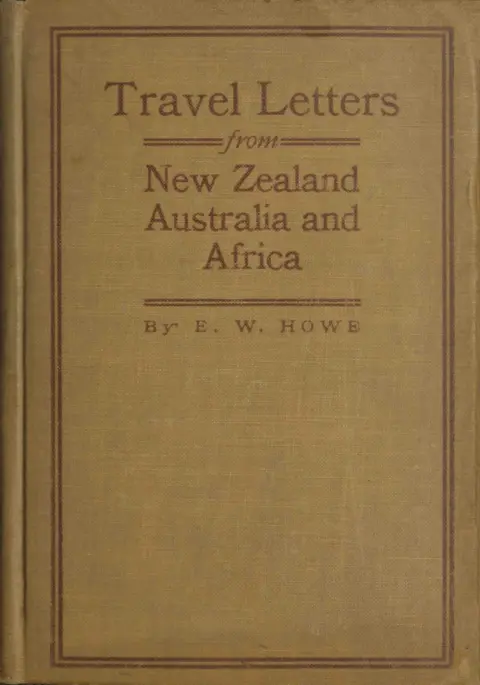
E. W. (Edgar Watson) Howe
Coulson Kernahan

Maurice Baring
Frances Wright