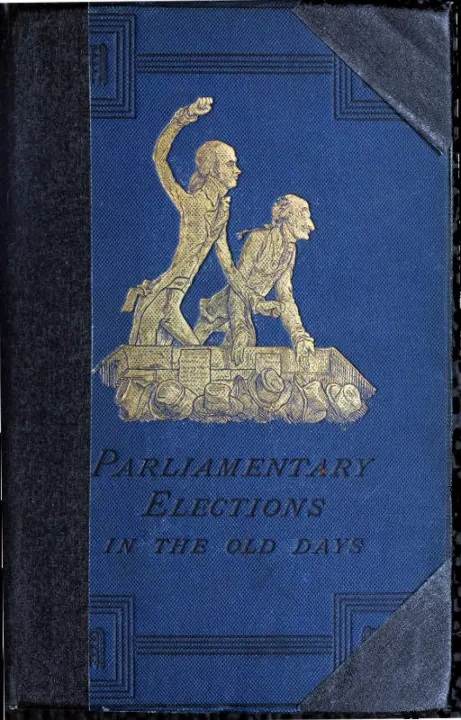
A History of Parliamentary Elections and Electioneering in the Old Days Showing the State of Political Parties and Party Warfare at the Hustings and in the House of Commons from the Stuarts to Queen Victoria
Joseph Grego
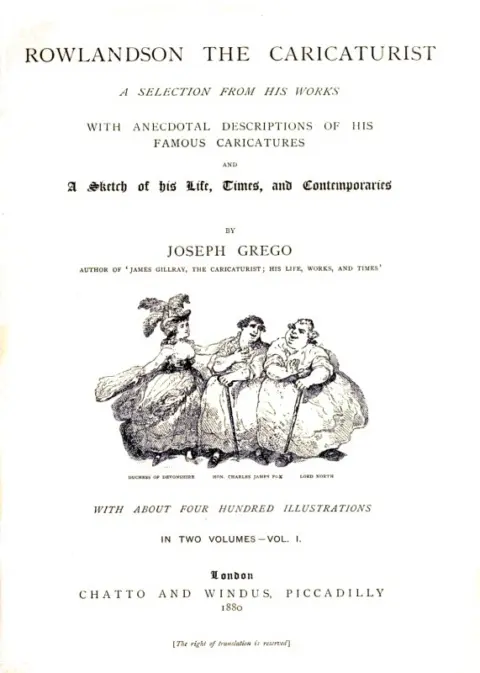
THE CLASSIC COLLECTION · 1880
"Rowlandson the Caricaturist; a Selection from His Works. Vol. 1" by Joseph Grego is a collection of caricatures and illustrations written in the late 19th century. This volume showcases the works of Thomas Rowlandson, focusing on his unique style of graphic humor and providing anecdotal descriptions of his famous caricatures, as well as a comprehensive sketch of his life, times, and contemporaries. The work appeals to enthusiasts of satire, humor, and art history, providing a glimpse into Rowlandson's prolific contributions during a vibrant period of social and political change. The opening of the volume serves as a preface where Grego sets the stage for Rowlandson's significance in the world of caricature and the challenges he faced in gaining recognition. It discusses the artist's remarkable ability to capture the absurdities and eccentricities of societal life through his work, with a particular emphasis on the colorful and vibrant age in which he lived. The preface prepares readers for an exploration of Rowlandson's whimsical and often humorous portrayals of political figures, everyday people, and various social scenarios, invoking an atmosphere of curiosity and appreciation for Rowlandson's artistic genius.
Introduction adapted from the source catalogue; source summaries may be automatically generated.
Free to read · English · 133,025 words · No account needed
MAKE TIME FOR A GOOD BOOK
On by default. Untick to stop anonymous reading totals. Each page counts after 10 seconds in view. How this works.
Anonymous counting is on unless you have switched it off.
Then would the poet thankfully reply,
With falt'ring voice, low bow, and marv'ling eye
All meekness! such a simple, dove-like thing!
'Blest be the bard who verses can indite,
To yield a second Solomon delight!
Thrice blest, who findeth favour with the King!
'Since 'tis the royal will to give the bard
In whom the King delighteth some reward,
Some mark of royal bounty to requite him,
O King! do anything but knight him.'
Know, reader, that the laureate's post sublime Is destin'd to record, in handsome rhyme, The deeds of British monarchs twice a year: If great, how happy is the tuneful tongue! If pitiful, as Shakespeare says, the song Must 'suckle fools and chronicle small beer.'
But bards must take the up hill with the down; Kings cannot always oracles be hatching: Maggots are oft the tenants of a crown-- Therefore, like those in cheese, not worth the catching.
O gentle reader! if, by God's good grace, Or (what's more sought) good interest at court, Thou get'st of lyric trumpeter the place, And hundreds are, like gudgeons, gaping for't; Hear! (at a palace if thou mean'st to thrive) And, of a steady coachman, learn to drive.
Whene'er employ'd to celebrate a King, Let fancy lend thy muse her loftiest wing-- Stun with thy minstrelsy th' affrighted sphere; Bid thy voice thunder like a hundred batteries; For common sounds, conveying common flatteries. Are zephyrs whisp'ring to the royal ear.
Know, glutton-like, on praise each monarch crams; Hot spices suit alone their pamper'd nature: Alas! the stomach, parch'd by burning drams, With mad-dog terror starts at simple water. Fierce is each royal mania for applause; And, as a horse-pond wide, are monarch's maws-- Form'd, therefore, on a pretty ample scale: To sound the decent panegyric note, To pour the modest flatt'ries down their throat, Were off'ring shrimps for dinner to a whale.
And mind! whene'er thou strik'st the lyre to kings,
To touch to Abigails of court the strings;
Give the Queen's toad-eater a handsome sop,
And swear she always has more grace
Than e'en to sell the meanest place--
Swear, too, the woman keeps no title-shop.
Thus, reader, ends the prologue to my odes! The true-bred courtiers wonder whilst I preach-- And with grave vizards and stretch'd eyes to gods, Pronounce my sermon a most impious speech: With all my spirit--let them damn my lays-- A courtier's curses are exalted praise.
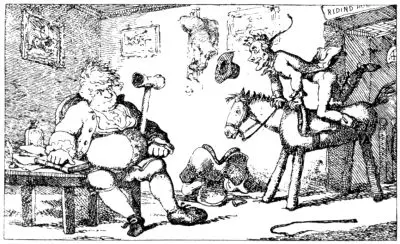
January, 1787. The Triumph of Sentiment.
January, 1787. The Triumph of Hypocrisy.
Your reading position is saved on this browser. Take it to another device with a library code. Reading pages adapt to text, rather than matching a printed edition.
Joseph Grego
Joseph Grego
BEHIND THE BOOK
This eBook is for the use of anyone anywhere in the United States and most other parts of the world at no cost and with almost no restrictions whatsoever. You may copy it, give it away or re-use it under the terms of the Project Gutenberg License included with this eBook or online at www.gutenberg.org. If you are not located in the United States, you will have to check the laws of the country where you are located before using this eBook. Read the source licence.
The original source file, including credits and licence, is retained by this library. Request an original-format copy at no charge. Please include the book title and Project Gutenberg identifier #45980.
KEEP YOUR CURIOSITY GOING

Charles G. (Charles Griffith) Ross
Hannah Webster Foster

Emily Lawless
Edwin Hamlin Carr

Charles De Lano Hine
Andrew Ure