The Stark Munro Letters Being series of twelve letters written by J. Stark Munro, M.B., to his friend and former fellow-student, Herbert Swanborough, of Lowell, Massachusetts, during the years 1881-1884
Arthur Conan Doyle

THE CLASSIC COLLECTION · 1894
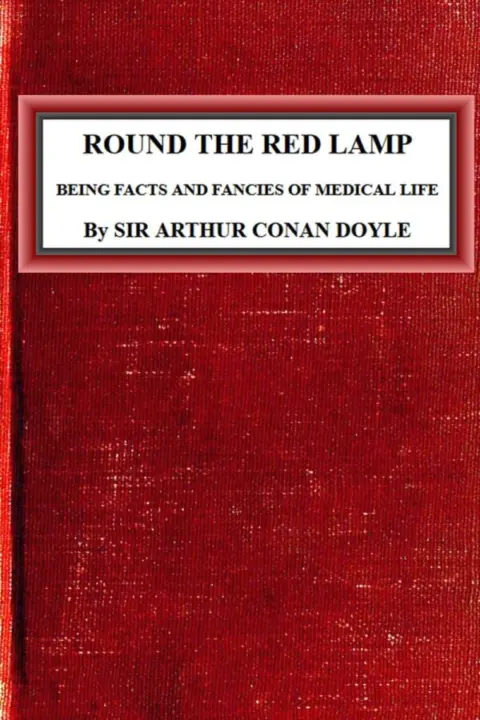
"Round the Red Lamp: Being Facts and Fancies of Medical Life" by Sir Arthur Conan Doyle is a collection of stories written during the late 19th century. The work delves into various aspects of medical life, presenting a blend of both factual and fictional narratives that explore the realities and complexities faced by practitioners and their patients. The opening portion introduces us to Dr. James Winter, an old-fashioned country doctor whose approach to medicine contrasts sharply with the modern practices of his younger colleagues. Through humorous anecdotes and character observations, we see Dr. Winter's endearing yet outdated methods, as well as the reverence he holds in his community despite the advancements in medical science that he remains oblivious to. The narrative highlights the tension between traditional and modern medical practices, setting the stage for a series of engaging tales that promise to illuminate the graver sides of life in the medical field, while also portraying the human stories behind the treatments.
Introduction adapted from the source catalogue; source summaries may be automatically generated.
Free to read · English · 68,160 words · No account needed
MAKE TIME FOR A GOOD BOOK
On by default. Untick to stop anonymous reading totals. Each page counts after 10 seconds in view. How this works.
Anonymous counting is on unless you have switched it off.
"Oh, I beg your pardon! I meant the doctor--Dr. Verrinder Smith."
"I am Dr. Verrinder Smith."
Dr. Ripley was so surprised that he dropped his hat and forgot to pick
it up again.
"What!" he grasped, "the Lee Hopkins prizeman! You!"
He had never seen a woman doctor before, and his whole conservative soul rose up in revolt at the idea. He could not recall any Biblical injunction that the man should remain ever the doctor and the woman the nurse, and yet he felt as if a blasphemy had been committed. His face betrayed his feelings only too clearly.
"I am sorry to disappoint you," said the lady drily.
"You certainly have surprised me," he answered, picking up his hat.
"You are not among our champions, then?"
"I cannot say that the movement has my approval."
"And why?"
"I should much prefer not to discuss it."
"But I am sure you will answer a lady's question."
"Ladies are in danger of losing their privileges when they usurp the place of the other sex. They cannot claim both."
"Why should a woman not earn her bread by her brains?"
Dr. Ripley felt irritated by the quiet manner in which the lady
cross-questioned him.
"I should much prefer not to be led into a discussion, Miss Smith."
"Dr. Smith," she interrupted.
"Well, Dr. Smith! But if you insist upon an answer, I must say that I do not think medicine a suitable profession for women and that I have a personal objection to masculine ladies."
It was an exceedingly rude speech, and he was ashamed of it the instant after he had made it. The lady, however, simply raised her eyebrows and smiled.
"It seems to me that you are begging the question," said she. "Of course, if it makes women masculine that <i>would</i> be a considerable deterioration."
It was a neat little counter, and Dr. Ripley, like a pinked fencer,
bowed his acknowledgment.
"I must go," said he.
"I am sorry that we cannot come to some more friendly conclusion since we are to be neighbours," she remarked.
He bowed again, and took a step towards the door.
"It was a singular coincidence," she continued, "that at the instant that you called I was reading your paper on 'Locomotor Ataxia,' in the Lancet."
"Indeed," said he drily.
"I thought it was a very able monograph."
"You are very good."
"But the views which you attribute to Professor Pitres, of Bordeaux, have been repudiated by him."
"I have his pamphlet of 1890," said Dr. Ripley angrily.
Your reading position is saved on this browser. Take it to another device with a library code. Reading pages adapt to text, rather than matching a printed edition.
Arthur Conan Doyle
Arthur Conan Doyle
Arthur Conan Doyle
Arthur Conan Doyle
BEHIND THE BOOK
This eBook is for the use of anyone anywhere in the United States and most other parts of the world at no cost and with almost no restrictions whatsoever. You may copy it, give it away or re-use it under the terms of the Project Gutenberg License included with this eBook or online at www.gutenberg.org. If you are not located in the United States, you will have to check the laws of the country where you are located before using this eBook. Read the source licence.
The original source file, including credits and licence, is retained by this library. Request an original-format copy at no charge. Please include the book title and Project Gutenberg identifier #423.
KEEP YOUR CURIOSITY GOING
Coulson Kernahan

Maurice Baring
Frances Wright
Cécile Tormay

Frederic Jesup Stimson

W. H. P. (William Henry Pope) Jarvis


