THE CLASSIC COLLECTION✦Jack DerringerCLASSIC FREE BOOKS
Jack Derringer
Basil Lubbock
THE CLASSIC COLLECTION · 1915
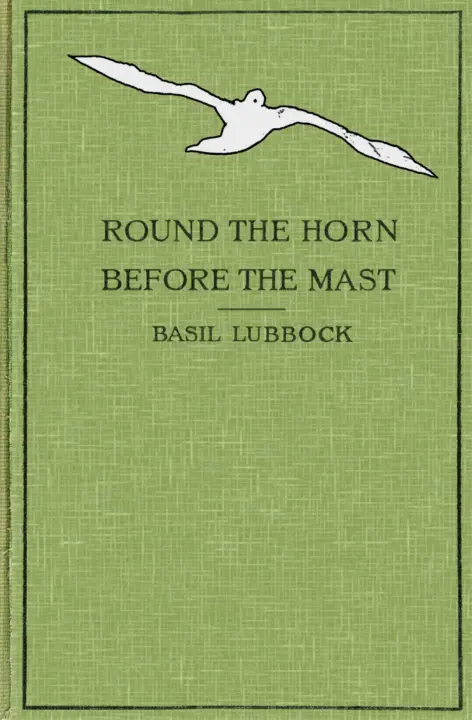
"Round the Horn before the mast" by Basil Lubbock is a maritime memoir written in the early 20th century. It follows a gentleman volunteer who ships before the mast on the four‑masted barque Royalshire to experience deep‑water life on a grain passage from San Francisco around Cape Horn toward Europe. The narrative dwells on the gritty work, seamanship, and shipboard culture of the great windjammers, painting vivid portraits of officers, crew, and ports. It promises realism, humor, and danger rather than romance. The opening of this narrative finds the narrator in San Francisco after the Klondike, choosing the Royalshire, signing on, and pairing up with fellow recruit Don Henderson. He outfits like a common seaman and plunges into hard labor: unloading Japanese coal, scouring stringers and bilges, chipping and painting, wrestling wire moorings, and enduring rough fare—relieved by cricket matches and the Seamen’s Institute. The ship shifts to Oakland Creek and Port Costa to line the holds and load barley, while a suspicious Swedish sailmaker appears, a classic South Sea whaler is spotted, and the crew bends sail aloft in a stiff wind. There are swims in the Sacramento, a sandy-shore breakfast on a boat errand, and a grim episode when an apprentice from another ship drowns and the Royalshire’s “nipper” is nearly lost. After finishing cargo and returning to the bay, a mixed crew drifts aboard, the narrator briefly serves as steward, and the harbor erupts in celebration for returning troops as the ship is dressed overall. Before dawn, the men man the capstan, a tug takes hold, the anchor breaks out, and the Royalshire heads to sea.
Introduction adapted from the source catalogue; source summaries may be automatically generated.
Free to read · English · 84,274 words · No account needed
MAKE TIME FOR A GOOD BOOK
On by default. Untick to stop anonymous reading totals. Each page counts after 10 seconds in view. How this works.
Anonymous counting is on unless you have switched it off.
She was taking some big lumps of water aboard, and hardly had I clambered on deck out of the main rigging than a big dollop came over the rail right on top of me, and swept me off my legs; luckily I had firm hold of the topgallant halliards.
The next moment I heard the second mate calling for me: it was my timekeeping, and two of the binnacles were out. I soon had them lighted, after a liberal use of matches and oaths, and rushing on to the poop in the darkness, ran straight into the old man, all but knocking him down. Hastily apologising, I dashed on, not waiting for any remarks.
When I turned the watch out at one bell, Don rounded on me and said,
“I wish you would not make such a row lighting those binnacles, Bally.”
“Why,” I answered, “I thought I was very quiet.”
“I don’t know what you call quiet, but I lay and listened to you scratching matches and cursing for nearly twenty minutes.”
“Oh, rats! I cursed a bit to myself, I admit, in a whisper.”
“D--d big whisper,” and with that he proceeded to roll out of his bunk.
“Any water on deck?” asked the third mate.
“I advise you to put on oilskins; I’ve had a dollop over me.”
“Where’s Loring?”
“At the lee wheel.”
“What ho! a lee wheel, eh! What’s she doing?”
“Been going about 14 knots since eight,” I answered, and glancing at the clock, saw it was eight bells, and dashed on to the poop again to strike the bell.
Presently came the welcome words from the mate,
“Relieve the wheel and lookout!” and our watch went below, after a busy
time.
The second mate came down into the half-deck when the watch changed, and told them how I had tried to knock the old man down.
This was a great joke.
“Bally’s been raisin’ hell everywhere to-night,” said Mac. “He wanted to fight me on the fore upper-topgallant yard, he threatened to chuck Wilson off the main-yard, he tried to knock the old man down--”
“He’s been keeping us awake in here for the last half-hour whilst he abused the binnacles,” put in Don.
“Boil your burners to-morrow,” I growled to Don, and then gave myself
up to delicious sleep.
Monday, 2nd October.--In the morning watch the weather began to moderate. We hove the log and found she was doing 8 knots.
At 5 A.M. we started setting sail in the dark. I loosed the mizen-royal and upper-topgallant sail.
We set all three royals and the upper-topgallant sails, bending another
fore-royal.
Your reading position is saved on this browser. Take it to another device with a library code. Reading pages adapt to text, rather than matching a printed edition.
BEHIND THE BOOK
This eBook is for the use of anyone anywhere in the United States and most other parts of the world at no cost and with almost no restrictions whatsoever. You may copy it, give it away or re-use it under the terms of the Project Gutenberg License included with this eBook or online at www.gutenberg.org. If you are not located in the United States, you will have to check the laws of the country where you are located before using this eBook. Read the source licence.
The original source file, including credits and licence, is retained by this library. Request an original-format copy at no charge. Please include the book title and Project Gutenberg identifier #76788.
KEEP YOUR CURIOSITY GOING
Wilfrid Scawen Blunt
Wilfrid Scawen Blunt

E. W. (Edgar Watson) Howe
Francis Greenleaf Allinson & Anne C. E. (Anne Crosby Emery) Allinson
Cyrenus Cole

John Martineau