READ · DISCOVER · ENJOYClassic literature · Always free
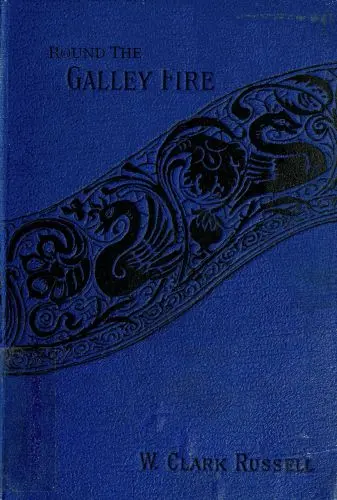
Round the Galley Fire — digital edition cover

THE CLASSIC COLLECTION · 1883

Round the Galley Fire

"Round the Galley Fire" by W. Clark Russell is a collection of maritime stories written in the late 19th century. The book compiles entertaining yarns recounted by a narrator who invites readers into the cozy atmosphere of shipboard life, filled with sailors' adventures, mishaps, and the captivating allure of the sea. The opening of the book sets a vivid scene aboard an Australian passenger ship becalmed in the tropics. As passengers from different backgrounds abandon their usual decorum to celebrate the birthday of a young lady with a dance, the narrative paints a rich tableau of ship life, punctuated with laughter, music, and the contrasting solitude of the vast ocean. Amid the festivities, the tranquility is tinged with the melancholy notion of the ship being a mere speck amidst the infinite sea, foreshadowing the unpredictable adventures that sailors face. As the evening progresses, the situation on deck evolves, allowing for a taste of both joy and the looming presence of nature's unpredictability.

Introduction adapted from the source catalogue; source summaries may be automatically generated.

Start reading ↓

Free to read · English · 94,637 words · No account needed

MAKE TIME FOR A GOOD BOOK

Round the Galley Fire

On by default. Untick to stop anonymous reading totals. Each page counts after 10 seconds in view. How this works.

Anonymous counting is on unless you have switched it off.

Round the Galley Fire

Whoever has examined into the fishing industry must be well aware that smack-owners have substantial cause of grievance in respect of their treatment by their apprentices. An owner told me that a boy came to him for a berth; the lad was in rags and starving, and so filthy that the owner would not send him to his house where his apprentices were. He walked with him to the Sailor’s Home, had him bathed and scrubbed and fed, paid nearly a pound for him for seven days at the Home, purchased for him some clothes that cost over £2, and then on the morning of the day on which the vessel was to sail the boy ran away, and the smack had to be detained until another lad could be shipped. Instances of such behaviour are numerous, and might really account for, if they should not justify, a very much harsher discipline and sterner kind of treatment than I have been able to discover. For always let us remember that the smack-owner has, as a rule, been a fisherman himself, gone through the mill, suffered all the hardships of the life, and, though ashore, has to work harder for his living than ever he did when at sea. He is in this position, that he is only able to insure for total loss. He belongs to a club whose members subscribe in proportion to the number of vessels they severally enter. “Only yesterday,” said a smack-owner, “one of my vessels came in; she had lost fifteen fathom of warp, two main-bridles, dandy-bridle, trawl-warp tackle, two trawl-heads, a trawl-beam, a ground-rope, mortices, head-line, and other gear. I have to bear all that. There is Mr. ----. In one night of storm his loss amounted, in insurance of other vessels which had foundered, to £245, together with eight sets of gear, valued at £60 a set.” It is a vocation full of risk; scores of men may be beggared by a gale; and, seeing the important part that smack apprentices play in the fishing interests, it is reasonable that we should survey the question from every point of view, before hastily forming conclusions on the basis of such an incident as that of the recent Hull atrocity. Of course, there are savages and bullies among smacksmen, as there are the whole wide world over, whether among landgoers or seafarers. But whatever might have been the state of things in former days, I do not believe that, at the present time, there is half the ill usage to be found aboard smacks that I know exists at sea in other kinds of vessels. The crime of the murderer Brand necessarily gives a malignant colouring to every smack-master’s report of having lost a boy by drowning whilst at sea; but the old salt maxim, “A fisherman’s walk, three steps and overboard,” should go a long way in explanation of many of the disasters that befall smack-boys. An accident aboard a smack happens in a breath. A lad dips over the side for a bucket of water; the vessel is sailing fast, the bucket pulls the lad over the rail, and he is astern and drowned before the fellow at the tiller can sing out. Or a boy goes to look over the stern to see the white water running away; the boom jibes and flings him into the sea. I should very gravely question whether a deliberate murder could be done without some one of the men reporting it. No doubt black deeds have been perpetrated in fishing-smacks. For instance, a story is told of a lad who was frying some fish; through his neglect the fish were burnt, whereupon the skipper, smelling the fumes, bundled below, seized the boy’s hands, and thrust them into the boiling fat. The instant he was released, the boy rushed on deck and flung himself overboard, and was drowned. One might conceive of a man hating another and jogging him into the sea on a dark night. But the statistics of loss of life among smacksmen and smack apprentices at sea must reduce such dreadful possibilities to a very small number; and of that small number it is rare indeed to find one to which any better basis can be furnished than suspicion. So far as the professional life of the smack apprentice goes--his treatment at sea, his food, his clothes, and the like--it is difficult to guess, having regard to the unavoidable roughness and hardship of his calling, how his position is to be improved. You cannot make a drawing-room of a smack; there will be always hard work and hard words where there is hard weather; and there is not much hope of polished airs and genteel behaviour amongst a race of men who sleep in holes at which a blackbeetle might stand aghast, and who are boxed up for many months together in the year in a bit of a fabric whose forecastle is full of raffle, and whose hold is full of dead fish. But ashore no doubt something may be done for the lads to advance them morally, and make real men of them when they come to be men. It would be well if there were a few more Smack-boys’ Homes than there are. There is one in Ramsgate the theory of which is exceedingly good. The manager writes to a school or reformatory for boys, the conditions of acceptance being that the lads are healthy and strong and of good character; also that enough money be paid down to furnish each youth with a fishing outfit and a Sunday suit. The boys being got together in this fashion, the smack-owners are asked to take apprentices from them. This many of them do, I believe, on the understanding that the boys lodge at the Home when in port at a cost of 2s. a day each. By this means the lads are brought under a certain moral influence. They are watched over by the clergy associated with the Home, attend service in a chapel that adjoins the building, and are provided with the means of harmlessly amusing themselves in the evenings. The sole objection is--and it is a commercial one--the expensiveness of the arrangement to smack-owners who have several apprentices. “If I had but one apprentice,” said an owner, “2s. a day would be cheap enough; but I have ten, who at 2s. a day per boy would be a good deal dearer to me at the Home than I find them in my own house.” This is a point I will not deal with, but in all other respects I know of nothing that can be advanced against smack-boys’ homes. Smacksmen make fine sailors; the navy and the merchant service ought to have no better recruiting field than the British fisheries, and therefore something of Imperial significance should enter into consideration of the smack-boy’s moral and material welfare. You are not going to make him a refined person, but you can teach him to write and read, to have a reverence for God, to think of himself as a responsible being. An early training of this kind will not impair his hardiness, but it will put him higher than he is as a human creature. The lower orders of smack-owners let him run loose of a night when he is ashore, he is quite uncared for, and in the prison days he passed a good deal more of his time in gaol than at sea. “Making every allowance for second or third convictions,” says the Rev. J. E. Brennan, of Ramsgate, writing in 1878, “we are not far from the truth in stating that 50 per cent. of these boys go to prison during some part of their service.” These incessant punishments naturally led people to infer the worst of the fishing life. “Think what a calling it must be,” they would say, “when boys actually beg to be sent to prison rather than on board these smacks.” But Mr. Brennan justly, I think, attributes the lads’ defection to their neglected condition, to the absence of all suitable guardianship. “The scenes of drunkenness and sin,” he writes, “of which some of these lads are cognizant I will not describe. Let it suffice to say that many a pure-minded boy has in a few months become utterly corrupted, and his character, it may be, utterly ruined for ever.” He is writing of the boys of one town; but his remarks are equally, and even more, applicable to such places as Grimsby and Hull and Yarmouth. Here, then, is the real evil. It is not that the boys are maltreated at sea to any extent outside the proverbial rough usage of the marine life; it is not that smack-owners--the majority of them certainly--do not feed and clothe them well, nor that they exact unreasonable share of labour from them; it is that, when ashore and during the evenings, they wander about, fall into bad company, acquire habits of intemperance, become unspeakable nuisances to the police, to the inhabitants, and to their own masters, run away, and leave owners in the lurch and practically now without redress; and so, in a large proportion of instances, end in becoming untrustworthy men, worthless sailors, people whom nobody will employ. Smack-owners, as I have said, cannot be expected to look after the morals of the lads; their hands are full of business, they come home wearied, and, even with the best will in the world, they must lack in ways it would take too much space to explain here the opportunities to care for the boys as they are cared for at a Home. What is really wanted is a Home wherever there are fishing-apprentices, an institution conducted with something of the self-sacrificing spirit that characterizes the Ramsgate Home; where the boys can be comfortably housed and tended at a small expense to their employers; where they may be educated and helped and rewarded for their merits as seafaring lads; and any one truly concerned in the welfare of our mercantile marine, and who holds that we should neglect no source from which we may derive the forces that keep our nation dominant upon the sea, will believe that the State could make no wiser disbursement than in helping in the establishment of such institutions, and contributing to them until they become self-supporting.

Your reading position is saved on this browser. Take it to another device with a library code. Reading pages adapt to text, rather than matching a printed edition.

More from this author

BEHIND THE WORDS

About William Clark Russell

William Clark Russell (1844–1911). Explore List, Ye Landsmen! A Romance of Incident, The Yarn of Old Harbour Town, Heart of Oak: A Three-Stranded Yarn, vol. 3 and other works in this collection. These books span adventure, classic fiction, history.

Explore this author’s books →

THE READERS’ VERDICT

How did this story stay with you?

Not rated yet
Your rating for Round the Galley Fire

Be the first to share your verdict.

One rating per browser, which you can change or remove. A necessary browser identifier remembers your vote. How ratings work

A GOOD STORY DESERVES COMPANY

Pass this book along.

A great read is even better when it’s shared.

SEND A LITTLE INSPIRATION

Share this book

BEHIND THE BOOK

Edition & source details.

Title
Round the Galley Fire
Author
William Clark Russell
First publication (Open Library catalogue match)
1883
Digital edition publisher
Project Gutenberg
Gutenberg release date
2020-04-04
Language
English
Source edition imprint
Not stated in source catalogue
Source identifier
Project Gutenberg #61750
Contributors
No additional named contributors in source metadata

Public-domain source & licence

This eBook is for the use of anyone anywhere in the United States and most other parts of the world at no cost and with almost no restrictions whatsoever. You may copy it, give it away or re-use it under the terms of the Project Gutenberg License included with this eBook or online at www.gutenberg.org. If you are not located in the United States, you will have to check the laws of the country where you are located before using this eBook. Read the source licence.

Full source licence and obtaining an original copy

The original source file, including credits and licence, is retained by this library. Request an original-format copy at no charge. Please include the book title and Project Gutenberg identifier #61750.

the full Project Gutenberg License must appear
prominently whenever any copy of a Project Gutenberg work (any work
on which the phrase “Project Gutenberg” appears, or with which the
phrase “Project Gutenberg” is associated) is accessed, displayed,
performed, viewed, copied or distributed:

This eBook is for the use of anyone anywhere in the United States and most
other parts of the world at no cost and with almost no restrictions
whatsoever. You may copy it, give it away or re-use it under the terms
of the Project Gutenberg™ License included with this eBook or online
at www.gutenberg.org. If you
are not located in the United States, you will have to check the laws
of the country where you are located before using this eBook.

1.E.2. If an individual Project Gutenberg electronic work is
derived from texts not protected by U.S. copyright law (does not
contain a notice indicating that it is posted with permission of the
copyright holder), the work can be copied and distributed to anyone in
the United States without paying any fees or charges. If you are
redistributing or providing access to a work with the phrase “Project
Gutenberg” associated with or appearing on the work, you must comply
either with the requirements of paragraphs 1.E.1 through 1.E.7 or
obtain permission for the use of the work and the Project Gutenberg
trademark as set forth in paragraphs 1.E.8 or 1.E.9.

1.E.3. If an individual Project Gutenberg electronic work is posted
with the permission of the copyright holder, your use and distribution
must comply with both paragraphs 1.E.1 through 1.E.7 and any
additional terms imposed by the copyright holder. Additional terms
will be linked to the Project Gutenberg License for all works
posted with the permission of the copyright holder found at the
beginning of this work.

1.E.4. Do not unlink or detach or remove the full Project Gutenberg
License terms from this work, or any files containing a part of this
work or any other work associated with Project Gutenberg.

1.E.5. Do not copy, display, perform, distribute or redistribute this
electronic work, or any part of this electronic work, without
prominently displaying the sentence set forth in paragraph 1.E.1 with
active links or immediate access to the full terms of the Project
Gutenberg License.

1.E.6. You may convert to and distribute this work in any binary,
compressed, marked up, nonproprietary or proprietary form, including
any word processing or hypertext form. However, if you provide access
to or distribute copies of a Project Gutenberg work in a format
other than “Plain Vanilla ASCII” or other format used in the official
version posted on the official Project Gutenberg website
(www.gutenberg.org), you must, at no additional cost, fee or expense
to the user, provide a copy, a means of exporting a copy, or a means
of obtaining a copy upon request, of the work in its original “Plain
Vanilla ASCII” or other form. Any alternate format must include the
full Project Gutenberg License as specified in paragraph 1.E.1.

1.E.7. Do not charge a fee for access to, viewing, displaying,
performing, copying or distributing any Project Gutenberg works
unless you comply with paragraph 1.E.8 or 1.E.9.

1.E.8. You may charge a reasonable fee for copies of or providing
access to or distributing Project Gutenberg electronic works
provided that:

• You pay a royalty fee of 20% of the gross profits you derive from
the use of Project Gutenberg works calculated using the method
you already use to calculate your applicable taxes. The fee is owed
to the owner of the Project Gutenberg trademark, but he has
agreed to donate royalties under this paragraph to the Project
Gutenberg Literary Archive Foundation. Royalty payments must be paid
within 60 days following each date on which you prepare (or are
legally required to prepare) your periodic tax returns. Royalty
payments should be clearly marked as such and sent to the Project
Gutenberg Literary Archive Foundation at the address specified in
Section 4, “Information about donations to the Project Gutenberg
Literary Archive Foundation.”

• You provide a full refund of any money paid by a user who notifies
you in writing (or by e-mail) within 30 days of receipt that s/he
does not agree to the terms of the full Project Gutenberg™
License. You must require such a user to return or destroy all
copies of the works possessed in a physical medium and discontinue
all use of and all access to other copies of Project Gutenberg™
works.

• You provide, in accordance with paragraph 1.F.3, a full refund of
any money paid for a work or a replacement copy, if a defect in the
electronic work is discovered and reported to you within 90 days of
receipt of the work.

• You comply with all other terms of this agreement for free
distribution of Project Gutenberg™ works.


1.E.9. If you wish to charge a fee or distribute a Project
Gutenberg™ electronic work or group of works on different terms than
are set forth in this agreement, you must obtain permission in writing
from the Project Gutenberg Literary Archive Foundation, the manager of
the Project Gutenberg™ trademark. Contact the Foundation as set
forth in Section 3 below.

1.F.

1.F.1. Project Gutenberg volunteers and employees expend considerable
effort to identify, do copyright research on, transcribe and proofread
works not protected by U.S. copyright law in creating the Project
Gutenberg™ collection. Despite these efforts, Project Gutenberg™
electronic works, and the medium on which they may be stored, may
contain “Defects,” such as, but not limited to, incomplete, inaccurate
or corrupt data, transcription errors, a copyright or other
intellectual property infringement, a defective or damaged disk or
other medium, a computer virus, or computer codes that damage or
cannot be read by your equipment.

1.F.2. LIMITED WARRANTY, DISCLAIMER OF DAMAGES - Except for the “Right
of Replacement or Refund” described in paragraph 1.F.3, the Project
Gutenberg Literary Archive Foundation, the owner of the Project
Gutenberg™ trademark, and any other party distributing a Project
Gutenberg™ electronic work under this agreement, disclaim all
liability to you for damages, costs and expenses, including legal
fees. YOU AGREE THAT YOU HAVE NO REMEDIES FOR NEGLIGENCE, STRICT
LIABILITY, BREACH OF WARRANTY OR BREACH OF CONTRACT EXCEPT THOSE
PROVIDED IN PARAGRAPH 1.F.3. YOU AGREE THAT THE FOUNDATION, THE
TRADEMARK OWNER, AND ANY DISTRIBUTOR UNDER THIS AGREEMENT WILL NOT BE
LIABLE TO YOU FOR ACTUAL, DIRECT, INDIRECT, CONSEQUENTIAL, PUNITIVE OR
INCIDENTAL DAMAGES EVEN IF YOU GIVE NOTICE OF THE POSSIBILITY OF SUCH
DAMAGE.

1.F.3. LIMITED RIGHT OF REPLACEMENT OR REFUND - If you discover a
defect in this electronic work within 90 days of receiving it, you can
receive a refund of the money (if any) you paid for it by sending a
written explanation to the person you received the work from. If you
received the work on a physical medium, you must return the medium
with your written explanation. The person or entity that provided you
with the defective work may elect to provide a replacement copy in
lieu of a refund. If you received the work electronically, the person
or entity providing it to you may choose to give you a second
opportunity to receive the work electronically in lieu of a refund. If
the second copy is also defective, you may demand a refund in writing
without further opportunities to fix the problem.

1.F.4. Except for the limited right of replacement or refund set forth
in paragraph 1.F.3, this work is provided to you ‘AS-IS’, WITH NO
OTHER WARRANTIES OF ANY KIND, EXPRESS OR IMPLIED, INCLUDING BUT NOT
LIMITED TO WARRANTIES OF MERCHANTABILITY OR FITNESS FOR ANY PURPOSE.

1.F.5. Some states do not allow disclaimers of certain implied
warranties or the exclusion or limitation of certain types of
damages. If any disclaimer or limitation set forth in this agreement
violates the law of the state applicable to this agreement, the
agreement shall be interpreted to make the maximum disclaimer or
limitation permitted by the applicable state law. The invalidity or
unenforceability of any provision of this agreement shall not void the
remaining provisions.

1.F.6. INDEMNITY - You agree to indemnify and hold the Foundation, the
trademark owner, any agent or employee of the Foundation, anyone
providing copies of Project Gutenberg™ electronic works in
accordance with this agreement, and any volunteers associated with the
production, promotion and distribution of Project Gutenberg™
electronic works, harmless from all liability, costs and expenses,
including legal fees, that arise directly or indirectly from any of
the following which you do or cause to occur: (a) distribution of this
or any Project Gutenberg work, (b) alteration, modification, or
additions or deletions to any Project Gutenberg work, and (c) any
Defect you cause.

Section 2. Information about the Mission of Project Gutenberg

Project Gutenberg is synonymous with the free distribution of
electronic works in formats readable by the widest variety of
computers including obsolete, old, middle-aged and new computers. It
exists because of the efforts of hundreds of volunteers and donations
from people in all walks of life.

Volunteers and financial support to provide volunteers with the
assistance they need are critical to reaching Project Gutenberg’s
goals and ensuring that the Project Gutenberg collection will
remain freely available for generations to come. In 2001, the Project
Gutenberg Literary Archive Foundation was created to provide a secure
and permanent future for Project Gutenberg and future
generations. To learn more about the Project Gutenberg Literary
Archive Foundation and how your efforts and donations can help, see
Sections 3 and 4 and the Foundation information page at www.gutenberg.org.

Section 3. Information about the Project Gutenberg Literary Archive Foundation

The Project Gutenberg Literary Archive Foundation is a non-profit
501(c)(3) educational corporation organized under the laws of the
state of Mississippi and granted tax exempt status by the Internal
Revenue Service. The Foundation’s EIN or federal tax identification
number is 64-6221541. Contributions to the Project Gutenberg Literary
Archive Foundation are tax deductible to the full extent permitted by
U.S. federal laws and your state’s laws.

The Foundation’s business office is located at 41 Watchung Plaza #516,
Montclair NJ 07042, USA, +1 (862) 621-9288. Email contact links and up
to date contact information can be found at the Foundation’s website
and official page at www.gutenberg.org/contact

Section 4. Information about Donations to the Project Gutenberg
Literary Archive Foundation

Project Gutenberg™ depends upon and cannot survive without widespread
public support and donations to carry out its mission of
increasing the number of public domain and licensed works that can be
freely distributed in machine-readable form accessible by the widest
array of equipment including outdated equipment. Many small donations
($1 to $5,000) are particularly important to maintaining tax exempt
status with the IRS.

The Foundation is committed to complying with the laws regulating
charities and charitable donations in all 50 states of the United
States. Compliance requirements are not uniform and it takes a
considerable effort, much paperwork and many fees to meet and keep up
with these requirements. We do not solicit donations in locations
where we have not received written confirmation of compliance. To SEND
DONATIONS or determine the status of compliance for any particular state
visit www.gutenberg.org/donate.

While we cannot and do not solicit contributions from states where we
have not met the solicitation requirements, we know of no prohibition
against accepting unsolicited donations from donors in such states who
approach us with offers to donate.

International donations are gratefully accepted, but we cannot make
any statements concerning tax treatment of donations received from
outside the United States. U.S. laws alone swamp our small staff.

Please check the Project Gutenberg web pages for current donation
methods and addresses. Donations are accepted in a number of other
ways including checks, online payments and credit card donations. To
donate, please visit: www.gutenberg.org/donate.

Section 5. General Information About Project Gutenberg electronic works

Professor Michael S. Hart was the originator of the Project
Gutenberg concept of a library of electronic works that could be
freely shared with anyone. For forty years, he produced and
distributed Project Gutenberg eBooks with only a loose network of
volunteer support.

Project Gutenberg eBooks are often created from several printed
editions, all of which are confirmed as not protected by copyright in
the U.S. unless a copyright notice is included. Thus, we do not
necessarily keep eBooks in compliance with any particular paper
edition.

Most people start at our website which has the main PG search
facility: www.gutenberg.org.

This website includes information about Project Gutenberg,
including how to make donations to the Project Gutenberg Literary
Archive Foundation, how to help produce our new eBooks, and how to
subscribe to our email newsletter to hear about new eBooks.


KEEP YOUR CURIOSITY GOING

Your next chapter awaits.