THE CLASSIC COLLECTION✦The star dreamer: A romanceCLASSIC FREE BOOKS
The star dreamer: A romance
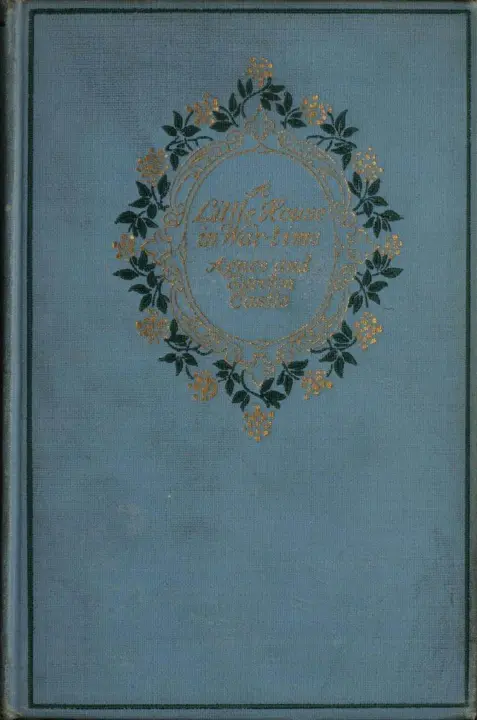
Agnes Castle & Egerton Castle
THE CLASSIC COLLECTION · 1905
"Rose of the World" by Agnes and Egerton Castle is a novel written in the early 20th century. The story is set against the backdrop of British India and follows Major Raymond Bethune, a soldier of the Guides, who grapples with his feelings for Lady Gerardine, the widow of his fallen comrade, Captain Harry English. The narrative explores themes of duty, love, loss, and the clash of cultures, encapsulated in the characters' struggles to reconcile their pasts with their present. The opening of the novel introduces Major Bethune as he reflects on his life in India and the deep connection he has developed there, while also feeling an inexplicable pull towards his English roots. Upon arriving at the palace of the Lieutenant-Governor, he encounters the youthful and spirited Aspasia Cuningham, who brings a refreshing energy to the scene. As Lady Gerardine makes her entrance, a palpable tension arises between her and Bethune, hinting at a shared history that Bethune desperately wants to explore for the sake of writing a biography about Captain English. The dialogue sets the stage for complex emotional dynamics as Bethune's admiration for Lady Gerardine clashes with her reluctance to revisit the past, a struggle that promises to unfold throughout the story.
Introduction adapted from the source catalogue; source summaries may be automatically generated.
Free to read · English · 94,143 words · No account needed
MAKE TIME FOR A GOOD BOOK
On by default. Untick to stop anonymous reading totals. Each page counts after 10 seconds in view. How this works.
Anonymous counting is on unless you have switched it off.
Old Mary, back from her errand, here proffered some brandy in a glass.
"What is that?" cried the physician, sharply. "Brandy," he said, sniffing. "Heaven preserve us, 'tis well I am here! Above all things she must not be roused. Mon cher Monsieur," he went on, turning again to Harry English, "here all our efforts must be to help nature, not to oppose her. Let all those lights be extinguished," he added authoritatively. "We must have darkness and quiet. How come all these people in the room?" He spoke with the doctor's immediate irritation at surroundings injurious to his patient.
There are situations passing the endurance of human nature, especially when it is the human nature of a person of high political importance. Here was M. Châtelard actually addressing yonder infernal interloper as the leading person!
"I call you to witness, M. Châtelard," Sir Arthur cried excitedly, "that this is some conspiracy that I by no means acknowledge----"
Old Mary interposed, subdued yet urgent.
"Oh, sir, it is indeed my master!"
"Hush, Arty, come away now!" whispered Lady Aspasia; and once more clasped his elbow with strong sensible hand. "There will be plenty of time for all this by-and-by."
"Unless you want to kill her altogether, Sir Gerardine," said Dr. Châtelard, gravely, "you will make no scenes here."
Harry English stood sentinel by his wife's bed, disdaining speech.
"Unless you want to kill her," had said the doctor. As the words had been spoken Sir Arthur looked quickly at her whom he had called wife. "Better she should die," thought he. The whole measure of his love for the woman in whose beauty he had gloried was in that mean thought. Better she should die, since her existence was no longer an honour but a shame to him, Sir Arthur. He had loved her as part of himself; no longer his, what was she to him? Nothing more than the amputated limb to its owner, a thing to hide out of sight with all speed, a thing to bury away.
"I beg of you again," resumed Dr. Châtelard, in tones of restrained impatience; "I can have no one remain."
A couple of servant girls, who stood huddled whispering in their corner, slid away one after the other.
Lady Aspasia, by some moral force and a good deal of muscular pressure, succeeded in dragging the protesting Sir Arthur in their wake. The doctor looked at old Mary--she dropped her curtsey.
"I might be of use, sir."
He considered her a second in silence.
"You may stay," he said.
"And I?" said Aspasia, her pallid tear-stained face was thrust
pleadingly forward.
Your reading position is saved on this browser. Take it to another device with a library code. Reading pages adapt to text, rather than matching a printed edition.
Agnes Castle & Egerton Castle
Agnes Castle & Egerton Castle
Agnes Castle & Egerton Castle

Agnes Castle & Egerton Castle
BEHIND THE BOOK
This eBook is for the use of anyone anywhere in the United States and most other parts of the world at no cost and with almost no restrictions whatsoever. You may copy it, give it away or re-use it under the terms of the Project Gutenberg License included with this eBook or online at www.gutenberg.org. If you are not located in the United States, you will have to check the laws of the country where you are located before using this eBook. Read the source licence.
The original source file, including credits and licence, is retained by this library. Request an original-format copy at no charge. Please include the book title and Project Gutenberg identifier #55696.
KEEP YOUR CURIOSITY GOING
Coulson Kernahan

Maurice Baring
Frances Wright
Cécile Tormay

Frederic Jesup Stimson

W. H. P. (William Henry Pope) Jarvis