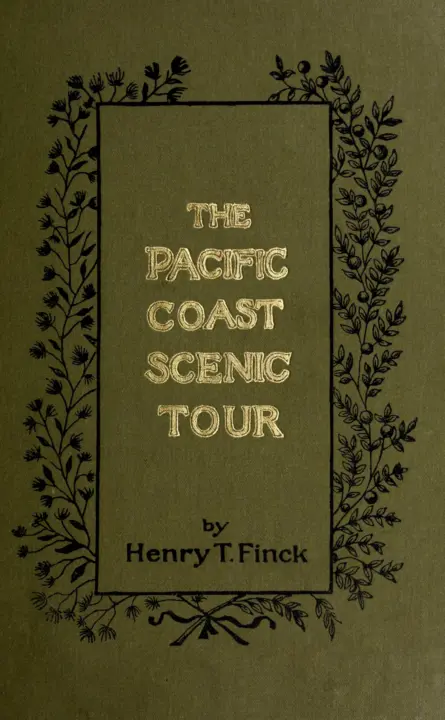
The Pacific Coast scenic tour
Henry T. Finck
THE CLASSIC COLLECTION · 1887
"Romantic Love and Personal Beauty" by Henry T. Finck is a scientific examination of emotional experiences written in the late 19th century. The book explores the evolution and nuances of romantic love, analyzing its impact on personal beauty, cultural aspects, and historical variations. Finck delves into the psychology behind love, its biological underpinnings, and the social constructs surrounding it, attempting to provide a comprehensive understanding of romance as a significant aspect of human experience. The opening of the text introduces the complex topic of romantic love by debunking common myths that suggest it has remained unchanged throughout history. It presents the idea that modern romantic love is actually a relatively recent sentiment, differentiating it from earlier forms of love such as conjugal love often celebrated in ancient literature. Finck begins with a critique of previous assertions and leads into a detailed examination of various elements that shape romantic affection, including individual preference and jealousy, while linking these to broader biological and cultural themes. This opening sets the stage for a thorough exploration of how love has evolved and manifests in contemporary society, indicating an analytical approach to a deeply personal subject.
Introduction adapted from the source catalogue; source summaries may be automatically generated.
Free to read · English · 241,219 words · No account needed
MAKE TIME FOR A GOOD BOOK
On by default. Untick to stop anonymous reading totals. Each page counts after 10 seconds in view. How this works.
Anonymous counting is on unless you have switched it off.
Jaeger, G.: personal perfumery, 446
James, Henry: American women, 158;
Daisy Miller, 295
Japan: jealousy, 129, 133
Jaws, the, 408
Jealousy: an overtone of Love, 30;
among animals, 39;
moral mission of, 62;
occasional absence among savages, 62;
Greek, 77;
mediæval, 103;
modern, 127-133;
retrospective and prospective, 131;
aroused by Beauty, 133, 172;
conjugal, 184;
Oriental, 185;
morbid, 221
Jeffrey: on Taste, 328;
theory of Beauty, 335
Jews. See Hebrews
Johnson, Dr.: second Love, 135;
marriage and Love, 258
Jowett, Prof.: Sokrates, love and friendship, 258
Kant: women ensnared by counterfeit lovers, 243;
value of smiles, 421
Karr, A.: Woman’s Love, 259
Keats: amorous hyperbole, 163;
paradox, 168;
Beauty and Love, 177;
love-letters, 246-248
Kissing, 142, 227;
among animals, 227;
savages, 228;
origin of, 229;
ancient, 232;
mediæval, 233;
modern, 234;
love-kisses, 235;
art of, 237;
varieties of, 414;
on the ears, 432;
cheeks, 425
Knight: Beauty and utility, 336, 340
Knille: Italian Beauty, 514
Kollmann, Prof.: feminine Beauty, 342;
walking, 371;
muscular development, 373;
gait, 374;
breasts, 395;
face, 411;
nose, 436;
hair, 502;
results of crossing, 320
Koran, the: on woman’s soul, 94
Krafft-Ebing: Insanity and Love, 173, 222
La Bruyère: how to win love, 244;
on use of paint, 459
Lacing: fatal to Beauty, 379
Lamartine: genius and Love, 210;
love-affairs, 252
Lamb, Chas.: amorous paradoxes, 166;
love-affairs, 212
Language of Love: words, 223;
facial expression, 224;
caresses, 225;
kissing, 227
La Rochefoucauld: Love and friendship, 26;
and absence, 256
Lathrop, G. P.: Love-making in Spain, 278;
Spanish Beauty, 518
Laughter, 421
Lavater: chin, 412;
ocular lustre, 470
Lawson, F. P.: effect of education on Beauty, 324
Leanness, 304, 382;
how to cure, 384
Lecky: on kindness to animals, 18;
family affections among Greeks, 75;
asceticism and chastity, 93;
feminine devotion, 160;
southern type of Beauty, 501
Lenau: love-letters, 248;
music and Love, 257
Leo, Judah: on Love, 4
Lessing: every woman a shrew, 259
Life: prolonged through hygienic care, 316
Lips, 227, 231;
expression of scorn, 410;
refined, 413;
lip language, 414;
effect on, of æsthetic culture, 419
Liszt, 199
London, 435
Longfellow, 264
Love-charms (and calls): among animals, 50;
for women, 250, 426
Love-dramas, among flowers, 9
Love-maxims: Hindoo, 11
Love, Romantic: a modern sentiment, 1, 180;
superior to friendship, 26;
to maternal love, 27;
secures to man the benefits of cross-fertilisation, 28;
overtones of, 29;
a great moral, æsthetic and hygienic force, 28, 97;
among animals, 33;
savages, 54;
Egyptians, 67;
Hebrews, 69;
ancient Aryans, 72;
more traces of modern in Indian poetry than in Greek and Roman, 73;
among Greeks, 75;
origin of, 85;
among Romans, 86;
Mediæval, 92;
wooing and waiting, 101;
dependent on refinement, 101;
maid versus married woman, 105;
birth of modern, 109;
order of development proved, 111;
at the altar, 113;
in novels, 113;
pleasure of pursuit, 115;
value of procrastination, 116, 118;
coyness lessens woman’s, 119;
masculine deeper than feminine, 120, 259, 272;
modern jealousy, 127;
passion or admiration, 130;
is transient, 135, 180;
is first best? 136;
Heine on first, 137;
first is not best, 137;
individual versus the species, 139;
coquetry, 142;
opposed by rank, 143;
intensifies emotions, 147;
stimulates social sympathy, 149;
selfish aspect of, 151;
at first sight, 38, 152;
inspired by a fine figure, 154;
by sympathy, 156;
responsible for general growth of Gallantry, 158;
refines men, 159;
impels toward self-sacrifice, 159, 161;
in France, 162;
emotional hyperbole, 162, 175;
intoxication of, 163;
honeymoon, 164;
mixed moods and paradoxes, 166;
course of true, 170;
lunatic, lover, and poet, 172;
and conjugal, 173;
individual choice, 174;
and culture, 176;
idealised by Beauty, 177-180;
responsible for Beauty, 177;
differs from conjugal, 180;
elements of, in conjugal affection, 184;
makes men embarrassed, 187;
free choice does not always imply Love, 188;
eliminates ugly and masculine women, 190;
inspired by Beauty, 194;
a duty, 196;
must be mutual, 196;
genius is amorous, 201;
a creative impulse, 202;
imagined is real, 203;
arouses genius, 204;
precocious, 204;
most intense in men of genius, 208;
fickle, 210, 216;
loving two at once, 213;
“sublimed” by Beauty, 218;
pathologic analogies, 218;
erotomania, 222;
language of, 223;
facial expression of, 224;
caresses, 225;
kissing, 227;
how to win, 237-255;
feminine, and genius, 242;
effects of, 242;
compliments, 244;
love-letters not necessarily slovenly, 247;
extracts from, 247-250;
charms for women, 251;
masculine, and vanity, 252;
opposed to viragoes, 252;
proposing, 253;
signs and tests of, 254;
how to cure, 255;
effect of absence on, 256;
effects of marriage on, 257;
poisoned by humiliation, 263;
versus Love, 264;
chances of recovery, 265;
national peculiarities, 265;
massacred in France, 266;
Italian, 274, 276;
Spanish, 277;
German, 280;
English, 288, 299;
American, 294;
a cause of Beauty, 280, 301, 309;
points out woman’s sphere, 292;
obedience to, a moral duty, 286;
Schopenhauer’s theory of, 301-310;
sources of, 303;
complementary, explanation of, 307;
leads to happy marriages, 309;
a source of Beauty, 322;
displaces cruel Natural Selection, 323, 424;
is inspired by grace, 344, 357, 362;
more concerned with form than with colour, 347;
guided by subtle signs, 349;
individualisation and “beauty-spots,” 350;
neglects no detail of Beauty, 351;
the object of dancing, 365;
killed by fashionable deformity, 380;
feminine and masculine, 401;
maintains æsthetic proportion, 412;
related to Health and Beauty, 415;
beautifies the face, 324, 418;
special expression of, 418;
beautifies the lips, 420;
the cheeks, 424;
and fresh air, 426;
and blushes, 429;
inspired by a musical voice, 435;
beautifies the nose, 440;
eliminates high feminine foreheads, 448, 450;
method of amorous selection, 458;
awakens the sense of beauty, 458;
banishes rouge, 459;
inspired by eyes, 464, 482;
beautifies the eyes, 469;
eyebrows, 474, 485;
large pupils, 479;
musculus amatorius, 482;
killed by sunken eyes, 483;
preserves the hair, 492;
favours brunettes, 305, 497, 529;
eye-lashes, 503;
and Beauty, 508;
favours small women, 520;
versus reason, 522;
and Beauty in England, 534;
sexual differentiation, 541;
in America, 541;
age of, 542
Lovers: selfish bores, 135, 147;
quarrels, 170;
musician and poet for, 169;
falsetto, 224, 436
Love-sickness: real, 222
Love-stories; none in Greek literature, 76
Lubbock, Sir J.: on flowers and insects, 8;
absence of certain emotions in savages, 55;
kissing, 228
Lungs: hygiene of, 398
Lustre, 345;
in eyes, 469, 476
Luther: and marriage, 97
Lynn-Linton, Mrs.: Girl of the Period, 187
Your reading position is saved on this browser. Take it to another device with a library code. Reading pages adapt to text, rather than matching a printed edition.
Henry T. Finck
Henry T. Finck
Henry T. Finck
Henry T. Finck
BEHIND THE BOOK
This eBook is for the use of anyone anywhere in the United States and most other parts of the world at no cost and with almost no restrictions whatsoever. You may copy it, give it away or re-use it under the terms of the Project Gutenberg License included with this eBook or online at www.gutenberg.org. If you are not located in the United States, you will have to check the laws of the country where you are located before using this eBook. Read the source licence.
The original source file, including credits and licence, is retained by this library. Request an original-format copy at no charge. Please include the book title and Project Gutenberg identifier #60054.
KEEP YOUR CURIOSITY GOING

Charles G. (Charles Griffith) Ross
Hannah Webster Foster

Emily Lawless
Edwin Hamlin Carr

Charles De Lano Hine
Andrew Ure