
The Pacific Coast scenic tour
Henry T. Finck
THE CLASSIC COLLECTION · 1887
"Romantic Love and Personal Beauty" by Henry T. Finck is a scientific examination of emotional experiences written in the late 19th century. The book explores the evolution and nuances of romantic love, analyzing its impact on personal beauty, cultural aspects, and historical variations. Finck delves into the psychology behind love, its biological underpinnings, and the social constructs surrounding it, attempting to provide a comprehensive understanding of romance as a significant aspect of human experience. The opening of the text introduces the complex topic of romantic love by debunking common myths that suggest it has remained unchanged throughout history. It presents the idea that modern romantic love is actually a relatively recent sentiment, differentiating it from earlier forms of love such as conjugal love often celebrated in ancient literature. Finck begins with a critique of previous assertions and leads into a detailed examination of various elements that shape romantic affection, including individual preference and jealousy, while linking these to broader biological and cultural themes. This opening sets the stage for a thorough exploration of how love has evolved and manifests in contemporary society, indicating an analytical approach to a deeply personal subject.
Introduction adapted from the source catalogue; source summaries may be automatically generated.
Free to read · English · 241,219 words · No account needed
MAKE TIME FOR A GOOD BOOK
On by default. Untick to stop anonymous reading totals. Each page counts after 10 seconds in view. How this works.
Anonymous counting is on unless you have switched it off.
According to Mr. Ruskin, “woman’s work is—(1) To please people. (2) To feed them in dainty ways. (3) To clothe them. (4) To keep them orderly. (5) To teach them.”
Statistics concerning the employments instinctively sought by the majority of women bear out Mr. Ruskin’s table quite well. Woman’s first duty is to please people by being beautiful, amiable, and fascinating in conversation and manners. No man would marry a woman unless she pleased him in one way or another; hence matrimony is the most successful female profession, which in England includes 4,437,962 women. But there are other ways in which women seek to please and prosper; hence there are in England 2368 actresses as against 2197 actors, and 11,376 women whose profession is music, as against 14,170 men.
Domestic service, which includes the “feeding in dainty ways” (though too often the “dainty” must be omitted), employs 1,230,406 women in England—about 30,000 fewer than industrial employments, which are somewhat more popular owing to the greater individual liberty they allow the employed. Yet domestic service is a much better preparation for married life than labour in a manufactory; so that, other things being equal, a labouring man looking for a wife would be apt to select one who has learned how to take care of his home. This thought ought to help to render domestic service more popular.
“To clothe them.” Dressmaking, staymaking (alas!), and millinery, employ 357,995 women in England.
“To keep them orderly.” Bathing and washing service employ 176,670 women; medicine and nursing, almost 50,000; missions, 1660.
“To teach them.” This, one of woman’s special vocations, eminently suited to her capacity, employs 123,995 females.
If I have failed in correctly interpreting Mr. Ruskin’s oracle, I stand subject to correction from that earnest labourer in the task of finding for woman her proper sphere—a work for which he has not yet received the recognition and thanks he deserves.
That marriage, and not miscellaneous employment, is woman’s true destiny, is shown by the way in which Cupid influences statistics. Thus there are in England about 29,000 school-mistresses aged 15-20, and 28,500 aged 25-45; but the time from 20-25, the period of courtship and marriage, has only 21,000. In the case of dressmakers this fact is brought out still more strikingly: 15-20—84,000; 20-25—76,000; 25-45—129,000, in round numbers.
Although, therefore, as Emerson remarks, “the circumstances may be easily imagined in which woman may speak, vote, argue cases, legislate, and drive coaches, if only it comes by degrees,” facts show that there is more philosophy of the future in Mrs. Hawthorne’s remark that “Home, I think, is the great arena for women, and there, I am sure, she can wield a power which no king or emperor can cope with.”
Your reading position is saved on this browser. Take it to another device with a library code. Reading pages adapt to text, rather than matching a printed edition.
Henry T. Finck
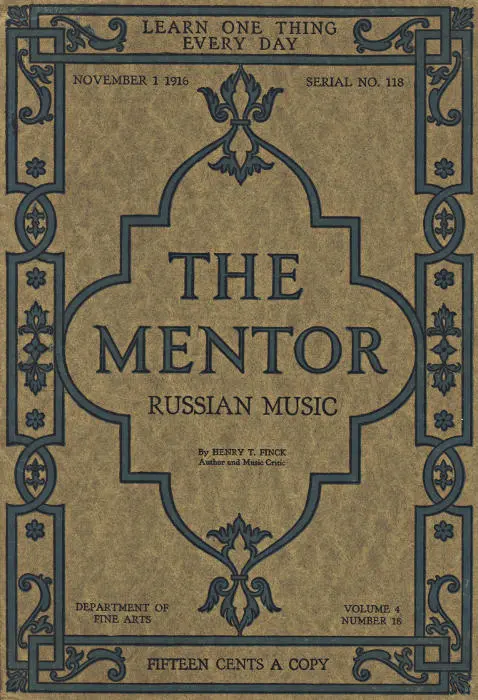
Henry T. Finck
Henry T. Finck
Henry T. Finck
BEHIND THE BOOK
This eBook is for the use of anyone anywhere in the United States and most other parts of the world at no cost and with almost no restrictions whatsoever. You may copy it, give it away or re-use it under the terms of the Project Gutenberg License included with this eBook or online at www.gutenberg.org. If you are not located in the United States, you will have to check the laws of the country where you are located before using this eBook. Read the source licence.
The original source file, including credits and licence, is retained by this library. Request an original-format copy at no charge. Please include the book title and Project Gutenberg identifier #60054.
KEEP YOUR CURIOSITY GOING

Charles G. (Charles Griffith) Ross
Hannah Webster Foster

Emily Lawless
Edwin Hamlin Carr

Charles De Lano Hine
Andrew Ure