THE CLASSIC COLLECTION✦A dead man’s diaryCLASSIC FREE BOOKS
A dead man’s diary
Coulson Kernahan
THE CLASSIC COLLECTION · 1909
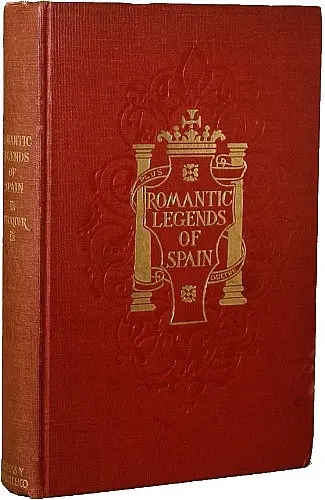
"Romantic Legends of Spain" by Gustavo Adolfo Bécquer is a collection of short stories written in the late 19th century. The tales blend elements of folklore, romance, and the supernatural, exploring the rich traditions and legends of Spanish culture. Through intricate narratives, the author delves into themes of love, loss, and the mystical, often featuring enchanting characters that evoke the spirit of bygone eras. The opening of the collection introduces readers to the poignant story of Master Pérez, the blind organist at a convent in Seville who is dedicated to his craft and beloved by the townsfolk. As Christmas Eve approaches, he is determined to play the Midnight Mass despite his ailing health, illustrating his deep connection to both music and faith. His miraculous performance in the church, which draws tears from the audience, becomes an emotional crescendo that leads to his passing, leaving the townspeople to grapple with the loss of their cherished musician. This initial tale sets the tone for the collection, blending reverence for tradition with the haunting beauty of Bécquer's prose.
Introduction adapted from the source catalogue; source summaries may be automatically generated.
Free to read · English · 89,207 words · No account needed
MAKE TIME FOR A GOOD BOOK
On by default. Untick to stop anonymous reading totals. Each page counts after 10 seconds in view. How this works.
Anonymous counting is on unless you have switched it off.
varied forms. Yet the most dangerous, those who with sweet words win their way into the hearts of maidens and dazzle them with magnificent promises, are the gnomes. The gnomes live in the inner recesses of the mountains; they know their subterranean roads and, eternal guardians of the treasures hidden in the heart of the hills, they keep watch day and night over the veins of metal and the precious stones. Do you see--” continued the old man, pointing with the stick which served him for a prop to the summit of the Moncayo, that rose at his right, looming dark and gigantic against the misted, violet sky of twilight--“do you see that mighty mass still crowned with snow? In its deep cavities these diabolical spirits have their dwellings. The palace they inhabit is terrible and glorious to see. Many years ago a shepherd, following some stray of his flock, penetrated into the mouth of one of those caves whose entrances are covered by thick growths of bushes and whose outlets no man has ever seen. When he came back to the village, he was pale as death; he had surprised the secret of the gnomes; he had breathed their poisonous atmosphere, and he paid for his rashness with his life; but before he died he related marvellous things. Going on along that cavern, he had come at last to vast subterranean galleries lighted by a fitful, fantastic splendor shed from the phosphorescence in the rocks, which there were like great boulders of quartz crystallized into a thousand strange, fantastic forms. The floor, the vaulted ceiling and the walls of those immense halls, the work of nature, seemed variegated like the richest marbles; but the veins which crossed them were of gold and silver, and among those shining veins, as if incrusted in the rock, were seen jewels, a multitude of precious stones of all colors and sizes. There were jacinths and emeralds in heaps, and diamonds and rubies, and sapphires and--how should I know?--many other gems unrecognized--more than he could name but all so great and beautiful that his eyes dazzled at the sight. No noise of the outer world reached the depths of that weird cavern; the only perceptible sounds were, at intervals, the prolonged and pitiful groans of the air which blew through that enchanted labyrinth, a vague roar of subterranean fire furious in its prison, and murmurs of running water which flowed on not knowing whither they went. The shepherd, alone and lost in that immensity, wandered I know not how many hours without finding any outlet, until at last he chanced upon the source of a spring whose murmur he had heard. This broke from the ground like a miraculous fountain, a leap of foam-crowned water that fell in an exquisite cascade, singing a silver song as it slipped away through the crannies of the rocks. About him grew plants that he had never seen, some with wide, thick leaves, and others delicate and long like floating ribbons. Half hidden in that humid foliage were running about a number of extraordinary creatures, some of them manlike, some reptilian, or both at once, changing shape continually, at one moment appearing like human beings, deformed and tiny, the next like gleaming salamanders or fugitive flames that danced in circles above the tip of the fountain-jet. There, darting in all directions, running across the floor in form of repugnant, hunchbacked dwarfs, scrambling up the walls, wriggling along, reptile-shaped, in their slime, dancing like Will-o-the-wisps on the pool of water, went the gnomes, the lords of those recesses, counting over and shifting from place to place their fabulous riches. They know where misers store those treasures which, afterwards, the heirs seek in vain; they know the spot where the Moors, before their flight, hid their jewels; and the ornaments which are lost, the money that is missing, everything that has value and disappears, they search for, find and steal, to hide in their caves, for they know how to go to and fro through all the world by secret, unimagined paths beneath the earth. So there they were keeping stored up in heaps all manner of rare and precious things. There were jewels of inestimable worth; chains and necklaces of pearls and exquisite gems; golden jars of classic form, full of rubies; chiseled cups, armor richly wrought, coins with images and superscriptions that it is no longer possible to recognize or decipher; treasures, in short, so fabulous and limitless that scarcely may imagination picture them. And all glittered together, flashing out such vivid sparks of light and color that it seemed as if the whole hoard were on fire, quivering and wavering. At least, the shepherd said that so it had seemed to him.” At this point the old patriarch paused a moment. The girls, who in the beginning had hearkened to Uncle Gregorio’s story with a mocking smile, now maintained unbroken silence, hoping that he would go on,--waiting with frightened eyes, with lips slightly parted, and with curiosity and interest depicted on their faces. One of them finally broke the hush, and unable to control herself, exclaimed, fascinated with the account of the fabulous riches which had met the shepherd’s view:
Your reading position is saved on this browser. Take it to another device with a library code. Reading pages adapt to text, rather than matching a printed edition.
BEHIND THE BOOK
This eBook is for the use of anyone anywhere in the United States and most other parts of the world at no cost and with almost no restrictions whatsoever. You may copy it, give it away or re-use it under the terms of the Project Gutenberg License included with this eBook or online at www.gutenberg.org. If you are not located in the United States, you will have to check the laws of the country where you are located before using this eBook. Read the source licence.
The original source file, including credits and licence, is retained by this library. Request an original-format copy at no charge. Please include the book title and Project Gutenberg identifier #50044.
KEEP YOUR CURIOSITY GOING
Coulson Kernahan

Maurice Baring
Frances Wright
Cécile Tormay
Francis Greenleaf Allinson & Anne C. E. (Anne Crosby Emery) Allinson

Frederic Jesup Stimson