THE CLASSIC COLLECTION✦Little Guzzy, and other storiesCLASSIC FREE BOOKS
Little Guzzy, and other stories
John Habberton
THE CLASSIC COLLECTION · 1880
"Romance of California Life" by John Habberton is a collection of humorous and poignant sketches set in the mid-19th century, reflecting the lives and characters of people in California during the gold rush era. The book explores various narratives that blend both lightheartedness and serious themes, primarily focusing on the relationships, challenges, and adventures of its characters, including miners, teachers, and townsfolk. The beginning of the work introduces us to the small mining community of Bottle Flat, where the arrival of a new schoolteacher, Miss Huldah Brown, stirs up unexpected reactions among the miners who initially oppose her presence. As the miners gather to express their disdain, their plans to intimidate the teacher are derailed when she shows up, completely different from their expectations. Miss Brown's arrival sets off a series of events that lead the miners to reconsider their prejudices against education and women, creating a lighthearted yet insightful look into community dynamics and personal transformations.
Introduction adapted from the source catalogue; source summaries may be automatically generated.
Free to read · English · 139,975 words · No account needed
MAKE TIME FOR A GOOD BOOK
On by default. Untick to stop anonymous reading totals. Each page counts after 10 seconds in view. How this works.
Anonymous counting is on unless you have switched it off.
The major tried to wash his heart out of his throat with a sip of coffee, and succeeded but partially; yet the appealing look of his favorite, added to the unconscious pathos of his tone, restored to him his self-command, and he replied:
"I'll do it, Fred, right away."
"Don't spoil your breakfast for it; any time this morning will do," said the lieutenant, as the major arose from the table. But the veteran needed an excuse for leaving his breakfast untouched, and he rather abruptly stepped upon, the piazza and indulged in a thoughtful promenade.
"Write just as if you were doing it for yourself."
The young man's words rang constantly in his ears, and before the major had thought many moments, he determined to do exactly what he was asked to do.
This silly performance of the lieutenant's would, of course, put an end to the acquaintanceship of the major and Mrs. Wittleday, unless that lady were most unusually gracious. Why should he not say to her, over the subaltern's name, all that he had for years been hoping for an opportunity to say? No matter that she would not imagine who was the real author of the letter--it would still be an unspeakable comfort to write the words and know that her eyes would read them--that her heart would perhaps--probably, in fact--pity the writer.
The major seated himself, wrote, erased, interlined, rewrote, and finally handed to the lieutenant a sheet of letter-paper, of which nearly a page was covered with the major's very characteristic chirography.
"By gracious, major!" exclaimed the lieutenant, his face having lightened perceptibly during the perusal of the letter, "that's magnificent! I declare, it puts hope into me; and yet, confound it, it's plaguy like marching under some one else's colors."
"Never mind, my boy, copy it, sign it, and send it over, and don't hope
too much."
The romantic young brave copied the letter carefully, line for line; he spoilt several envelopes in addressing one to suit him, and then dispatched the missive by the major's servant, laying the rough draft away for future (and probably sorrowful) perusal.
The morning hours lagged dreadfully. Both warriors smoked innumerable cigars, but only to find fault with the flavor thereof.
The lieutenant tried to keep his heart up by relating two or three stories, at the points of each of which the major forced a boisterous laugh, but the mirth upon both sides was visibly hollow. Dinner was set at noon, the usual military dinner-hour, but little was consumed, except a bottle of claret, which the major, who seldom drank, seemed to consider it advisable to produce.
Your reading position is saved on this browser. Take it to another device with a library code. Reading pages adapt to text, rather than matching a printed edition.
John Habberton
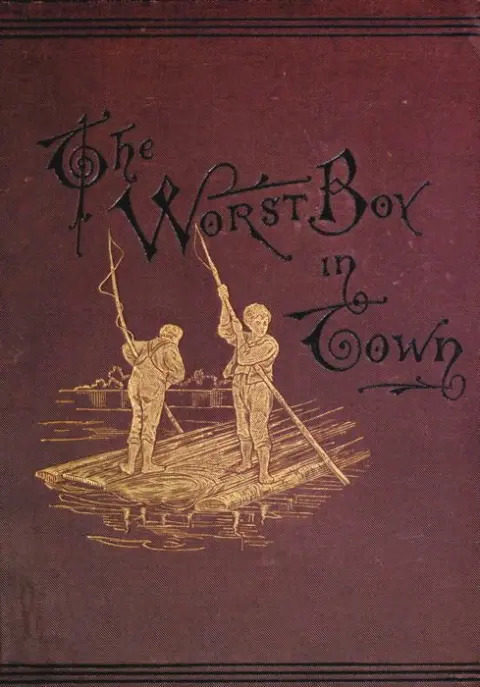
John Habberton
John Habberton
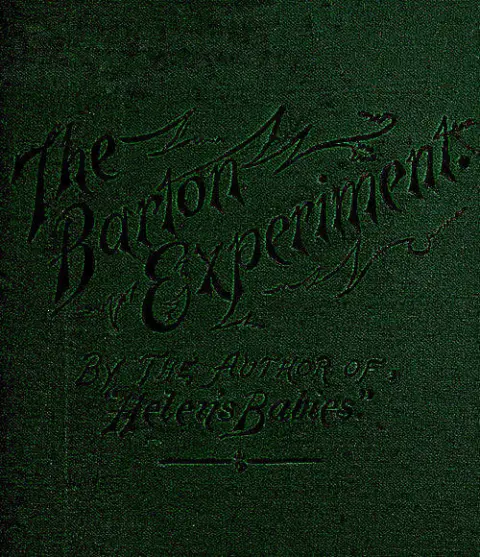
John Habberton
BEHIND THE BOOK
This eBook is for the use of anyone anywhere in the United States and most other parts of the world at no cost and with almost no restrictions whatsoever. You may copy it, give it away or re-use it under the terms of the Project Gutenberg License included with this eBook or online at www.gutenberg.org. If you are not located in the United States, you will have to check the laws of the country where you are located before using this eBook. Read the source licence.
The original source file, including credits and licence, is retained by this library. Request an original-format copy at no charge. Please include the book title and Project Gutenberg identifier #13832.
KEEP YOUR CURIOSITY GOING
Coulson Kernahan

Maurice Baring
Frances Wright
Cécile Tormay

Frederic Jesup Stimson

W. H. P. (William Henry Pope) Jarvis