
Three generations
Maud Howe Elliott
THE CLASSIC COLLECTION · 1903
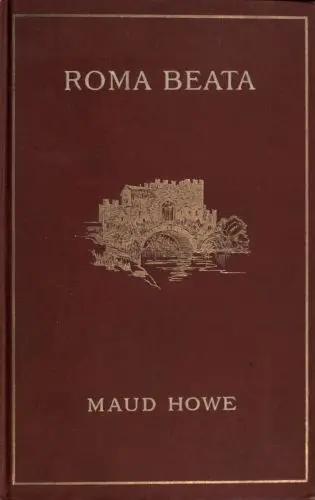
"Roma Beata; Letters from the Eternal City" by Maud Howe Elliott is a collection of letters written in the late 19th century. The book provides a vivid and personal account of life in Rome during a time of significant cultural and social change. Through the author's correspondence, readers can expect insights into her experiences as an expatriate embracing the intricacies of daily life, local customs, and the beauty of the Eternal City. The opening of the work sets the stage for the author's arrival in Rome and the adjustments she and her companion must make as they search for a home. Elliott describes their initial struggles with finding suitable accommodations and the comical interactions with their Italian landlady. As the narrative unfolds, the letters capture the sights, sounds, and daily rhythms of Roman life, from the vibrant markets and unique culinary delights to the challenges of household management. With humor and charm, the author paints a portrait of a city that is both intimate and grand, inviting readers to share in her journey through the complexities of living in Rome among its rich historical backdrop.
Introduction adapted from the source catalogue; source summaries may be automatically generated.
Free to read · English · 73,601 words · No account needed
MAKE TIME FOR A GOOD BOOK
On by default. Untick to stop anonymous reading totals. Each page counts after 10 seconds in view. How this works.
Anonymous counting is on unless you have switched it off.
In the pulpit who should be thundering away, whacking the dusty crimson cushions till the beautiful old carved pulpit shook, but our friend the parroco! He seemed so much in earnest that I paid two cents for a chair and sat down to listen to him. His subject was the erudition of Mary, “the most learned woman,” he said, “who has ever lived. Her knowledge of languages--she spoke at least twenty--proves this. She is known to have talked with Moabites, Samaritans, Egyptians, and other persons, to the number of twenty different nationalities.” The hypothesis that some of these persons may have spoken Aramaic, Mary’s own language, was not admitted by the preacher.
Coming out after church, I overheard one well-dressed contadina--senza cappello (without a hat), a social grade is marked by the wearing of a hat--say to another peasant woman,--
“My son has preached a new sermon on the Madonna on each of the thirty-one days of her month. He has done well.” I thought he had!
It was the parroco’s mother. She had the same soft dark eyes, the same mouth, the same smile--the mother for whose sake, as he himself told us, he became a priest. “Poverella,” he said, “it was her wish; I am all that she has; how could I disappoint her? and she believes that one day I shall receive the cardinal’s hat!”
He had come as he always does, the Saturday before Easter, to bless the house. Pompilia and Filomena had been on their marrow-bones for a week, rubbing, scrubbing, polishing, setting the house in order for the rite. On the kitchen dresser the prescribed food to be eaten on Easter Sunday was neatly arranged: eggs and mortadella for breakfast; lamb, green peas, a certain broth made with lemon and eggs, served only on this day of the year, and the sweet dish already prepared,--what the Italians call zuppa Inglese, and we call Italian cream! In a vase were carefully preserved the blossoms of wall flowers, stocks, and violets, from the sepulchre of Holy Thursday at the church near by in the Piazza Scossa Cavalli; these, according to tradition, must deck our Easter dinner table. It was four o’clock when the parroco reached our house. He was very smart in his neat beretta,--a high, square, black silk cap,--his best white linen cotta trimmed with handsome lace, freshly starched and ironed. It was “done up,” I’ll be bound, by that good brown mother of his. He was followed by an imp of a boy with the oddest snub nose, and hair growing almost down to his eyebrows, who made the responses and carried the silver holy-water vessel by a pair of enchanting wrought handles. We formed a procession, headed by the parroco and the imp; next came the padrona di casa (myself); behind me walked Pompilia the cook in the time-honored striped black silk which I had given to Nena, and she, “per miseria,” had sold to the cook; after her, Filomena, the prettiest girl in the Borgo, in her best blue frock and a rose in her hair; the procession was brought up in the rear by Nena,--the witch, the snuff-taker, the footman, the mainstay and comfort of the whole household. She had borrowed a clean apron, smoothed her rough, gray hair, and redeemed her coral beads and gold earrings from pawn at the Monte di Pieta. There were flowers everywhere in the house, the terrace had been rifled, roses, roses, roses, red, pink, saffron. In the very best vase were a single white rose from my mother’s favorite tree, the Catherine Cook, and one mammoth pink one from Captain Christy. We marched first to the salon, the most honorable room. The parroco dipped a silver sprinkler in the lustral water, which he sprinkled in four directions, north, south, east, west, saying as he did so, “Bless, O Lord, this place, that in it may be health, chastity, victory, virtue, humility, goodness, sweetness, the fulness of law and thanksgiving, and may this blessing abide in this place and upon all those who dwell herein.”
Your reading position is saved on this browser. Take it to another device with a library code. Reading pages adapt to text, rather than matching a printed edition.
Maud Howe Elliott
Maud Howe Elliott
Maud Howe Elliott
Maud Howe Elliott
BEHIND THE BOOK
This eBook is for the use of anyone anywhere in the United States and most other parts of the world at no cost and with almost no restrictions whatsoever. You may copy it, give it away or re-use it under the terms of the Project Gutenberg License included with this eBook or online at www.gutenberg.org. If you are not located in the United States, you will have to check the laws of the country where you are located before using this eBook. Read the source licence.
The original source file, including credits and licence, is retained by this library. Request an original-format copy at no charge. Please include the book title and Project Gutenberg identifier #58430.
KEEP YOUR CURIOSITY GOING
Wilfrid Scawen Blunt
Wilfrid Scawen Blunt

E. W. (Edgar Watson) Howe

David Patterson (Spirit) Hatch

David Patterson (Spirit) Hatch

David Patterson (Spirit) Hatch