The Girl From Tim’s Place
Charles Clark Munn
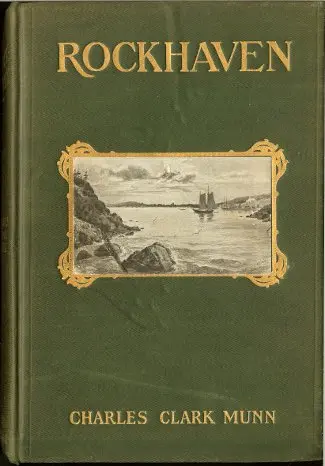
THE CLASSIC COLLECTION · 1902
"Rockhaven" by Charles Clark Munn is a novel written in the early 20th century. The narrative revolves around the intertwining lives of the residents of Rockhaven Island, touching upon themes of community, ambition, and romance, particularly through the experiences of characters like Jess Hutton and Winn Hardy. The story captures the essence of life on an isolated island, showcasing the struggles and camaraderie of the inhabitants. The opening of "Rockhaven" introduces us to Jess Hutton, a beloved local figure who has just sold a granite ledge for a surprising sum, much to the intrigue of his close-knit circle of friends. The scene unfolds in his general store during a celebratory gathering, where conversations bounce between local gossip and speculation about the eccentric buyer of the quarry. Amid this backdrop, Jess takes pride in his quirky storytelling as he reflects on his unexpected fortune, while the atmosphere is filled with camaraderie, humor, and hints of a budding romance involving the next chapter's protagonist, Winn Hardy, who arrives with ambitions to manage the quarry and integrate into the community. The rich details and vibrant interactions make it clear that life on Rockhaven is both challenging and full of opportunities for connection.
Introduction adapted from the source catalogue; source summaries may be automatically generated.
Free to read · English · 80,312 words · No account needed
MAKE TIME FOR A GOOD BOOK
On by default. Untick to stop anonymous reading totals. Each page counts after 10 seconds in view. How this works.
Anonymous counting is on unless you have switched it off.
"Some of them would," he answered, smiling at her earnestness, "but most of them would take advantage of it. World-wise men grow to be selfish." Then, as if the subject was distasteful, or her inquiries too pointed, he added, "Do you know what love is, Mona, and have you never had a lover among the young fishermen here?"
"T have read about it," she answered with perfect sincerity, and smiling at her own thought, "but I've never had much for any of the boys I've known; they smell too fishy."
This time Winn laughed heartily. "And is your nose the by-road to your
heart?" he asked.
"It may be," she replied, also laughing, "if I have one."
It was the first coquettish word she had so far uttered, and Winn did
not like it.
"That does not sound like you, Mona," he replied soberly, "your greatest charm, and it is a charm, is sincerity. When you speak that way you remind me of the ladies in my world, and I do not like them."
"And if I am always truthful," she said, "you will call me simple, won't
you?"
"No, I told you I admired that in you," he said, "but you have not answered my question, Mona. Have you never had a lover?"
"I have had two or three," she replied again, looking sober, "at least they said they loved me, but I did not return it."
And as Winn looked at the girlish figure, just showing the rounded curves of womanhood beneath its close-fitting blue flannel gown, and at the pansy face with eyes like one of those purple petals, fixed on him, he, manlike, thought how sweet it would be to moisten them with the dew of love's light and feel the touch of her velvety lips.
But should he try for that prize, and did he want it, if he could win
it?
The lowering sun had thrown the shadows of the spruce trees adown the gorge, the wind scarce ruffled the ocean and only the low lullaby of its undulations crept up the ravine. It was the parting of day and night, the good-by of sunshine, the peace of summer twilight.
"Now, Mona," he half whispered, as if fearing to scare the mermaids
away, "play 'Annie Laurie'!"
And lost to the world, he watched her bending over and caressing that old brown fiddle, even as a mother would press her baby's face to her own, again and once again came that whisper of a love that never dies, a refrain that holds the pathos of life and parting in its chords, a love cry centuries old, as sweet as heaven, as sad as death.
Your reading position is saved on this browser. Take it to another device with a library code. Reading pages adapt to text, rather than matching a printed edition.
BEHIND THE BOOK
This eBook is for the use of anyone anywhere in the United States and most other parts of the world at no cost and with almost no restrictions whatsoever. You may copy it, give it away or re-use it under the terms of the Project Gutenberg License included with this eBook or online at www.gutenberg.org. If you are not located in the United States, you will have to check the laws of the country where you are located before using this eBook. Read the source licence.
The original source file, including credits and licence, is retained by this library. Request an original-format copy at no charge. Please include the book title and Project Gutenberg identifier #33787.
KEEP YOUR CURIOSITY GOING
Coulson Kernahan

Maurice Baring
Frances Wright
Cécile Tormay

Frederic Jesup Stimson

W. H. P. (William Henry Pope) Jarvis