The Girl From Tim’s Place
Charles Clark Munn
THE CLASSIC COLLECTION · 1902
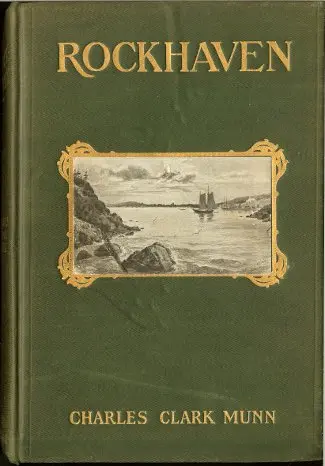
"Rockhaven" by Charles Clark Munn is a novel written in the early 20th century. The narrative revolves around the intertwining lives of the residents of Rockhaven Island, touching upon themes of community, ambition, and romance, particularly through the experiences of characters like Jess Hutton and Winn Hardy. The story captures the essence of life on an isolated island, showcasing the struggles and camaraderie of the inhabitants. The opening of "Rockhaven" introduces us to Jess Hutton, a beloved local figure who has just sold a granite ledge for a surprising sum, much to the intrigue of his close-knit circle of friends. The scene unfolds in his general store during a celebratory gathering, where conversations bounce between local gossip and speculation about the eccentric buyer of the quarry. Amid this backdrop, Jess takes pride in his quirky storytelling as he reflects on his unexpected fortune, while the atmosphere is filled with camaraderie, humor, and hints of a budding romance involving the next chapter's protagonist, Winn Hardy, who arrives with ambitions to manage the quarry and integrate into the community. The rich details and vibrant interactions make it clear that life on Rockhaven is both challenging and full of opportunities for connection.
Introduction adapted from the source catalogue; source summaries may be automatically generated.
Free to read · English · 80,312 words · No account needed
MAKE TIME FOR A GOOD BOOK
On by default. Untick to stop anonymous reading totals. Each page counts after 10 seconds in view. How this works.
Anonymous counting is on unless you have switched it off.
"I wish you had kept that money in your own hands," she said confidentially, "and used it to buy an interest in a paper. When I read your description of the reception this morning, it seemed to me that was your forte."
"Thanks for your compliment," he answered, "and I only wish you edited the paper now. But if you did, my pencil-pushing wouldn't strike you that way."
"But it really did," she continued, "and the best of it was what you didn't say, knowing, as I do, how you regard such affairs. Hiding your own opinion so well was fine art."
"I wasn't expected to express my views," he asserted, "but to flatter you all judiciously; that's what makes a paper popular."
"And do you think I wanted to be flattered?" she asked.
"Certainly," he replied, "you are a woman."
Ethel laughed.
"Personally, you are wrong; in general, right. I receive so much of it, it wearies me, knowing as I do how insincere it all is, but most of my sex, I'll admit, feel otherwise. But tell me why you haven't called for three weeks?"
It was a question he could not answer truthfully, and like all the
polite world he evaded it.
"My work is my excuse," he said; "and then I've not been in a mood for
sociability."
Ethel looked at him long and earnestly, reading him, as she read most
men, like an open book.
"Winn, my dear old friend," she said at last, in the open-your-heart tone so natural to her, "I made you a promise long ago and I shall keep it, so forgive my question. But you needn't fear me. I want to be your friend and feel you are mine, in spite of the old score and this new influence. And when you are ready to trust me, no one in the world shall be more worthy of it."
Then they drifted to commonplaces: she, as all women will, relating the gossip of her set and chatting of the latest opera, what was on at the theatres and the like. Now and then she let fall a word of quiet flattery, or what was more potent, one by inference; for Ethel Sherman was past-mistress in that art. And all the while she looked at Winn, smiling deference to his opinions and pointing hers about others with a keen wit so natural to her.
She played and sang, selecting as once before (and unfortunately, perhaps) the songs that carried his thoughts to Rockhaven.
So charming was she in all this, when she chose, that the evening sped by while Winn was unconscious of its lapse.
Your reading position is saved on this browser. Take it to another device with a library code. Reading pages adapt to text, rather than matching a printed edition.
BEHIND THE BOOK
This eBook is for the use of anyone anywhere in the United States and most other parts of the world at no cost and with almost no restrictions whatsoever. You may copy it, give it away or re-use it under the terms of the Project Gutenberg License included with this eBook or online at www.gutenberg.org. If you are not located in the United States, you will have to check the laws of the country where you are located before using this eBook. Read the source licence.
The original source file, including credits and licence, is retained by this library. Request an original-format copy at no charge. Please include the book title and Project Gutenberg identifier #33787.
KEEP YOUR CURIOSITY GOING
Coulson Kernahan

Maurice Baring
Frances Wright
Cécile Tormay

Frederic Jesup Stimson

W. H. P. (William Henry Pope) Jarvis