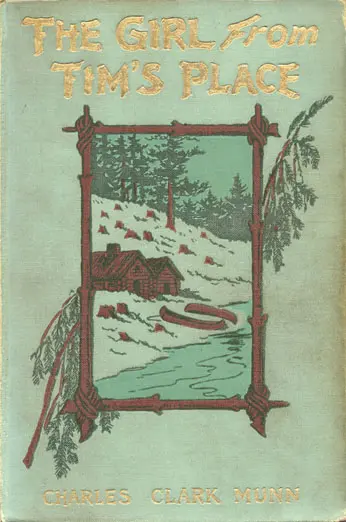
The Girl From Tim’s Place
Charles Clark Munn
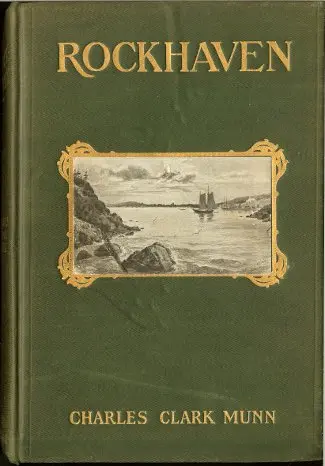
THE CLASSIC COLLECTION · 1902
"Rockhaven" by Charles Clark Munn is a novel written in the early 20th century. The narrative revolves around the intertwining lives of the residents of Rockhaven Island, touching upon themes of community, ambition, and romance, particularly through the experiences of characters like Jess Hutton and Winn Hardy. The story captures the essence of life on an isolated island, showcasing the struggles and camaraderie of the inhabitants. The opening of "Rockhaven" introduces us to Jess Hutton, a beloved local figure who has just sold a granite ledge for a surprising sum, much to the intrigue of his close-knit circle of friends. The scene unfolds in his general store during a celebratory gathering, where conversations bounce between local gossip and speculation about the eccentric buyer of the quarry. Amid this backdrop, Jess takes pride in his quirky storytelling as he reflects on his unexpected fortune, while the atmosphere is filled with camaraderie, humor, and hints of a budding romance involving the next chapter's protagonist, Winn Hardy, who arrives with ambitions to manage the quarry and integrate into the community. The rich details and vibrant interactions make it clear that life on Rockhaven is both challenging and full of opportunities for connection.
Introduction adapted from the source catalogue; source summaries may be automatically generated.
Free to read · English · 80,312 words · No account needed
MAKE TIME FOR A GOOD BOOK
On by default. Untick to stop anonymous reading totals. Each page counts after 10 seconds in view. How this works.
Anonymous counting is on unless you have switched it off.
"You seem to want an entire chapter of a novel in one breath," answered Winn, smiling. "How did you find out I brought any one to the city?"
"Oh, I am still able to read the papers," she laughed, "and Jack called the other evening. It's all over the city, as well as your firm's collapse and the part you played in it. Oh, you have become famous in a day, as it were, and people who have never set eyes on you are talking about you."
Winn smiled, for what man could resist such subtile flattery.
"I wasn't aware that I was a mark for gossip," he said, "though Weston & Hill must have been, and deservedly. I'm not sorry for Hill, however, for I despised him, but I rather liked Weston, even after I discovered he was a rascal, he was such a jolly, good-natured one."
"So Jack says," answered Ethel, "and happily indifferent as to whom he swindled. It was first come, first served, with him."
"He served Hill the worst dose," said Winn, "and it looks as if Hill were the ultimate object of his plot, and the rest of us only pawns in his game."
"You at least called 'checkmate' to him," answered Ethel, smiling admiration, "but tell me about the island. That is of more interest to me. The city end of this affair is now ancient history."
"Oh, the island is a poem," replied Winn, earnestly, "a spot to forget the world on and learn a new life. Its people are poor, but honest, kind, and truthful; their houses turkey coops, their customs ancient, their religion sincere, their livelihood gained by fishing, and the island a wild spruce-clad ledge of granite with bold sea-washed cliffs and an interior harbor that is a dream of peace, seldom rippled. There is an ancient beacon built by the Norsemen on a hill nine centuries ago, a ravine surpassingly grand with a cave called the Devil's Oven, and an old tide-mill at the head of their harbor, where a love-lorn girl once hanged herself."
"A charming spot, truly," said Ethel, "and if I had known all this last July, and there had been a comfortable hotel there, we should have summered on this delightful island instead of on the mountains."
"It would have amused you a week," replied Winn, smiling, "but not longer. There were no golf links or young dudes to flirt with there."
Ethel colored slightly.
"That is the worst of having friends," she said, "they are bound to gossip about one. I don't mind," she added gayly; "I am a flirt and admit it cheerfully, but what else are men good for?"
Your reading position is saved on this browser. Take it to another device with a library code. Reading pages adapt to text, rather than matching a printed edition.
BEHIND THE BOOK
This eBook is for the use of anyone anywhere in the United States and most other parts of the world at no cost and with almost no restrictions whatsoever. You may copy it, give it away or re-use it under the terms of the Project Gutenberg License included with this eBook or online at www.gutenberg.org. If you are not located in the United States, you will have to check the laws of the country where you are located before using this eBook. Read the source licence.
The original source file, including credits and licence, is retained by this library. Request an original-format copy at no charge. Please include the book title and Project Gutenberg identifier #33787.
KEEP YOUR CURIOSITY GOING
Coulson Kernahan

Maurice Baring
Frances Wright
Cécile Tormay

Frederic Jesup Stimson

W. H. P. (William Henry Pope) Jarvis