THE CLASSIC COLLECTION✦An outlaw’s diary: the CommuneCLASSIC FREE BOOKS
An outlaw’s diary: the Commune
Cécile Tormay
THE CLASSIC COLLECTION · 1899
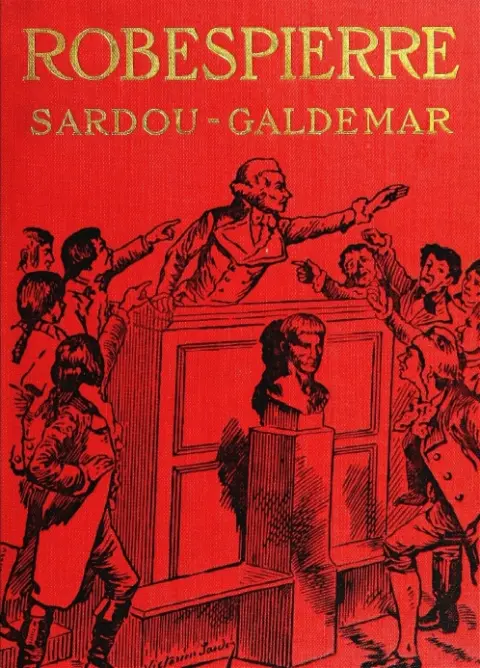
"Robespierre" by Ange Galdemar is a historical novel written in the late 19th century. The book is based on Victorien Sardou's play and explores the complex life of Maximilien Robespierre, a leading figure of the French Revolution. It delves into themes of power, ambition, and personal sacrifice amid the tumultuous backdrop of revolutionary France, focusing on characters such as Robespierre himself, Monsieur de Pontivy, and Clarisse. The opening of "Robespierre" introduces readers to the Hôtel de Pontivy, where we meet Monsieur de Pontivy as he searches for a lost document important for a secret debate in Parliament. Here, the reader is introduced to his daughter Clarisse, who navigates a sheltered life and shares a complicated relationship with both her father and Robespierre, her father's secretary. The tension rises as it becomes apparent that their lives are entwined through shared ambitions and the unacknowledged consequences of their interactions. The initial chapter sets the stage for the unfolding drama, hinting at themes of love, betrayal, and the heavy burdens of honor and reputation that will develop as the story progresses.
Introduction adapted from the source catalogue; source summaries may be automatically generated.
Free to read · English · 71,073 words · No account needed
MAKE TIME FOR A GOOD BOOK
On by default. Untick to stop anonymous reading totals. Each page counts after 10 seconds in view. How this works.
Anonymous counting is on unless you have switched it off.
And turning to Didier he asked--
"Where is he?"
"A few steps from here, at the police station of the Rue Saint-Florentin, where Héron has locked him up, pending your orders."
"Very well! Bid Héron bring him here; I wish to examine him
instantly."
The peremptory tone admitted no reply. Didier, wishing the company good-night, left the room with Simon Duplay, whom the Incorruptible had charged with several messages, and Cornélie, taking advantage of their departure, called Robespierre to the harpsichord.
"And now, I hope you will take a little notice of us," she said, coming towards him in half petulant, half coquettish mood.
Robespierre, softening at her approach, kissed her hand. Only let him have the time to answer a letter from his friend Saint-Just, and he would be entirely at her disposal. And he seated himself at the round table to write. Only Buonarotti played now. Lebas had laid down his violin, and whilst filling his pipe asked Robespierre for news of the Army of the North, where Saint-Just then was. All was going well there. Robespierre had also good news from his brother Augustin, then at Lyons, and on the point of returning. Augustin warmly recommended to him a young general of the artillery whom he had known at Nice, and who had already distinguished himself at Toulon.
"Augustin tells me that this young man could replace, to some
advantage, that drunkard Hauriot as commander of the armed force of
Paris."
Buonarotti, who was still at the harpischord, turned at the mention
of Toulon.
"Bonaparte?" he said.
Robespierre looked across. He knew him, then?
Yes, he knew him. They had lived together in Corsica. And as the Incorruptible asked what were the sentiments of the young soldier, he replied--
"Excellent. He is Republican to the core."
"Well, we shall see," said Robespierre, favourably inclined to a change, adverse as he was to the idea of a military commander remaining too long in the same post.
And he began his letter to Saint-Just, at the same time lending an ear to Lebas, who was telling Duplay of certain rumours coming from the army of the aspiration of some of its chiefs to the dictatorship. But Duplay interrupted him--
"Sapristi! I had almost forgotten!"
Robespierre raised his eyes inquiringly.
"I have a letter also to give you."
"From whom?" asked the Incorruptible, reassured as soon as he knew it
was only a letter.
"From a prisoner, I think, who very innocently confided it to one of our spies. It was given to me just now at the Tribunal."
Duplay searched in his pockets, and having found the letter, handed it to Robespierre, who continued writing.
Your reading position is saved on this browser. Take it to another device with a library code. Reading pages adapt to text, rather than matching a printed edition.
BEHIND THE BOOK
This eBook is for the use of anyone anywhere in the United States and most other parts of the world at no cost and with almost no restrictions whatsoever. You may copy it, give it away or re-use it under the terms of the Project Gutenberg License included with this eBook or online at www.gutenberg.org. If you are not located in the United States, you will have to check the laws of the country where you are located before using this eBook. Read the source licence.
The original source file, including credits and licence, is retained by this library. Request an original-format copy at no charge. Please include the book title and Project Gutenberg identifier #71538.
KEEP YOUR CURIOSITY GOING
Cécile Tormay

Moritz Busch
Coulson Kernahan
John L. Ransom

Maurice Baring
Frances Wright