THE CLASSIC COLLECTION✦An outlaw’s diary: the CommuneCLASSIC FREE BOOKS
An outlaw’s diary: the Commune
Cécile Tormay
THE CLASSIC COLLECTION · 1899
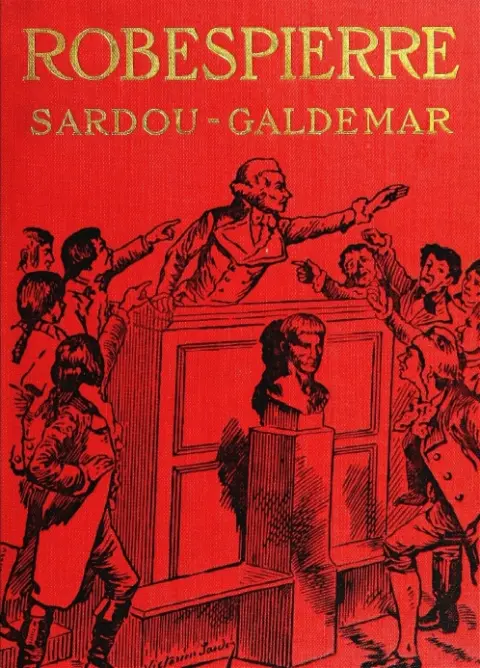
"Robespierre" by Ange Galdemar is a historical novel written in the late 19th century. The book is based on Victorien Sardou's play and explores the complex life of Maximilien Robespierre, a leading figure of the French Revolution. It delves into themes of power, ambition, and personal sacrifice amid the tumultuous backdrop of revolutionary France, focusing on characters such as Robespierre himself, Monsieur de Pontivy, and Clarisse. The opening of "Robespierre" introduces readers to the Hôtel de Pontivy, where we meet Monsieur de Pontivy as he searches for a lost document important for a secret debate in Parliament. Here, the reader is introduced to his daughter Clarisse, who navigates a sheltered life and shares a complicated relationship with both her father and Robespierre, her father's secretary. The tension rises as it becomes apparent that their lives are entwined through shared ambitions and the unacknowledged consequences of their interactions. The initial chapter sets the stage for the unfolding drama, hinting at themes of love, betrayal, and the heavy burdens of honor and reputation that will develop as the story progresses.
Introduction adapted from the source catalogue; source summaries may be automatically generated.
Free to read · English · 71,073 words · No account needed
MAKE TIME FOR A GOOD BOOK
On by default. Untick to stop anonymous reading totals. Each page counts after 10 seconds in view. How this works.
Anonymous counting is on unless you have switched it off.
"But we are not late, mamma!" said Cornélie, who had prudently
stopped to avoid being splashed.
"Not so very," answered the good woman, "but one never knows what may happen in such a crowd!" And looking towards Robespierre, from whom Victoire was taking his hat and stick, she added: "You can't help being anxious about people you love. Can you?"
But Robespierre was for the moment entirely occupied with his dog, who barked and jumped on his master in frantic delight.
"Yes, you good old dog, here I am! ... Yes! ... Yes! ... I couldn't take you with me, because of the crowd. It isn't fit for a good dog like you."
"Then there were many people?" asked Duplay, who smoked his pipe, seated on a joiner's bench near little Maurice, his son, who was amusing himself by planing a small plank.
"Yes, a great many."
"An enormous crowd," added Cornélie, "particularly on the Place de la
Révolution."
"What! You crossed the Place de la Révolution?"
Robespierre hastened to explain that Cornélie had had a fancy to come that way, which was, after all, excusable, as the people were dancing.
"What! Already?" asked Victoire, her eyes sparkling.
"Yes, already!" said Robespierre.
And he told them all about their walk through the strange crowd, so lively and so full of enthusiasm, turning now and then to Cornélie for corroboration. But Cornélie wore an absent air, replying only in monosyllables, for she had just learnt that her dress had not yet arrived; though she took some comfort on hearing that her sisters were in no better plight.
Mother Duplay, with arms akimbo, lingered to listen with enraptured interest to Robespierre's narrative.
"I said as much to Duplay! It will be a triumph."
Duplay here interrupted her.
"Well, are we to have supper to-night?"
"You may well ask, but when Maximilien talks I forget everything."
Then taking up her basket of salad, she called Victoire to help her. They used to dine out of doors when the weather was fine; the table was already there, and had only to be laid. Ah! that fête--how it turned everybody's head! Mother Duplay was certainly late, to her great discomfiture. Yes, she was late--she, the pink of punctuality.
"And the chicken will be burnt to a cinder!"
She ran to the kitchen, on the ground floor, next to the dining room, and found her youngest daughter, Madame Lebas, already there.
"I thought of it, mamma!" she said.
The chicken, nicely cooked to a golden brown, swimming in gravy, was
ready to be served.
Your reading position is saved on this browser. Take it to another device with a library code. Reading pages adapt to text, rather than matching a printed edition.
BEHIND THE BOOK
This eBook is for the use of anyone anywhere in the United States and most other parts of the world at no cost and with almost no restrictions whatsoever. You may copy it, give it away or re-use it under the terms of the Project Gutenberg License included with this eBook or online at www.gutenberg.org. If you are not located in the United States, you will have to check the laws of the country where you are located before using this eBook. Read the source licence.
The original source file, including credits and licence, is retained by this library. Request an original-format copy at no charge. Please include the book title and Project Gutenberg identifier #71538.
KEEP YOUR CURIOSITY GOING
Cécile Tormay

Moritz Busch
Coulson Kernahan
John L. Ransom

Maurice Baring
Frances Wright