THE CLASSIC COLLECTION✦An outlaw’s diary: the CommuneCLASSIC FREE BOOKS
An outlaw’s diary: the Commune
Cécile Tormay
THE CLASSIC COLLECTION · 1899
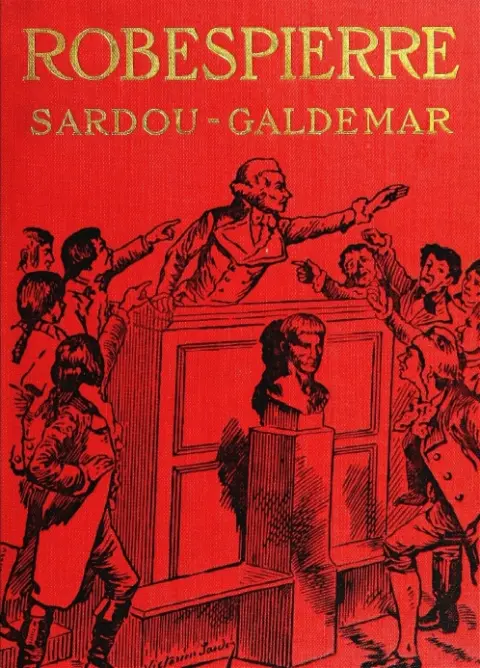
"Robespierre" by Ange Galdemar is a historical novel written in the late 19th century. The book is based on Victorien Sardou's play and explores the complex life of Maximilien Robespierre, a leading figure of the French Revolution. It delves into themes of power, ambition, and personal sacrifice amid the tumultuous backdrop of revolutionary France, focusing on characters such as Robespierre himself, Monsieur de Pontivy, and Clarisse. The opening of "Robespierre" introduces readers to the Hôtel de Pontivy, where we meet Monsieur de Pontivy as he searches for a lost document important for a secret debate in Parliament. Here, the reader is introduced to his daughter Clarisse, who navigates a sheltered life and shares a complicated relationship with both her father and Robespierre, her father's secretary. The tension rises as it becomes apparent that their lives are entwined through shared ambitions and the unacknowledged consequences of their interactions. The initial chapter sets the stage for the unfolding drama, hinting at themes of love, betrayal, and the heavy burdens of honor and reputation that will develop as the story progresses.
Introduction adapted from the source catalogue; source summaries may be automatically generated.
Free to read · English · 71,073 words · No account needed
MAKE TIME FOR A GOOD BOOK
On by default. Untick to stop anonymous reading totals. Each page counts after 10 seconds in view. How this works.
Anonymous counting is on unless you have switched it off.
Voices and sounds of applause interrupted the marquise, and cries of "Bravo! Bravo! That was very good!" were heard. A young girl, her arms tied behind her back, was bowing from the top of a ladder on which she was standing, and to which she had mounted by the aid of chairs and stools placed upon tables and benches. As she tried to descend all arms proffered assistance, and when she had reached the ground another lady came forward, the Marquise d'Avaux, whom Madame de Choiseul named to Olivier, and began to climb the improvised ascent with faltering steps.
Clarisse, Thérèse, and Olivier watched this performance, understanding nothing of it. Madame de Choiseul looked at them to note their expression, and with one accord the three turned to question her--
"That is a new game, is it not?"
"Yes, and a rather gloomy one," answered Madame de Choiseul. Then
she added solemnly, "Those ladies are learning how to walk to the
scaffold."
She explained to them that the wooden steps which the condemned had to climb to reach the guillotine were difficult to ascend. The women encountered serious obstacles in mounting, being without the assistance of their hands, which were tied behind them. They stumbled and slipped, their dresses sometimes catching in the woodwork, to the great amusement of the rabble crowd.
"It is to avoid these accidents," she said, "and to be able to meet their martyrdom respected by the mob, that they rehearse the role which they may be called upon to play on the morrow, perhaps, in public."
Olivier was dumb with admiration before this contempt of the scaffold, the general resignation to the thought of death.
Presently peals of laughter were heard. The Marquise d'Avaux, just before reaching the last stool, caught her dress on the back of a chair. She laughed with the rest, and said gaily, showing her torn skirt--
"Some more work for this evening!"
"You see," continued Madame de Choiseul, "what the indifference which revolted you so much just now hides in reality. Many of those young women keep up the failing courage of the men at the scaffold, and offer to die first."
But Clarisse, whose curiosity was now satisfied, tried to turn attention from these gloomy subjects, her mother's heart telling her they would reawaken Olivier's apprehensions. She soon found a pretext. Madame de Narbonne passed them with her little girl, holding a basket of fruit, of which the child partook without restraint.
"What lovely cherries!" exclaimed Clarisse.
Madame de Narbonne stopped to offer her some, but Clarisse declined,
and when pressed, said--
"Not for me, thanks; but my niece will perhaps taste them."
Your reading position is saved on this browser. Take it to another device with a library code. Reading pages adapt to text, rather than matching a printed edition.
BEHIND THE BOOK
This eBook is for the use of anyone anywhere in the United States and most other parts of the world at no cost and with almost no restrictions whatsoever. You may copy it, give it away or re-use it under the terms of the Project Gutenberg License included with this eBook or online at www.gutenberg.org. If you are not located in the United States, you will have to check the laws of the country where you are located before using this eBook. Read the source licence.
The original source file, including credits and licence, is retained by this library. Request an original-format copy at no charge. Please include the book title and Project Gutenberg identifier #71538.
KEEP YOUR CURIOSITY GOING
Cécile Tormay

Moritz Busch
Coulson Kernahan
John L. Ransom

Maurice Baring
Frances Wright