THE CLASSIC COLLECTION✦An outlaw’s diary: the CommuneCLASSIC FREE BOOKS
An outlaw’s diary: the Commune
Cécile Tormay
THE CLASSIC COLLECTION · 1899
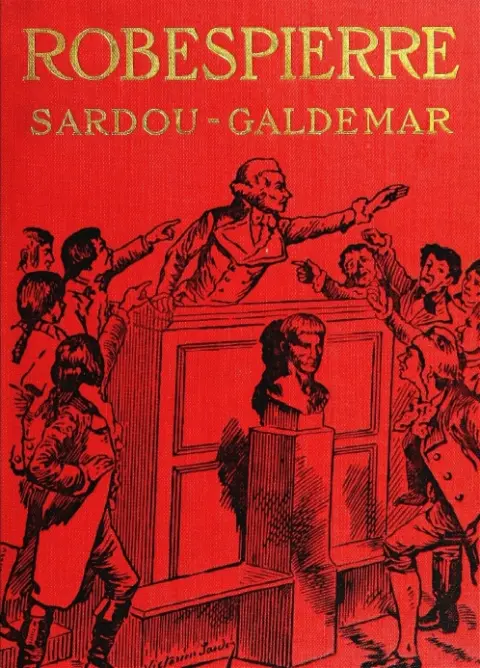
"Robespierre" by Ange Galdemar is a historical novel written in the late 19th century. The book is based on Victorien Sardou's play and explores the complex life of Maximilien Robespierre, a leading figure of the French Revolution. It delves into themes of power, ambition, and personal sacrifice amid the tumultuous backdrop of revolutionary France, focusing on characters such as Robespierre himself, Monsieur de Pontivy, and Clarisse. The opening of "Robespierre" introduces readers to the Hôtel de Pontivy, where we meet Monsieur de Pontivy as he searches for a lost document important for a secret debate in Parliament. Here, the reader is introduced to his daughter Clarisse, who navigates a sheltered life and shares a complicated relationship with both her father and Robespierre, her father's secretary. The tension rises as it becomes apparent that their lives are entwined through shared ambitions and the unacknowledged consequences of their interactions. The initial chapter sets the stage for the unfolding drama, hinting at themes of love, betrayal, and the heavy burdens of honor and reputation that will develop as the story progresses.
Introduction adapted from the source catalogue; source summaries may be automatically generated.
Free to read · English · 71,073 words · No account needed
MAKE TIME FOR A GOOD BOOK
On by default. Untick to stop anonymous reading totals. Each page counts after 10 seconds in view. How this works.
Anonymous counting is on unless you have switched it off.
Not a single voice mediates in his favour! Not one dares to defend his cause! The crowd in the gallery have remained silent and unmoved from the very outset of the stormy scene.
A cry of anguish rises to Robespierre's lips. "Villains! Wretches!"
he gasps.
But his voice is again drowned.
"You are the villain! To death with the tyrant! To death with him! To the vote for his arrest! To the vote for his arrest!"
Robespierre, now completely exhausted, makes one supreme effort, addressing himself to Thuriot, who is still vainly trying to restore silence with his bell.
"President of assassins, for the last time I demand the right of
speech."
"No! No!" cry all the deputies.
"Then decree my murder...."
But his voice breaks, and the last word is lost in a hoarse cry.
"It is Danton's blood that chokes you!"
Robespierre, livid at the taunt, turns to the interrupter.
"Danton? It is he, then, you will avenge? Why did you not protect
him, cowards?"
Replies are hurled at him from every corner. Had he not gagged Danton's defenders? Now they were going to avenge him! Now their turn had come!
"Did you not hound him to his death, you curs?" shouts Robespierre,
with one last cry of rage.
But a pregnant remark falls on the assembly and hastens the end.
"It is hard work, indeed, to drag down a tyrant!"
There is no more hope for Robespierre.
This interruption recalls the Convention to the danger that threatens them. The turmoil is re-doubled. Tallien, from the tribune, which he has not yet quitted, demands of the president that the traitor's arrest be put to the vote.
"To the vote! To the vote!" echoes through the Hall.
But suddenly an unexpected incident attracts general attention.
A deputy advances to the centre of the semi-circle: "I demand to share my brother's fate, as I have striven to share his nobler deeds."
It is Augustin Robespierre, who had returned to Paris the day before, and, acting on a generous impulse, thus offers the sacrifice of his life, a sacrifice that is accepted out of hand.
"The arrest of the brothers Robespierre!"
"And mine!" calls out Lebas proudly, joining the two.
"And Saint-Just!" cries a voice.
"And Couthon!"
"To the vote! To the vote!"
The president has risen. He will put these arrests to the vote when
silence is restored.
"Silence for the voting! Silence!"
"Every one to his seat!"
The deputies take their respective places. Then in the deep and awful silence which follows, under the strained gaze of the mob in the gallery, the president speaks--
Your reading position is saved on this browser. Take it to another device with a library code. Reading pages adapt to text, rather than matching a printed edition.
BEHIND THE BOOK
This eBook is for the use of anyone anywhere in the United States and most other parts of the world at no cost and with almost no restrictions whatsoever. You may copy it, give it away or re-use it under the terms of the Project Gutenberg License included with this eBook or online at www.gutenberg.org. If you are not located in the United States, you will have to check the laws of the country where you are located before using this eBook. Read the source licence.
The original source file, including credits and licence, is retained by this library. Request an original-format copy at no charge. Please include the book title and Project Gutenberg identifier #71538.
KEEP YOUR CURIOSITY GOING
Cécile Tormay

Moritz Busch
Coulson Kernahan
John L. Ransom

Maurice Baring
Frances Wright