THE CLASSIC COLLECTION✦An outlaw’s diary: the CommuneCLASSIC FREE BOOKS
An outlaw’s diary: the Commune
Cécile Tormay
THE CLASSIC COLLECTION · 1899
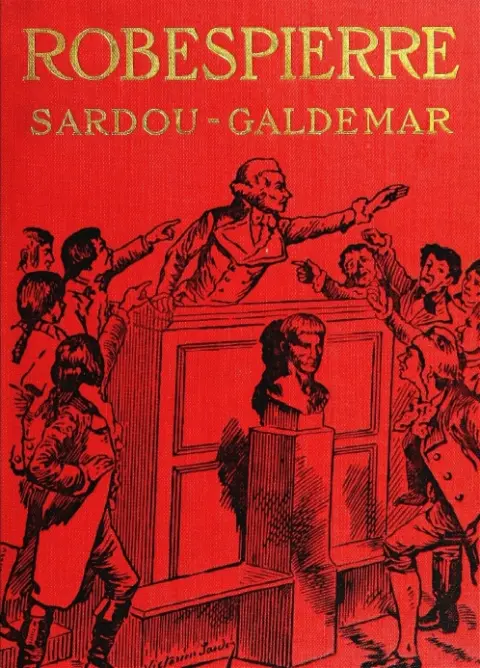
"Robespierre" by Ange Galdemar is a historical novel written in the late 19th century. The book is based on Victorien Sardou's play and explores the complex life of Maximilien Robespierre, a leading figure of the French Revolution. It delves into themes of power, ambition, and personal sacrifice amid the tumultuous backdrop of revolutionary France, focusing on characters such as Robespierre himself, Monsieur de Pontivy, and Clarisse. The opening of "Robespierre" introduces readers to the Hôtel de Pontivy, where we meet Monsieur de Pontivy as he searches for a lost document important for a secret debate in Parliament. Here, the reader is introduced to his daughter Clarisse, who navigates a sheltered life and shares a complicated relationship with both her father and Robespierre, her father's secretary. The tension rises as it becomes apparent that their lives are entwined through shared ambitions and the unacknowledged consequences of their interactions. The initial chapter sets the stage for the unfolding drama, hinting at themes of love, betrayal, and the heavy burdens of honor and reputation that will develop as the story progresses.
Introduction adapted from the source catalogue; source summaries may be automatically generated.
Free to read · English · 71,073 words · No account needed
MAKE TIME FOR A GOOD BOOK
On by default. Untick to stop anonymous reading totals. Each page counts after 10 seconds in view. How this works.
Anonymous counting is on unless you have switched it off.
"What! a cross?" he exclaimed, staring the while at the sign of
redemption.
The watchman told him that some prisoner had probably daubed this cross on the panel after the Queen's death. The prisoners always stopped before it to pray, and it was their habit to scribble in that way over the prison walls with pencils, or even nails.
"Why, here's your name!" he chuckled, highly amused.
Robespierre shuddered.
"My name?"
Barassin raised his lantern, throwing the light on an inscription in large letters on the wall, under some prison notices.
The Incorruptible read--
"We shall be avenged, Robespierre, monster! your turn will come!"
The watchman swung his lantern from place to place, lighting up, for
the Incorruptible's benefit, other ominous inscriptions addressed to
him.
"Robespierre, the tyrant!"
"Robespierre, the assassin!"
The Incorruptible turned pale.
He was well accustomed to insult and abuse, no doubt, but these imprecations on the walls, in that gruesome and silent prison, seemed like the last curses of the dead, written in letters of fire and blood!
"They must occupy themselves, I suppose!" remarked Barassin, still
laughing.
The Incorruptible turned away, feeling ill at ease. Again he questioned the man, fixing him the while as if he would fathom the depths of his experience. Did he keep watch every night? He must have witnessed some heart-rending scenes? Was he not disturbed in his sleep, living thus in continual contact with the dread spectre of death? Could he really sleep? Did not the cries of the victims disturb his slumber? Was he not haunted by their solemn leavetakings and their sobs?
Citoyen Robespierre could rest assured! Barassin slept soundly enough! Such fancies were very well for women! In the first place, the dead never returned, and then, after all, it was not Barassin who killed the victims, was it?
Steps were heard advancing, and the turnkey made his reappearance. The registrar had gone away and taken the keys with him. It was impossible to get at the prison register. He then suggested that Robespierre should go with him to the men's ward.
"Let us awake the prisoners. If the man you seek is there you will
easily recognize him."
The Incorruptible refused, starting involuntarily. He had no wish to
be seen by the prisoners.
Then, there was but one course left. Barrassin might accompany him, and speak to the men's turnkey, who would look for this Germain from bed to bed, and Barassin would bring back to Robespierre the result of the inquiry, as he himself had to return to his post. Robespierre would have to wait a little while, of course. And Collas moved the watchman's chair towards him.
Your reading position is saved on this browser. Take it to another device with a library code. Reading pages adapt to text, rather than matching a printed edition.
BEHIND THE BOOK
This eBook is for the use of anyone anywhere in the United States and most other parts of the world at no cost and with almost no restrictions whatsoever. You may copy it, give it away or re-use it under the terms of the Project Gutenberg License included with this eBook or online at www.gutenberg.org. If you are not located in the United States, you will have to check the laws of the country where you are located before using this eBook. Read the source licence.
The original source file, including credits and licence, is retained by this library. Request an original-format copy at no charge. Please include the book title and Project Gutenberg identifier #71538.
KEEP YOUR CURIOSITY GOING
Cécile Tormay

Moritz Busch
Coulson Kernahan
John L. Ransom

Maurice Baring
Frances Wright