THE CLASSIC COLLECTION✦An outlaw’s diary: the CommuneCLASSIC FREE BOOKS
An outlaw’s diary: the Commune
Cécile Tormay
THE CLASSIC COLLECTION · 1899
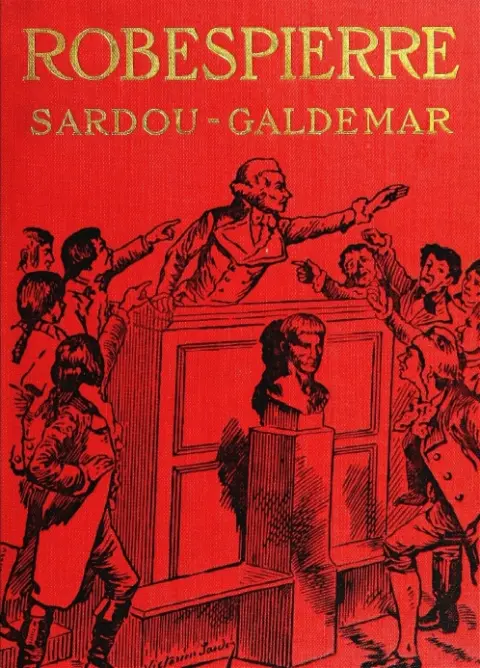
"Robespierre" by Ange Galdemar is a historical novel written in the late 19th century. The book is based on Victorien Sardou's play and explores the complex life of Maximilien Robespierre, a leading figure of the French Revolution. It delves into themes of power, ambition, and personal sacrifice amid the tumultuous backdrop of revolutionary France, focusing on characters such as Robespierre himself, Monsieur de Pontivy, and Clarisse. The opening of "Robespierre" introduces readers to the Hôtel de Pontivy, where we meet Monsieur de Pontivy as he searches for a lost document important for a secret debate in Parliament. Here, the reader is introduced to his daughter Clarisse, who navigates a sheltered life and shares a complicated relationship with both her father and Robespierre, her father's secretary. The tension rises as it becomes apparent that their lives are entwined through shared ambitions and the unacknowledged consequences of their interactions. The initial chapter sets the stage for the unfolding drama, hinting at themes of love, betrayal, and the heavy burdens of honor and reputation that will develop as the story progresses.
Introduction adapted from the source catalogue; source summaries may be automatically generated.
Free to read · English · 71,073 words · No account needed
MAKE TIME FOR A GOOD BOOK
On by default. Untick to stop anonymous reading totals. Each page counts after 10 seconds in view. How this works.
Anonymous counting is on unless you have switched it off.
"Unfortunately not!" said Lebas, "but taken by Coulongeon, the police-agent, by order of the Committee of Public Safety, to ... Where? No one could tell! To the Conciergerie perhaps?"
"Before the Tribunal!" Clarisse almost screamed.
Robespierre was stunned. The wretched members of the Committee had placed Olivier on trial! He had been, perhaps, condemned, and might even now be on the road to the scaffold, in one of those approaching tumbrils. He cried breathlessly to Lebas--
"Oh, quick! Go down and see!"
Lebas rushed off, and Robespierre ran to the window, Clarisse in mad
despair following him.
"If he is ... you will, you must, cry out to the people that he is
your son!"
Alas! Could he? The populace would answer that his son was a
Chouan! that he might thank the Tribunal for freeing him from such
disgrace.
Thérèse, drawn from the bedroom by the deafening cries of the crowd, now entered, trembling with fear. The carts were there... She could hear them!
"Mamma! mamma! do you hear?"
She stopped at sight of Robespierre.
"The friend who saved us," said Clarisse, answering her look of
surprise.
Thérèse went straight to the window, but Clarisse barred the way.
"Oh, no! she must not look at such a spectacle. Better kneel down and pray.... Pray for those about to die and for them also, yes for themselves, with all her soul!"
Thérèse fell on her knees and joined her hands, her large blue eyes, brimful of tears, lifted towards Saint Gervais, the deserted church, where the lingering spirit of outraged religion might perhaps accomplish a miracle!
The terrible tumult now burst on their ears like the rumble of thunder. As it drew nearer, separate sounds were distinguishable; screams, ribald laughter, hooting, degrading clamour, and coarse jokes reached them; all the hatred and fury of the Parisian populace was manifest in those hideous revels. The crowd was ushering the first tumbril into the Rue du Martroy, preceded by the mænads of the guillotine, loathsome, drinkbesotted viragoes, who yelled, and contorted themselves, dancing the Carmagnole in front of the condemned. Discordant strains of revolutionary songs rose above the rumbling of the cart-wheels, the clank of horses' hoofs, and the cracking of whips.
Robespierre had half opened the shutters, and tried to distinguish the first cart through the dense crowd. Clarisse struggled with him to look also, but the Incorruptible held her back resolutely.
"No; I will look alone!"
"Do you see him? Tell me; is he there?"
"No," he replied, still preventing her from approaching.
Then, as Robespierre made an eager movement, she gasped in her agony--
Your reading position is saved on this browser. Take it to another device with a library code. Reading pages adapt to text, rather than matching a printed edition.
BEHIND THE BOOK
This eBook is for the use of anyone anywhere in the United States and most other parts of the world at no cost and with almost no restrictions whatsoever. You may copy it, give it away or re-use it under the terms of the Project Gutenberg License included with this eBook or online at www.gutenberg.org. If you are not located in the United States, you will have to check the laws of the country where you are located before using this eBook. Read the source licence.
The original source file, including credits and licence, is retained by this library. Request an original-format copy at no charge. Please include the book title and Project Gutenberg identifier #71538.
KEEP YOUR CURIOSITY GOING
Cécile Tormay

Moritz Busch
Coulson Kernahan
John L. Ransom

Maurice Baring
Frances Wright