THE CLASSIC COLLECTION✦An outlaw’s diary: the CommuneCLASSIC FREE BOOKS
An outlaw’s diary: the Commune
Cécile Tormay
THE CLASSIC COLLECTION · 1899
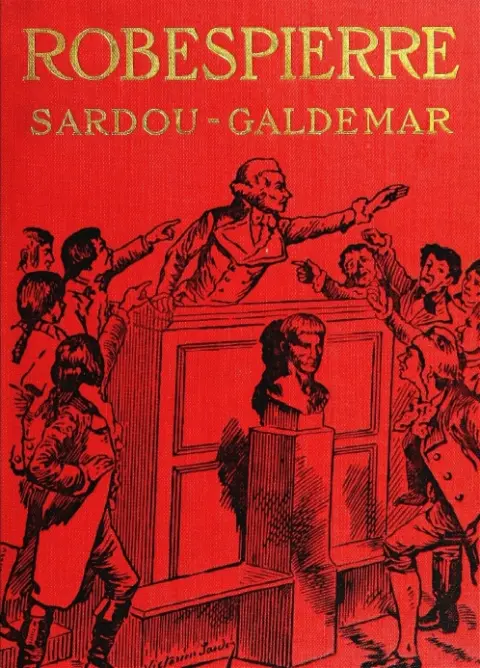
"Robespierre" by Ange Galdemar is a historical novel written in the late 19th century. The book is based on Victorien Sardou's play and explores the complex life of Maximilien Robespierre, a leading figure of the French Revolution. It delves into themes of power, ambition, and personal sacrifice amid the tumultuous backdrop of revolutionary France, focusing on characters such as Robespierre himself, Monsieur de Pontivy, and Clarisse. The opening of "Robespierre" introduces readers to the Hôtel de Pontivy, where we meet Monsieur de Pontivy as he searches for a lost document important for a secret debate in Parliament. Here, the reader is introduced to his daughter Clarisse, who navigates a sheltered life and shares a complicated relationship with both her father and Robespierre, her father's secretary. The tension rises as it becomes apparent that their lives are entwined through shared ambitions and the unacknowledged consequences of their interactions. The initial chapter sets the stage for the unfolding drama, hinting at themes of love, betrayal, and the heavy burdens of honor and reputation that will develop as the story progresses.
Introduction adapted from the source catalogue; source summaries may be automatically generated.
Free to read · English · 71,073 words · No account needed
MAKE TIME FOR A GOOD BOOK
On by default. Untick to stop anonymous reading totals. Each page counts after 10 seconds in view. How this works.
Anonymous counting is on unless you have switched it off.
What madness! Perhaps at this very moment they were entering the cart which was to take them to the Revolutionary Tribunal, and the next day to the scaffold. It was Olivier who was sending them to death, and all because he was too obstinate to say the word which would save them! He was a blind, unnatural son; he would kill his own mother!
Olivier, though amazed at Robespierre's persistence, remained
unshaken.
"Are you so thirsty for her blood?" he cried, hurling at him this
last insult.
At these words Robespierre lost all self-control.
"Fool!" he cried, "insensate fool!" as he paced the room in
unrestrained excitement.
But Lebas had heard enough.
"Let us have done with this madman," he said, hurrying towards the door to call in the police-agents.
But Robespierre turned round--
"No! Not yet!..."
Lebas, pretending not to have heard, called out--
"Héron! Hér..."
Robespierre threw himself on him, and pinning him to the wall, said
breathlessly--
"Don't call, I tell you! Don't call!"
Then lowering his voice he muttered in a dry whisper--
"Be quiet, man, I say! Be quiet! ... It is my son!"
"Ah!" and Lebas looked at him in stupefied amazement.
When he had sufficiently recovered from his surprise, he asked in a
low voice--
"Why do you not tell him so?"
Could Robespierre tell him? Tell the lad who loathed him! Would he
believe him? Olivier would say it was false, or how could he hate
him so?
"Oh, no! I cannot tell him that I am his father!" he said sadly, sinking down exhausted on a chair.
Lebas took his hand and pressed it sympathetically, deeply touched.
"You are right!" he murmured.
And turning to Olivier he said aloud--
"Then let us discover the prisoners without him!"
Olivier understood that matters were becoming very serious. However, Robespierre looked discouraged. How was it possible to find the women, under their assumed names, in Vendée? But Lebas remarked that they might be in Paris. At this Olivier visibly trembled, which Lebas did not fail to notice.
"Why," he continued--"why should he be so far from them?"
The point of this remark struck Robespierre.
Your reading position is saved on this browser. Take it to another device with a library code. Reading pages adapt to text, rather than matching a printed edition.
BEHIND THE BOOK
This eBook is for the use of anyone anywhere in the United States and most other parts of the world at no cost and with almost no restrictions whatsoever. You may copy it, give it away or re-use it under the terms of the Project Gutenberg License included with this eBook or online at www.gutenberg.org. If you are not located in the United States, you will have to check the laws of the country where you are located before using this eBook. Read the source licence.
The original source file, including credits and licence, is retained by this library. Request an original-format copy at no charge. Please include the book title and Project Gutenberg identifier #71538.
KEEP YOUR CURIOSITY GOING
Cécile Tormay

Moritz Busch
Coulson Kernahan
John L. Ransom

Maurice Baring
Frances Wright