THE CLASSIC COLLECTION✦On poetic interpretation of natureCLASSIC FREE BOOKS
On poetic interpretation of nature
John Campbell Shairp
THE CLASSIC COLLECTION · 1881
"Robert Burns" by John Campbell Shairp is a biographical account written in the late 19th century. This work delves into the life and legacy of the renowned Scottish poet Robert Burns, exploring his struggles, successes, and the cultural context that shaped his remarkable output. Shairp aims to provide a comprehensive glimpse into Burns' character and genius, highlighting the deep interest and affection that people have for the poet even decades after his death. The opening of the book introduces us to Burns' early life, set against the backdrop of Ayrshire, depicting his birth in a humble cottage and the challenging circumstances faced by his family. Shairp emphasizes the integrity and devotion of Burns’ father, William Burness, and the nurturing yet modest lifestyle that framed the poet’s formative years. As the narrative progresses, we see the influence of his environment, including the strong familial bonds and intellectual aspirations fostered by his parents, which ultimately lead to Burns’ initial foray into poetry spurred by his youthful love experiences. This opening sets the stage for an exploration of how Burns’ early struggles with love, ambition, and societal expectations would shape his poetic voice and his later encounters with fame in Edinburgh.
Introduction adapted from the source catalogue; source summaries may be automatically generated.
Free to read · English · 62,685 words · No account needed
MAKE TIME FOR A GOOD BOOK
On by default. Untick to stop anonymous reading totals. Each page counts after 10 seconds in view. How this works.
Anonymous counting is on unless you have switched it off.
Besides his conviction as to public wrongs to be redressed, Burns had, he thought, personal grievances to complain of, which, as is so often seen, added fuel to his reforming zeal. His great powers, which he believed entitled him to a very different position, were unacknowledged and disregarded by the then dispensers of patronage. Once he had been an admirer of Pitt, latterly he could not bear the mention of his name. Of the ministry, Addington, we have seen, was fully alive to his merits, and pressed his claims on Pitt, who himself was quite awake to the charm of Burns's poetry. The Premier, it is said, "pushed the bottle on to Dundas, and did nothing,"--to Dundas, too practical and too prosaic to waste a thought on poets and poetry. Latterly this neglect of him by public men preyed on the spirit of Burns, and was seldom absent from his thoughts. It added force, no doubt, to the rapture with which he, like all the younger poets of the time, hailed the French Revolution, and the fancied dawn of that day, which would place plebeian genius and worth in those high places, whence titled emptiness and landed incapacity would be at length thrust ignominiously down.
Burns had not been more than three months in Dumfries, before he (p. 145) found an opportunity of testifying by deed his sympathy with the French Revolutionists. At that time the whole coast of the Solway swarmed with smuggling vessels, carrying on a contraband traffic, and manned by men of reckless character, like the Dirk Hatteraick of Guy Mannering. In 1792, a suspicious-looking brig appeared in the Solway, and Burns, with other excisemen, was set to watch her motions. She got into shallow water, when the gaugers, enforced by some dragoons, waded out to her, and Burns, sword in hand, was the first to board her. The captured brig "Rosamond," with all her arms and stores, was sold next day at Dumfries, and Burns became the purchaser of four of her guns. These he sent, with a letter, to the French Legislative Assembly, requesting them to accept the present as a mark of his admiration and sympathy. The guns with the letter never reached their destination. They were, however, intercepted by the Custom-House officers at Dover, and Burns at once became a suspected man in the eye of the Government. Lockhart, who tells this incident, connects with it the song, The Deil's awa' wi' the Exciseman, which Burns, he said, composed while waiting on the shore to watch the brig. But Mr. Scott Douglas doubts whether the song is referable to this occasion. However this may be, the folly of Burns's act can hardly be disputed. He was in the employ of Government, and had no right to express in this way his sympathy with a movement, which, he must have known, the Government, under whom he served, regarded, if not yet with open hostility, at least with jealous suspicion. Men who think it part of their personal right and public duty unreservedly to express, by word and deed, their views on politics, had better not seek employment in the public service. (p. 146) Burns having once drawn upon himself the suspicions of his superiors, all his words and actions were no doubt closely watched. It was found that he 'gat the Gazetteer,' a revolutionary print published in Edinburgh, which only the most extreme men patronized, and which after a few months' existence was suppressed by Government. As the year 1792 drew to a close, the political heaven, both at home and abroad, became ominously dark. In Paris the king was in prison, the Reign of Terror had begun, and innocent blood of loyalists flowed freely in the streets; the republic which had been established was threatening to propagate its principles in other countries by force of arms. In this country, what at the beginning of the year had been but suspicion of France, was now turned to avowed hostility, and war against the republic was on the eve of being declared. There were uneasy symptoms, too, at home. Tom Paine's Rights of Man and Age of Reason were spreading questionable doctrines and fomenting disaffection. Societies named Friends of the People were formed in Edinburgh and the chief towns of Scotland, to demand reform of the representation and other changes, which, made at such a time were believed by those in power to cover seditious aims. At such a crisis any government might be expected to see that all its officers, from the highest to the lowest, were well affected. But though the Reign of Terror had alarmed many others who had at first looked favourably on the Revolution in France, Burns's ardour in its cause was no whit abated. He even denounced the war on which the ministry had determined; he openly reviled the men in power; and went so far in his avowal of democracy that at a social meeting, he proposed as a toast, "Here's the last verse of the (p. 147) last chapter of the last Book of Kings." This would seem to be but one specimen of the freedom of political speech in which Burns at this time habitually indulged,--the truculent way in which he flaunted defiance in the face of authority. It would not have been surprising, if at any time the Government had ordered inquiry to be made into such conduct, much less in such a season of anxiety and distrust. That an inquiry was made is undoubted; but as to the result which followed it, there is uncertainty. Some have thought that the poet received from his superiors only a slight hint or caution to be more careful in future. Others believed, that the matter went so far that he was in serious danger of dismissal from his post; and that this was only averted by the timely interposition of some kind and powerful friends. That Burns himself took a serious view of it, and was sufficiently excited and alarmed, may be seen from two letters which he wrote, the one at the time of the occurrence, the other soon after it. It was thus that in December, 1792, he addressed Mr. Graham of Fintray, the same person whose good offices had at first obtained for the poet his appointment, and whose kindness never failed him while he lived:--
Your reading position is saved on this browser. Take it to another device with a library code. Reading pages adapt to text, rather than matching a printed edition.
BEHIND THE BOOK
This eBook is for the use of anyone anywhere in the United States and most other parts of the world at no cost and with almost no restrictions whatsoever. You may copy it, give it away or re-use it under the terms of the Project Gutenberg License included with this eBook or online at www.gutenberg.org. If you are not located in the United States, you will have to check the laws of the country where you are located before using this eBook. Read the source licence.
The original source file, including credits and licence, is retained by this library. Request an original-format copy at no charge. Please include the book title and Project Gutenberg identifier #21330.
KEEP YOUR CURIOSITY GOING
John L. Ransom
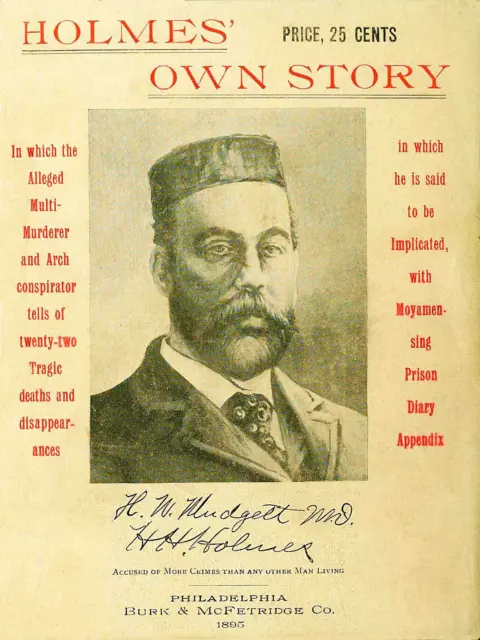
Herman W. Mudgett

Harriet Monroe
Daniel Dulany Addison
Charles Lanman
Harold Rosher