THE CLASSIC COLLECTION✦On poetic interpretation of natureCLASSIC FREE BOOKS
On poetic interpretation of nature
John Campbell Shairp
THE CLASSIC COLLECTION · 1881
"Robert Burns" by John Campbell Shairp is a biographical account written in the late 19th century. This work delves into the life and legacy of the renowned Scottish poet Robert Burns, exploring his struggles, successes, and the cultural context that shaped his remarkable output. Shairp aims to provide a comprehensive glimpse into Burns' character and genius, highlighting the deep interest and affection that people have for the poet even decades after his death. The opening of the book introduces us to Burns' early life, set against the backdrop of Ayrshire, depicting his birth in a humble cottage and the challenging circumstances faced by his family. Shairp emphasizes the integrity and devotion of Burns’ father, William Burness, and the nurturing yet modest lifestyle that framed the poet’s formative years. As the narrative progresses, we see the influence of his environment, including the strong familial bonds and intellectual aspirations fostered by his parents, which ultimately lead to Burns’ initial foray into poetry spurred by his youthful love experiences. This opening sets the stage for an exploration of how Burns’ early struggles with love, ambition, and societal expectations would shape his poetic voice and his later encounters with fame in Edinburgh.
Introduction adapted from the source catalogue; source summaries may be automatically generated.
Free to read · English · 62,685 words · No account needed
MAKE TIME FOR A GOOD BOOK
On by default. Untick to stop anonymous reading totals. Each page counts after 10 seconds in view. How this works.
Anonymous counting is on unless you have switched it off.
MOUNT OLIPHANT.--This was a small upland farm, about two miles from the Brig o' Doon, of a poor and hungry soil, belonging to Mr. Ferguson, of Doon-holm, who was also the landlord of William Burness' previous holding. Robert was in his seventh year when his father entered on this farm at Whitsuntide, 1766, and he had reached his eighteenth when the lease came to a close in 1777. All the years between these two dates were to the family of Burness one long sore battle with untoward circumstances, ending in defeat. If the hardest toil and severe self-denial could have procured success, they would not have failed. It was this period of his life which Robert afterwards described, as combining "the cheerless gloom of a hermit with the unceasing moil of galley-slave." The family did their best, but a niggard soil and bad seasons were too much for them. At length, on the death of his landlord, who had always dealt generously by him, William Burness fell into the grip of a factor, whose tender mercies were hard. This man wrote letters which set the whole family in tears. The poet has not given his name, but he has preserved his portrait in colours which are indelible:--
I've noticed, on our Laird's court-day, An' mony a time my heart's been wae, Poor tenant bodies, scant o' cash, How they maun thole a factor's snash; He'll stamp an' threaten, curse and swear, He'll apprehend them, poind their gear, While they maun stan', wi aspect humble, And hear it a', an' fear an' tremble.
In his autobiographical sketch the poet tells us that, "The farm proved a ruinous bargain. I was the eldest of seven children, and (p. 005) my father, worn out by early hardship, was unfit for labour. His spirit was soon irritated, but not easily broken. There was a freedom in the lease in two years more; and to weather these two years we retrenched expenses, and toiled on." Robert and Gilbert, the two eldest, though still boys, had to do each a grown man's full work. Yet for all their hardships these Mount Oliphant days were not without alleviations. If poverty was at the door, there was warm family affection by the fireside. If the two sons had, long before manhood, to bear toil beyond their years, still they were living under their parents' roof, and those parents two of the wisest and best of Scotland's peasantry. Work was no doubt incessant, but education was not neglected--rather it was held one of the most sacred duties. When Robert was five years old, he had been sent to a school at Alloway Mill, and when the family removed to Mount Oliphant, his father combined with four of his neighbours to hire a young teacher, who boarded among them, and taught their children for a small salary. This young teacher, whose name was Murdoch, has left an interesting description of his two young pupils, their parents, and the household life while he sojourned at Mount Oliphant. At that time Murdoch thought that Gilbert possessed a livelier imagination, and was more of a wit than Robert. "All the mirth and liveliness," he says, "were with Gilbert. Robert's countenance at that time wore generally a grave and thoughtful look." Had their teacher been then told that one of his two pupils would become a great poet, he would have fixed on Gilbert. When he tried to teach them church music along with other rustic lads, they two lagged far behind the rest. Robert's voice especially was untuneable, and his ear so dull, that it was with difficulty he could distinguish one tune from another. Yet this was he who was to (p. 006) become the greatest song-writer that Scotland--perhaps the world--has known. In other respects the mental training of the lads was of the most thorough kind. Murdoch taught them not only to read, but to parse, and to give the exact meaning of the words, to turn verse into the prose order, to supply ellipses, and to substitute plain for poetic words and phrases. How many of our modern village schools even attempt as much? When Murdoch gave up, the father himself undertook the education of his children, and carried it on at night after work-hours were over. Of that father Murdoch speaks as by far the best man he ever knew. Tender and affectionate towards his children he describes him, seeking not to drive, but to lead them to the right, by appealing to their conscience and their better feelings, rather than to their fears. To his wife he was gentle and considerate in an unusual degree, always thinking of her ease and comfort; and she repaid it with the utmost reverence. She was a careful and thrifty housewife, but, whenever her domestic tasks allowed, she would return to hang with devout attention on the discourse that fell from her wise husband. Under that father's guidance knowledge was sought for as hid treasure, and this search was based on the old and reverential faith that increase of knowledge is increase of wisdom and goodness. The readings of the household were wide, varied, and unceasing. Some one entering the house at meal-time found the whole family seated, each with a spoon in one hand and a book in the other. The books which Burns mentions as forming part of their reading at Mount Oliphant surprise us even now. Not only the ordinary school-books and geographies, not only the traditional life of Wallace and other popular books of that (p. 007) sort, but The Spectator, odd plays of Shakespeare, Pope (his Homer included), Locke on the Human Understanding, Boyle's Lectures, Taylor's Scripture Doctrine of Original Sin, Allan Ramsay's works, formed the staple of their reading. Above all there was a collection of songs, of which Burns says, "This was my vade mecum. I pored over them driving my cart, or walking to labour, song by song, verse by verse; carefully noting the true tender or sublime, from affectation and fustian, I am convinced I owe to this practice much of my critic-craft, such as it is!" And he could not have learnt it in a better way.
Your reading position is saved on this browser. Take it to another device with a library code. Reading pages adapt to text, rather than matching a printed edition.
BEHIND THE BOOK
This eBook is for the use of anyone anywhere in the United States and most other parts of the world at no cost and with almost no restrictions whatsoever. You may copy it, give it away or re-use it under the terms of the Project Gutenberg License included with this eBook or online at www.gutenberg.org. If you are not located in the United States, you will have to check the laws of the country where you are located before using this eBook. Read the source licence.
The original source file, including credits and licence, is retained by this library. Request an original-format copy at no charge. Please include the book title and Project Gutenberg identifier #21330.
KEEP YOUR CURIOSITY GOING
John L. Ransom
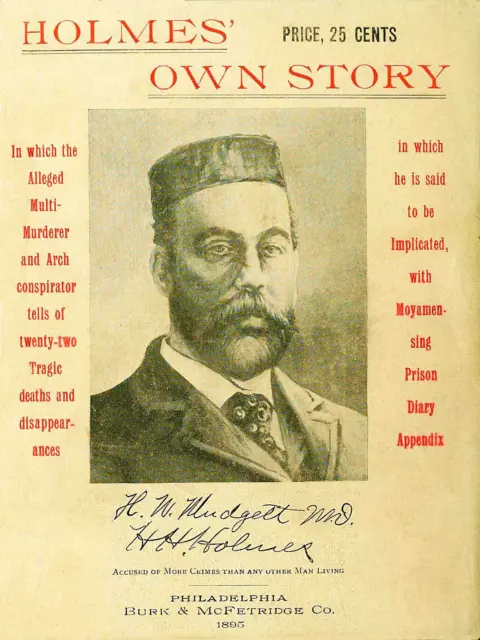
Herman W. Mudgett

Harriet Monroe
Daniel Dulany Addison
Charles Lanman

Harold Rosher