THE CLASSIC COLLECTION✦On poetic interpretation of natureCLASSIC FREE BOOKS
On poetic interpretation of nature
John Campbell Shairp
THE CLASSIC COLLECTION · 1881
"Robert Burns" by John Campbell Shairp is a biographical account written in the late 19th century. This work delves into the life and legacy of the renowned Scottish poet Robert Burns, exploring his struggles, successes, and the cultural context that shaped his remarkable output. Shairp aims to provide a comprehensive glimpse into Burns' character and genius, highlighting the deep interest and affection that people have for the poet even decades after his death. The opening of the book introduces us to Burns' early life, set against the backdrop of Ayrshire, depicting his birth in a humble cottage and the challenging circumstances faced by his family. Shairp emphasizes the integrity and devotion of Burns’ father, William Burness, and the nurturing yet modest lifestyle that framed the poet’s formative years. As the narrative progresses, we see the influence of his environment, including the strong familial bonds and intellectual aspirations fostered by his parents, which ultimately lead to Burns’ initial foray into poetry spurred by his youthful love experiences. This opening sets the stage for an exploration of how Burns’ early struggles with love, ambition, and societal expectations would shape his poetic voice and his later encounters with fame in Edinburgh.
Introduction adapted from the source catalogue; source summaries may be automatically generated.
Free to read · English · 62,685 words · No account needed
MAKE TIME FOR A GOOD BOOK
On by default. Untick to stop anonymous reading totals. Each page counts after 10 seconds in view. How this works.
Anonymous counting is on unless you have switched it off.
During the three or four days between his return from Brow and the end, his mind, when not roused by conversation, wandered in delirium. Yet when friends drew near his bed, sallies of his old wit would for a moment return. To a brother volunteer who came to see him he said, with a smile, "John, don't let the awkward squad fire over me." His wife was unable to attend him; and four helpless children wandered from room to room gazing on their unhappy parents. All the while, Jessie Lewars was ministering to the helpless and to the dying one, and doing what kindness could do to relieve their suffering. On the fourth day after his return, the 21st of July, Burns sank into his last sleep. His children stood around his bed, and his eldest son remembered long afterwards all the circumstances of that sad hour.
The news that Burns was dead, sounded through all Scotland like a knell announcing a great national bereavement. Men woke up to feel the greatness of the gift which in him had been vouchsafed to their generation, and which had met, on the whole, with so poor a reception. Self-reproach mingled with the universal sorrow, as (p. 186) men asked themselves whether they might not have done more to cherish and prolong that rarely gifted life.
Of course there was a great public funeral, in which the men of Dumfries and the neighbourhood, high and low, appeared as mourners, and soldiers and volunteers with colours, muffled drums, and arms reversed, not very appropriately mingled in the procession. At the very time when they were laying her husband in his grave, Mrs. Burns gave birth to his posthumous son. He was called Maxwell, after the physician who attended his father, but he died in infancy. The spot where the poet was laid was in a comer of St. Michael's churchyard, and the grave remained for a time unmarked by any monument. After some years his wife placed over it a plain, unpretending stone, inscribed with his name and age, and with the names of his two boys, who were buried in the same place. Well had it been, if he had been allowed to rest undisturbed in this grave where his family had laid him. But well-meaning, though ignorant, officiousness would not suffer it to be so. Nearly twenty years after the poet's death, a huge, cumbrous, unsightly mausoleum was, by public subscription, erected at a little distance from his original resting-place. This structure was adorned with an ungraceful figure in marble, representing, "The muse of Coila finding the poet at the plough, and throwing her inspiring mantle over him." To this was added a long, rambling epitaph in tawdry Latin, as though any inscription which scholars could devise could equal the simple name of Robert Burns. When the new structure was completed, on the 19th September, 1815, his grave was opened, and men for a moment gazed with awe on the form of Burns, seemingly as entire as on the (p. 187) day when first it was laid in the grave. But as soon as they began to raise it, the whole body crumbled to dust, leaving only the head and bones. These relics they bore to the mausoleum, which had been prepared for their reception. But not even yet was the poet's dust to be allowed to rest in peace. When his widow died, in March, 1834, the mausoleum was opened, that she might be laid by her husband's side. Some craniologists of Dumfries were then permitted, in the name of so-called science, to desecrate his dust with their inhuman outrage. At the dead of night, between the 31st of March and the 1st of April, these men laid their profane fingers on the skull of Burns, "tried their hats upon it, and found them all too little;" applied their compasses, registered the size of the so-called organs, and "satisfied themselves that Burns had capacity enough to compose Tam o' Shanter, The Cotter's Saturday Night, and To Mary in Heaven." This done, they laid the head once again in the hallowed ground, where, let us hope, it will be disturbed no more. The mausoleum, unsightly though it is, has become a place of pilgrimage whither yearly crowds of travellers resort from the ends of the earth, to gaze on the resting-place of Scotland's peasant poet, and thence to pass to that other consecrated place within ruined Dryburgh, where lies the dust of a kindred spirit by his own Tweed.
Your reading position is saved on this browser. Take it to another device with a library code. Reading pages adapt to text, rather than matching a printed edition.
BEHIND THE BOOK
This eBook is for the use of anyone anywhere in the United States and most other parts of the world at no cost and with almost no restrictions whatsoever. You may copy it, give it away or re-use it under the terms of the Project Gutenberg License included with this eBook or online at www.gutenberg.org. If you are not located in the United States, you will have to check the laws of the country where you are located before using this eBook. Read the source licence.
The original source file, including credits and licence, is retained by this library. Request an original-format copy at no charge. Please include the book title and Project Gutenberg identifier #21330.
KEEP YOUR CURIOSITY GOING
John L. Ransom
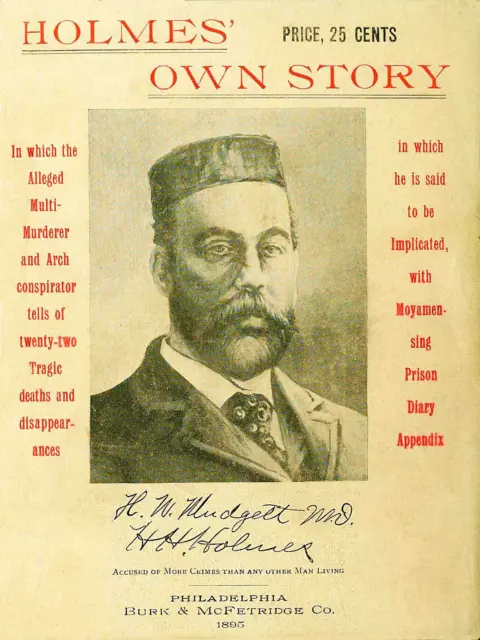
Herman W. Mudgett
Harriet Monroe
Daniel Dulany Addison
Charles Lanman
Harold Rosher