The black barque
T. Jenkins (Thornton Jenkins) Hains
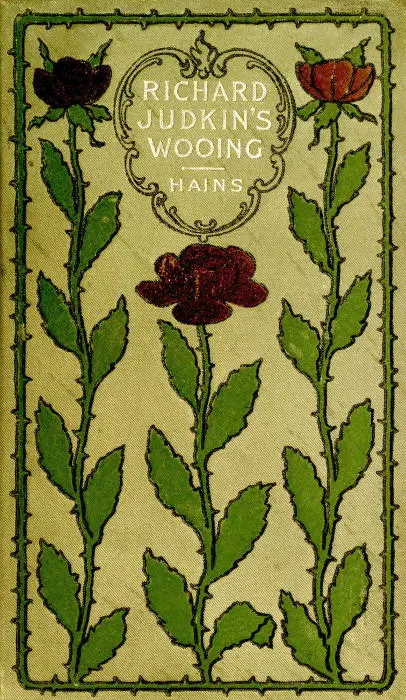
THE CLASSIC COLLECTION · 1898
"Richard Judkins' Wooing: A Tale of Virginia in the Revolution" by T. Jenkins Hains is a historical novel written in the late 19th century. Set against the backdrop of the American Revolution, the narrative follows Richard Judkins, the protagonist, as he navigates the political intrigue and personal conflicts of Virginia during this tumultuous period. The book introduces a range of characters, including the gruff Major Bullbeggor, who adds an element of military seriousness to the story, and others who embody the various views of loyalty and rebellion during this significant time in American history. The opening of the novel establishes Richard Judkins in a leisurely moment on his verandah, observing the arrival of Major Bullbeggor. This scene introduces the relaxed yet complex social dynamics of the time, highlighting Judkins' welcoming nature juxtaposed with the Major's military seriousness. As they discuss recent news of the ongoing conflict, tensions rise with the introduction of minor characters who represent differing political loyalties, such as the Tory Berk Harrison. A duel is initiated, setting up a conflict that reflects the larger themes of loyalty, honor, and the rapidly changing landscape of colonial society in Virginia. The narrative style captures the nuances of character interactions and societal expectations, presenting a rich tapestry of life during the American Revolution.
Introduction adapted from the source catalogue; source summaries may be automatically generated.
Free to read · English · 31,919 words · No account needed
MAKE TIME FOR A GOOD BOOK
On by default. Untick to stop anonymous reading totals. Each page counts after 10 seconds in view. How this works.
Anonymous counting is on unless you have switched it off.
"Its easy to see that Barron's heart lies in his stomach," said the Major. "There's an old woman's saying that 'to win a man's esteem, you must feed the brute.'"
"And, likewise, to win a woman's, 'dress the animal,'" laughed Barron.
"But what was the news, Major, from Boston? I thought I overheard you say something about a fight," asked Harrison.
"He did," said Will. "Gage's men carried Bunker Hill by assault, last week. But he says the Virginia boys fought well and gave the reddies all they wanted."
"They did that, and Woodford's men will give Dunmore about the same, if he doesn't bear a hand and leave," interrupted the Major sententiously.
"You don't say!" laughed Barron, raising his glass. "Well, here's to the army of Virginia, and may it reap much benefit from the Major and his combination of Christian men."
"And have reason to give thanks that they'll be in no worse condition than that which they find themselves," muttered Harrison, putting down his untouched glass. "They'll be damned lucky if they're not."
"Oh, well, it is hardly necessary to be profane about it," said the
Major, quietly.
Barron smacked his huge lips and smiled blandly, then murmured softly--
"And when they pawned and damned their souls
They were but prisoners on paroles."
"An apt quotation," snapped Harrison ill-humoredly.
"You don't look as if you were much given to poetry, especially
Butler's."
"An angel is sometimes disguised as a devil," laughed Barron.
"But never as a soldier," said Harrison, dryly.
"Nor as a fop," growled Bullbeggor, "which the same might be said of some people who dress to appear like gentlemen, but about whom there might be some diversity of opinion among men." And he looked straight before him.
"Your wit is coarse, and if you mean that for me, I'll say you are damned insolent," said Harrison with some energy.
"Oh, hold on!" said Will.
"The Major did not mean that for you," I said quietly, advancing toward Harrison, who stood leaning against a pillar of the verandah. "He never makes rude remarks to anyone," I continued, trying to pacify his rising anger, "and he simply meant the vice versa of Barron's jest."
Your reading position is saved on this browser. Take it to another device with a library code. Reading pages adapt to text, rather than matching a printed edition.
T. Jenkins (Thornton Jenkins) Hains
T. Jenkins (Thornton Jenkins) Hains
T. Jenkins (Thornton Jenkins) Hains
BEHIND THE BOOK
This eBook is for the use of anyone anywhere in the United States and most other parts of the world at no cost and with almost no restrictions whatsoever. You may copy it, give it away or re-use it under the terms of the Project Gutenberg License included with this eBook or online at www.gutenberg.org. If you are not located in the United States, you will have to check the laws of the country where you are located before using this eBook. Read the source licence.
The original source file, including credits and licence, is retained by this library. Request an original-format copy at no charge. Please include the book title and Project Gutenberg identifier #55832.
KEEP YOUR CURIOSITY GOING
Cécile Tormay

Moritz Busch
Coulson Kernahan
John L. Ransom

Maurice Baring
Frances Wright