THE CLASSIC COLLECTION✦Plays and controversiesCLASSIC FREE BOOKS
Plays and controversies
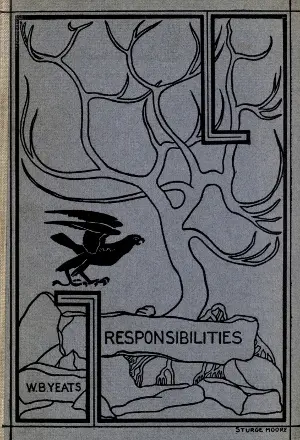
W. B. (William Butler) Yeats
THE CLASSIC COLLECTION · 1916
"Reveries over Childhood and Youth" by W. B. Yeats is a reflective memoir written in the early 20th century. The work delves into Yeats's childhood and youth, exploring his formative experiences, memories, and the emotional world that shaped him. This autobiographical account offers insights into significant relationships, particularly with his grandparents, and how these dynamics influenced his understanding of life and art. The opening of the memoir sets the tone for Yeats's exploration of his early memories, which are presented as fragmented and emotional recollections rather than a linear narrative. He reflects on moments of joy and sorrow, detailing vivid memories such as observing childhood scenes through windows, playing with relatives, and the profound impact of his grandfather's stoic presence. Yeats describes both the beauty and the pain of childhood, capturing his feelings of awe towards nature and his complex emotions surrounding love, loss, and innocence. As he weaves these memories together, he hints at the profound influence this period had on his later artistic expressions and philosophical musings.
Introduction adapted from the source catalogue; source summaries may be automatically generated.
Free to read · English · 31,987 words · No account needed
MAKE TIME FOR A GOOD BOOK
On by default. Untick to stop anonymous reading totals. Each page counts after 10 seconds in view. How this works.
Anonymous counting is on unless you have switched it off.
Presently I went to the modelling class to be with certain elder students who had authority among us. Among these were John Hughes and Oliver Sheppard, well-known now as Irish sculptors. The day I first went into the studio where they worked, I stood still upon the threshold in amazement. A pretty gentle-looking girl was modelling in the middle of the room, and all the men were swearing at her for getting in their light with the most violent and fantastic oaths, and calling her every sort of name, and through it all she worked in undisturbed diligence. Presently the man nearest me saw my face and called out, "she is stone deaf, so we always swear at her and call her names when she gets in our light." In reality I soon found that everyone was kind to her, carrying her drawing-boards and the like, and putting her into the tram at the day's end. We had no scholarship, no critical knowledge of the history of painting, and no settled standards. A student would show his fellows some French illustrated paper that we might all admire, now some statue by Rodin or Dalou and now some declamatory Parisian monument, and if I did not happen to have discussed the matter with my father I would admire with no more discrimination than the rest. That pretentious monument to Gambetta made a great stir among us. No influence touched us but that of France, where one or two of the older students had been already and all hoped to go. Of England I alone knew anything. Our ablest student had learnt Italian to read Dante, but had never heard of Tennyson or Browning, and it was I who carried into the school some knowledge of English poetry, especially of Browning who had begun to move me by his air of wisdom. I do not believe that I worked well, for I wrote a great deal and that tired me, and the work I was set to bored me. When alone and uninfluenced, I longed for pattern, for pre-Raphaelitism, for an art allied to poetry, and returned again and again to our National Gallery to gaze at Turner's Golden Bough. Yet I was too timid, had I known how, to break away from my father's style and the style of those about me. I was always hoping that my father would return to the style of his youth, and make pictures out of certain designs now lost, that one could still find in his portfolios. There was one of an old hunchback in vague medieval dress, going through some underground place where there are beds with people in the beds; a girl half rising from one has seized his hand and is kissing it. I have forgotten its story, but the strange old man and the intensity in the girl's figure are vivid as in my childhood. There is some passage, I believe in the Bible, about a man who saved a city and went away and was never heard of again and here he was in another design, an old ragged beggar in the market-place laughing at his own statue. But my father would say: "I must paint what I see in front of me. Of course I shall really paint something different because my nature will come in unconsciously." Sometimes I would try to argue with him, for I had come to think the philosophy of his fellow-artists and himself a misunderstanding created by Victorian science, and science I had grown to hate with a monkish hate; but no good came of it, and in a moment I would unsay what I had said and pretend that I did not really believe it. My father was painting many fine portraits, Dublin leaders of the bar, college notabilities, or chance comers whom he would paint for nothing if he liked their heads; but all displeased me. In my heart I thought that only beautiful things should be painted, and that only ancient things and the stuff of dreams were beautiful. And I almost quarrelled with my father when he made a large water-colour, one of his finest pictures and now lost, of a consumptive beggar girl. And a picture at the Hibernian Academy of cocottes with yellow faces sitting before a cafe by some follower of Manet's made me miserable for days, but I was happy when partly through my father's planning some Whistlers were brought over and exhibited, and did not agree when my father said: "imagine making your old mother an arrangement in gray!" I did not care for mere reality and believed that creation should be conscious, and yet I could only imitate my father. I could not compose anything but a portrait and even to-day I constantly see people as a portrait painter, posing them in the mind's eye before such and such a background. Meanwhile I was still very much of a child, sometimes drawing with an elaborate frenzy, simulating what I believed of inspiration and sometimes walking with an artificial stride in memory of Hamlet and stopping at shop windows to look at my tie gathered into a loose sailor-knot and to regret that it could not be always blown out by the wind like Byron's tie in the picture. I had as many ideas as I have now, only I did not know how to choose from among them those that belonged to my life.
Your reading position is saved on this browser. Take it to another device with a library code. Reading pages adapt to text, rather than matching a printed edition.
W. B. (William Butler) Yeats
W. B. (William Butler) Yeats
W. B. (William Butler) Yeats
W. B. (William Butler) Yeats
BEHIND THE BOOK
This eBook is for the use of anyone anywhere in the United States and most other parts of the world at no cost and with almost no restrictions whatsoever. You may copy it, give it away or re-use it under the terms of the Project Gutenberg License included with this eBook or online at www.gutenberg.org. If you are not located in the United States, you will have to check the laws of the country where you are located before using this eBook. Read the source licence.
The original source file, including credits and licence, is retained by this library. Request an original-format copy at no charge. Please include the book title and Project Gutenberg identifier #33348.
KEEP YOUR CURIOSITY GOING
John L. Ransom

Herman W. Mudgett

Harriet Monroe
Daniel Dulany Addison
Charles Lanman

Harold Rosher