THE CLASSIC COLLECTION✦Notes and Letters on the Natural History of Norfolk More Especially on the Birds and FishesCLASSIC FREE BOOKS
Notes and Letters on the Natural History of Norfolk More Especially on the Birds and Fishes
Thomas, Sir Browne
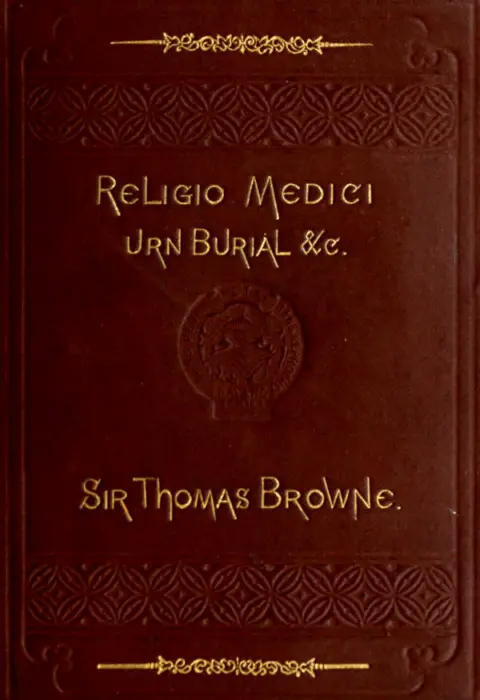
THE CLASSIC COLLECTION · 1690
"Religio Medici, Hydriotaphia, and the Letter to a Friend" by Sir Thomas Browne is a collection of philosophical and religious essays written in the 17th century. The work is significant for its exploration of spirituality, mortality, and the human condition, reflecting the complexity of Browne's thoughts as a physician and a thinker during a transformative period in history. The opening portion of the collection delves deep into Browne’s personal reflections on his faith and the philosophical underpinnings of his beliefs. He begins by asserting his Christian identity despite facing doubts from others due to his profession and demeanor. Browne emphasizes the importance of reason and personal interpretation of faith, advocating for an understanding of religion that transcends dogma. He discusses the relevance of charity and openness towards others’ beliefs and the historical context of varying Christian doctrines. Through a mixture of prose, reason, and introspective contemplation, he illustrates a mind grappling with the eternal themes of existence and divinity, setting the stage for the subsequent essays in the collection.
Introduction adapted from the source catalogue; source summaries may be automatically generated.
Free to read · English · 59,570 words · No account needed
MAKE TIME FOR A GOOD BOOK
On by default. Untick to stop anonymous reading totals. Each page counts after 10 seconds in view. How this works.
Anonymous counting is on unless you have switched it off.
It is the common wonder of all men, how, among so many millions of faces, there should be none alike: now, contrary, I wonder as much how there should be any. He that shall consider how many thousand several words have been carelessly and without study composed out of twenty-four letters; withal, how many hundred lines there are to be drawn in the fabrick of one man; shall easily find that this variety is necessary: and it will be very hard that they shall so concur as to make one portrait like another. Let a painter carelessly limn out a million of faces, and you shall find them all different; yes, let him have his copy before him, yet, after all his art, there will remain a sensible distinction: for the pattern or example of everything is the perfectest in that kind, whereof we still come short, though we transcend or go beyond it; because herein it is wide, and agrees not in all points unto its copy. Nor doth the similitude of creatures disparage the variety of nature, nor any way confound the works of God. For even in things alike there is diversity; and those that do seem to accord do manifestly disagree. And thus is man like God; for, in the same things that we resemble him we are utterly different from him. There was never anything so like another as in all points to concur; there will ever some reserved difference slip in, to prevent the identity; without which two several things would not be alike, but the same, which is impossible.
Sect. 3.--But, to return from philosophy to charity, I hold not so narrow a conceit of this virtue as to conceive that to give alms is only to be charitable, or think a piece of liberality can comprehend the total of charity. Divinity hath wisely divided the act thereof into many branches, and hath taught us, in this narrow way, many paths unto goodness; as many ways as we may do good, so many ways we may be charitable. There are infirmities not only of body, but of soul and fortunes, which do require the merciful hand of our abilities. I cannot contemn a man for ignorance, but behold him with as much pity as I do Lazarus. It is no greater charity to clothe his body than apparel the nakedness of his soul. It is an honourable object to see the reasons of other men wear our liveries, and their borrowed understandings do homage to the bounty of ours. It is the cheapest way of beneficence, and, like the natural charity of the sun, illuminates another without obscuring itself. To be reserved and caitiff[82] in this part of goodness is the sordidest piece of covetousness, and more contemptible than the pecuniary avarice. To this (as calling myself a scholar) I am obliged by the duty of my condition. I make not therefore my head a grave, but a treasure of knowledge. I intend no monopoly, but a community in learning. I study not for my own sake only, but for theirs that study not for themselves. I envy no man that knows more than myself, but pity them that know less. I instruct no man as an exercise of my knowledge, or with an intent rather to nourish and keep it alive in mine own head than beget and propagate it in his. And, in the midst of all my endeavours, there is but one thought that dejects me, that my acquired parts must perish with myself, nor can be legacied among my honoured friends. I cannot fall out or contemn a man for an error, or conceive why a difference in opinion should divide an affection; for controversies, disputes, and argumentations, both in philosophy and in divinity, if they meet with discreet and peaceable natures, do not infringe the laws of charity. In all disputes, so much as there is of passion, so much there is of nothing to the purpose; for then reason, like a bad hound, spends upon a false scent, and forsakes the question first started. And this is one reason why controversies are never determined; for, though they be amply proposed, they are scarce at all handled; they do so swell with unnecessary digressions; and the parenthesis on the party is often as large as the main discourse upon the subject. The foundations of religion are already established, and the principles of salvation subscribed unto by all. There remain not many controversies worthy a passion, and yet never any dispute without, not only in divinity but inferior arts. What a βατραχομυομαχία and hot skirmish is betwixt S. and T. in Lucian![83] How do grammarians hack and slash for the genitive case in Jupiter![84] How do they break their own pates, to salve that of Priscian![85] “Si foret in terris, rideret Democritus.” Yes, even amongst wiser militants, how many wounds have been given and credits slain, for the poor victory of an opinion, or beggarly conquest of a distinction! Scholars are men of peace, they bear no arms, but their tongues are sharper than Actius’s razor;[86] their pens carry farther, and give a louder report than thunder. I had rather stand the shock of a basilisko[87] than in the fury of a merciless pen. It is not mere zeal to learning, or devotion to the muses, that wiser princes patron the arts, and carry an indulgent aspect unto scholars; but a desire to have their names eternized by the memory of their writings, and a fear of the revengeful pen of succeeding ages: for these are the men that, when they have played their parts, and had their exits, must step out and give the moral of their scenes, and deliver unto posterity an inventory of their virtues and vices. And surely there goes a great deal of conscience to the compiling of an history: there is no reproach to the scandal of a story; it is such an authentick kind of falsehood, that with authority belies our good names to all nations and posterity.
Your reading position is saved on this browser. Take it to another device with a library code. Reading pages adapt to text, rather than matching a printed edition.
BEHIND THE BOOK
This eBook is for the use of anyone anywhere in the United States and most other parts of the world at no cost and with almost no restrictions whatsoever. You may copy it, give it away or re-use it under the terms of the Project Gutenberg License included with this eBook or online at www.gutenberg.org. If you are not located in the United States, you will have to check the laws of the country where you are located before using this eBook. Read the source licence.
The original source file, including credits and licence, is retained by this library. Request an original-format copy at no charge. Please include the book title and Project Gutenberg identifier #586.
KEEP YOUR CURIOSITY GOING

David Patterson (Spirit) Hatch

David Patterson (Spirit) Hatch

David Patterson (Spirit) Hatch
Cécile Tormay

Moritz Busch
Coulson Kernahan