THE CLASSIC COLLECTION✦Notes and Letters on the Natural History of Norfolk More Especially on the Birds and FishesCLASSIC FREE BOOKS
Notes and Letters on the Natural History of Norfolk More Especially on the Birds and Fishes
Thomas, Sir Browne
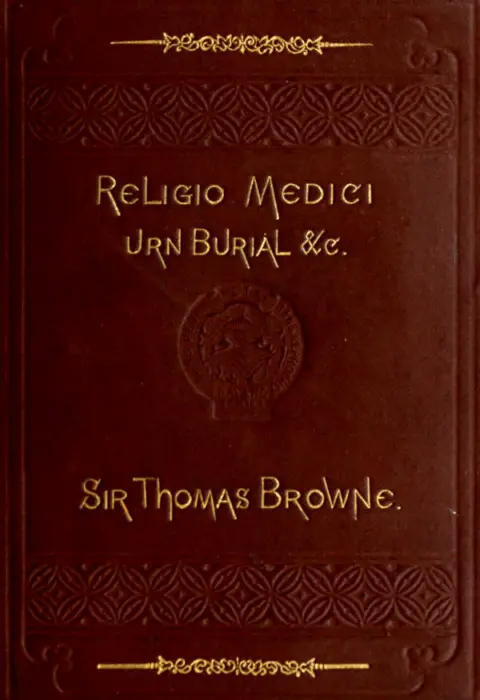
THE CLASSIC COLLECTION · 1690
"Religio Medici, Hydriotaphia, and the Letter to a Friend" by Sir Thomas Browne is a collection of philosophical and religious essays written in the 17th century. The work is significant for its exploration of spirituality, mortality, and the human condition, reflecting the complexity of Browne's thoughts as a physician and a thinker during a transformative period in history. The opening portion of the collection delves deep into Browne’s personal reflections on his faith and the philosophical underpinnings of his beliefs. He begins by asserting his Christian identity despite facing doubts from others due to his profession and demeanor. Browne emphasizes the importance of reason and personal interpretation of faith, advocating for an understanding of religion that transcends dogma. He discusses the relevance of charity and openness towards others’ beliefs and the historical context of varying Christian doctrines. Through a mixture of prose, reason, and introspective contemplation, he illustrates a mind grappling with the eternal themes of existence and divinity, setting the stage for the subsequent essays in the collection.
Introduction adapted from the source catalogue; source summaries may be automatically generated.
Free to read · English · 59,570 words · No account needed
MAKE TIME FOR A GOOD BOOK
On by default. Untick to stop anonymous reading totals. Each page counts after 10 seconds in view. How this works.
Anonymous counting is on unless you have switched it off.
Sect. 20.--Neither had these or any other ever such advantage of me, as to incline me to any point of infidelity or desperate positions of atheism; for I have been these many years of opinion there was never any. Those that held religion was the difference of man from beasts, have spoken probably, and proceed upon a principle as inductive as the other. That doctrine of Epicurus, that denied the providence of God, was no atheism, but a magnificent and high-strained conceit of his majesty, which he deemed too sublime to mind the trivial actions of those inferior creatures. That fatal necessity of the stoicks is nothing but the immutable law of his will. Those that heretofore denied the divinity of the Holy Ghost have been condemned but as hereticks; and those that now deny our Saviour, though more than hereticks, are not so much as atheists: for, though they deny two persons in the Trinity, they hold, as we do, there is but one God.
That villain and secretary of hell,[26] that composed that miscreant piece of the three impostors, though divided from all religions, and neither Jew, Turk, nor Christian, was not a positive atheist. I confess every country hath its Machiavel, every age its Lucian, whereof common heads must not hear, nor more advanced judgments too rashly venture on. It is the rhetorick of Satan; and may pervert a loose or prejudicate belief.
Sect. 21.--I confess I have perused them all, and can discover nothing that may startle a discreet belief; yet are their heads carried off with the wind and breath of such motives. I remember a doctor in physick, of Italy, who could not perfectly believe the immortality of the soul, because Galen seemed to make a doubt thereof. With another I was familiarly acquainted, in France, a divine, and a man of singular parts, that on the same point was so plunged and gravelled with three lines of Seneca,[E] that all our antidotes, drawn from both Scripture and philosophy, could not expel the poison of his error. There are a set of heads that can credit the relations of mariners, yet question the testimonies of Saint Paul: and peremptorily maintain the traditions of Ælian or Pliny; yet, in histories of Scripture, raise queries and objections: believing no more than they can parallel in human authors. I confess there are, in Scripture, stories that do exceed the fables of poets, and, to a captious reader, sound like Garagantua or Bevis.[27] Search all the legends of times past, and the fabulous conceits of these present, and ’twill be hard to find one that deserves to carry the buckler unto Samson; yet is all this of an easy possibility, if we conceive a divine concourse, or an influence from the little finger of the Almighty. It is impossible that, either in the discourse of man or in the infallible voice of God, to the weakness of our apprehensions there should not appear irregularities, contradictions, and antinomies:[28] myself could show a catalogue of doubts, never yet imagined nor questioned, as I know, which are not resolved at the first hearing; not fantastick queries or objections of air; for I cannot hear of atoms in divinity. I can read the history of the pigeon that was sent out of the ark, and returned no more, yet not question how she found out her mate that was left behind: that Lazarus was raised from the dead, yet not demand where, in the interim, his soul awaited; or raise a law-case, whether his heir might lawfully detain his inheritance bequeathed upon him by his death, and he, though restored to life, have no plea or title unto his former possessions. Whether Eve was framed out of the left side of Adam, I dispute not; because I stand not yet assured which is the right side of a man; or whether there be any such distinction in nature. That she was edified out of the rib of Adam, I believe; yet raise no question who shall arise with that rib at the resurrection. Whether Adam was an hermaphrodite, as the rabbins contend upon the letter of the text; because it is contrary to reason, there should be an hermaphrodite before there was a woman, or a composition of two natures, before there was a second composed. Likewise, whether the world was created in autumn, summer, or the spring; because it was created in them all: for, whatsoever sign the sun possesseth, those four seasons are actually existent. It is the nature of this luminary to distinguish the several seasons of the year; all which it makes at one time in the whole earth, and successively in any part thereof. There are a bundle of curiosities, not only in philosophy, but in divinity, proposed and discussed by men of most supposed abilities, which indeed are not worthy our vacant hours, much less our serious studies. Pieces only fit to be placed in Pantagruel’s library, or bound up with Tartaratus, De Modo Cacandi.[F][29]
Your reading position is saved on this browser. Take it to another device with a library code. Reading pages adapt to text, rather than matching a printed edition.
BEHIND THE BOOK
This eBook is for the use of anyone anywhere in the United States and most other parts of the world at no cost and with almost no restrictions whatsoever. You may copy it, give it away or re-use it under the terms of the Project Gutenberg License included with this eBook or online at www.gutenberg.org. If you are not located in the United States, you will have to check the laws of the country where you are located before using this eBook. Read the source licence.
The original source file, including credits and licence, is retained by this library. Request an original-format copy at no charge. Please include the book title and Project Gutenberg identifier #586.
KEEP YOUR CURIOSITY GOING

David Patterson (Spirit) Hatch

David Patterson (Spirit) Hatch

David Patterson (Spirit) Hatch
Cécile Tormay

Moritz Busch
Coulson Kernahan