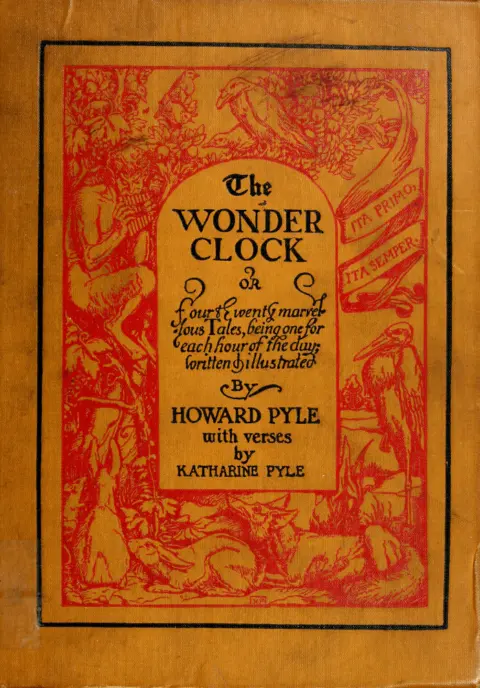
The Wonder Clock; or, four & twenty marvellous Tales being one for each hour of the day
Howard Pyle & Katharine Pyle
THE CLASSIC COLLECTION · 1903
"Rejected of Men: A Story of To-day" by Howard Pyle is a historical fiction novel written in the early 20th century. The narrative re-examines the biblical story of the crucifixion from the perspective of the scribes, Pharisees, priests, and Romans, offering a unique viewpoint that challenges contemporary interpretations of those events. The characters are depicted in a modern American context, aiming to provide insights into their motivations and the societal pressures they faced. At the start of the book, Pyle sets the stage by introducing the viewpoint of the clerical leaders in ancient Jerusalem, grappling with John the Baptist's growing influence and questioning the legitimacy of his prophetic role. The opening delves into their anxieties as they witness the crowds flock to hear John's sermons and the potential impact on their authority. The tension is palpable as they ponder their responsibility in confronting this popular preacher and the implications of the messages he brings, leading to a profound reflection on how circumstances shape human behavior and societal roles.
Introduction adapted from the source catalogue; source summaries may be automatically generated.
Free to read · English · 57,773 words · No account needed
MAKE TIME FOR A GOOD BOOK
On by default. Untick to stop anonymous reading totals. Each page counts after 10 seconds in view. How this works.
Anonymous counting is on unless you have switched it off.
Marcy turned towards him. "I'm glad you like it, Mr. Gilderman," he said. "It'll be very much improved when the paintings are hung. I think the stairway and the landing above is rather a happy inspiration, if I may say so."
"Stunning!" said Tilghman.
"Where did you get those chairs, De Witt?" said Gilderman.
"Inkerman picked them up for me at the Conti sale. They came from the Pinazi Palace, you know. Good, ain't they?" and De Witt passed his hand over the tapestried upholstery almost affectionately.
Just then the housekeeper appeared and dropped a courtesy as she came
in at the library doorway.
"Oh, Mrs. Lukens," said Mrs. De Witt, "I wish you'd have luncheon promptly at one o'clock. Mr. Gilderman wants to go back to town on the half-past two o'clock train."
"Yes, ma'am," said Mrs. Lukens, dropping another courtesy, and again Mr. Marcy smiled with a flash of his beautiful white teeth.
"I'd like to begin by taking you up-stairs, Mr. De Witt," he said.
"Very well," said De Witt. And then the whole party moved across the hall to begin the inspection of the house.
Gilderman rode back to the station behind the same smart horse, and with the same groom that had brought him over. The groom drove the horse very much faster than Tom De Witt had done. As they spun along the level stretch of road, Gilderman put up his hand, holding his hat against the wind, the smoke from his cigar blowing back in his eyes.
The groom checked the horse to a walk as they ascended the steep hill beyond which lay the town. "By-the-way, John," said Gilderman, suddenly, "there seems to be a good deal of interest hereabouts about that Man they're talking so much of just now."
The groom glanced quickly, almost suspiciously, at Gilderman, and then back at the horse again. "Yes, sir," he said. "They do be running after Him a lot, one way and another, about here."
"What do you think about Him yourself, John?" said Gilderman, curiously.
The man was plainly disinclined to talk. "I don't know, sir," he said. "I don't know that I think anything at all about Him. It ain't no concern of mine, sir."
"Then you don't believe in Him?" said Gilderman. "I'd really like to
know."
Again the man glanced swiftly at Gilderman. "I don't know, sir," he said. And then, after a pause, somewhat cautiously: "He have done some mighty strange things, sir."
"What do you mean?" said Gilderman, forbearing to look at him.
Your reading position is saved on this browser. Take it to another device with a library code. Reading pages adapt to text, rather than matching a printed edition.
Howard Pyle & Katharine Pyle
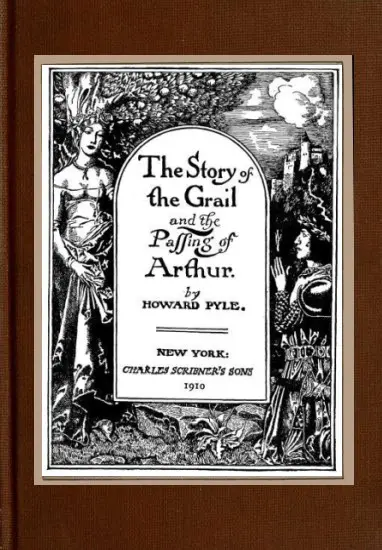
Howard Pyle
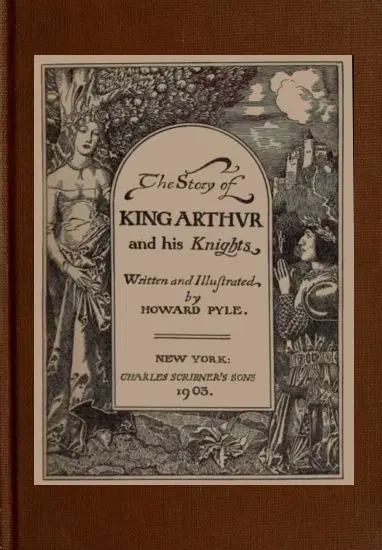
Howard Pyle
Howard Pyle
BEHIND THE BOOK
This eBook is for the use of anyone anywhere in the United States and most other parts of the world at no cost and with almost no restrictions whatsoever. You may copy it, give it away or re-use it under the terms of the Project Gutenberg License included with this eBook or online at www.gutenberg.org. If you are not located in the United States, you will have to check the laws of the country where you are located before using this eBook. Read the source licence.
The original source file, including credits and licence, is retained by this library. Request an original-format copy at no charge. Please include the book title and Project Gutenberg identifier #46841.
KEEP YOUR CURIOSITY GOING
Cécile Tormay

Moritz Busch
Coulson Kernahan
John L. Ransom

Maurice Baring
Frances Wright