THE CLASSIC COLLECTION✦The Plumed SerpentCLASSIC FREE BOOKS
The Plumed Serpent
D. H. (David Herbert) Lawrence
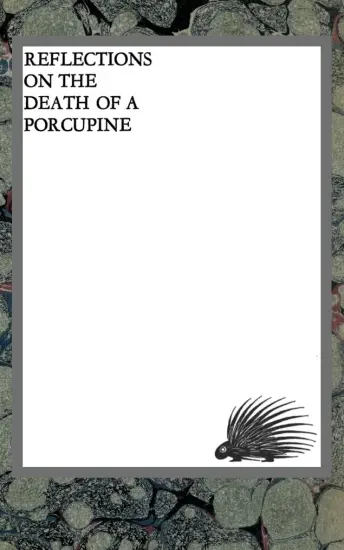
THE CLASSIC COLLECTION · 1925
"Reflections on the Death of a Porcupine and Other Essays" by D. H. Lawrence is a collection of essays written in the early 20th century. The work explores themes of existence, oppositional forces in life, and the struggles inherent in the human condition, emphasizing the complex interplay between light and darkness, life and death. Lawrence's unique perspective on nature and humanity invites readers to reflect on deeper philosophical questions. The opening portion of the book sets the tone with a discussion on oppositional forces symbolized by the lion and the unicorn, who perpetually contest for a crown that represents ultimate truth or purpose. It delves into the necessity of both light and darkness in understanding existence and asserts that the conflict between opposing forces is essential for meaning-making within life. Lawrence explores these themes using rich metaphors and existential musings, suggesting that individuals are often caught in self-imposed prisons of egoism that prevent true growth or connection. The urgent desire for fulfillment within this conflict underscores the overall philosophical depth and complexity of the essays ahead.
Introduction adapted from the source catalogue; source summaries may be automatically generated.
Free to read · English · 52,527 words · No account needed
MAKE TIME FOR A GOOD BOOK
On by default. Untick to stop anonymous reading totals. Each page counts after 10 seconds in view. How this works.
Anonymous counting is on unless you have switched it off.
Men are related to men: including women: and this, of course, is very important. But one would think it were everything. One would think, to read modern books, that the life of any tuppenny bank-clerk was more important than sun, moon, and stars; and to read the pert drivel of the critics, one would be led to imagine that every three-farthing whipper-snapper who lifts up his voice in approval or censure were the thrice-greatest Hermes speaking in judgment out of the mysteries.
This is the democratic age of cheap clap-trap, and it sits in jackdaw
judgment on all greatness.
And this is the result of making, in our own conceit, man the measure of the universe. Don’t you be taken in. The universe, so vast and profound, measures man up very accurately, for the yelping mongrel with his tail between his legs, that he is. And the great sun, and the moon, with a smile will soon start dropping the mongrel down the vast refuse-pit of oblivion. Oh, the universe has a terrible hole in the middle of it, an oubliette for all of you, whipper-snappering mongrels.
Man, of course, being measure of the universe, is measured only against man. Has, of course, vital relationship only with his own cheap little species. Hence the cheap little twaddler he has become.
In the great ages, man had vital relation with man, with woman: and beyond that, with the cow, the lion, the bull, the cat, the eagle, the beetle, the serpent. And beyond these, with narcissus and anemone, mistletoe and oak-tree, myrtle, olive, and lotus. And beyond these with humus and slanting water, cloud-towers and rainbow and the sweeping sun-limbs. And beyond that, with sun, and moon, the living night and the living day.
Do you imagine the great realities, even the ram of Amon, are only symbols of something human? Do you imagine the great symbols, the dragon, the snake, the bull, only refer to bits, qualities or attributes of little man? It is puerile. The puerilty, the puppyish conceit of modern white humanity is almost funny.
Amon, the great ram, do you think he doesn’t stand alone in the universe, without your permission, oh cheap little man? Because he’s there, do you think you bred him, out of your own almightiness, you cheap-jack?
Amon, the great ram! Mithras, the great bull! The mistletoe on the tree. Do you think, you stuffy little human fool sitting in a chair and wearing lambs-wool underwear and eating your mutton and beef under the Christmas decoration, do you think then that Amon, Mithras, Mistletoe, and the whole Tree of Life were just invented to contribute to your complacency?
Your reading position is saved on this browser. Take it to another device with a library code. Reading pages adapt to text, rather than matching a printed edition.
D. H. (David Herbert) Lawrence
D. H. (David Herbert) Lawrence
D. H. (David Herbert) Lawrence
D. H. (David Herbert) Lawrence
BEHIND THE BOOK
This eBook is for the use of anyone anywhere in the United States and most other parts of the world at no cost and with almost no restrictions whatsoever. You may copy it, give it away or re-use it under the terms of the Project Gutenberg License included with this eBook or online at www.gutenberg.org. If you are not located in the United States, you will have to check the laws of the country where you are located before using this eBook. Read the source licence.
The original source file, including credits and licence, is retained by this library. Request an original-format copy at no charge. Please include the book title and Project Gutenberg identifier #73691.
KEEP YOUR CURIOSITY GOING

David Patterson (Spirit) Hatch

David Patterson (Spirit) Hatch

David Patterson (Spirit) Hatch
Coulson Kernahan

Ralph Waldo Emerson

Maurice Baring