THE CLASSIC COLLECTION✦The Plumed SerpentCLASSIC FREE BOOKS
The Plumed Serpent
D. H. (David Herbert) Lawrence
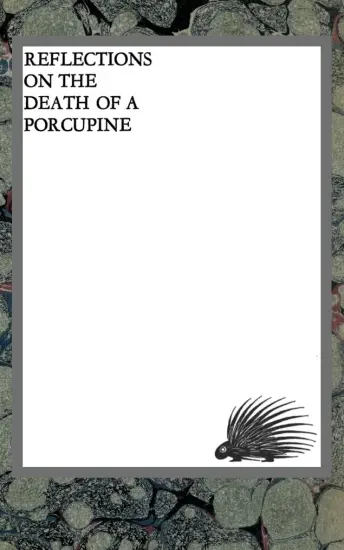
THE CLASSIC COLLECTION · 1925
"Reflections on the Death of a Porcupine and Other Essays" by D. H. Lawrence is a collection of essays written in the early 20th century. The work explores themes of existence, oppositional forces in life, and the struggles inherent in the human condition, emphasizing the complex interplay between light and darkness, life and death. Lawrence's unique perspective on nature and humanity invites readers to reflect on deeper philosophical questions. The opening portion of the book sets the tone with a discussion on oppositional forces symbolized by the lion and the unicorn, who perpetually contest for a crown that represents ultimate truth or purpose. It delves into the necessity of both light and darkness in understanding existence and asserts that the conflict between opposing forces is essential for meaning-making within life. Lawrence explores these themes using rich metaphors and existential musings, suggesting that individuals are often caught in self-imposed prisons of egoism that prevent true growth or connection. The urgent desire for fulfillment within this conflict underscores the overall philosophical depth and complexity of the essays ahead.
Introduction adapted from the source catalogue; source summaries may be automatically generated.
Free to read · English · 52,527 words · No account needed
MAKE TIME FOR A GOOD BOOK
On by default. Untick to stop anonymous reading totals. Each page counts after 10 seconds in view. How this works.
Anonymous counting is on unless you have switched it off.
Everything in the world is relative to everything else. And every living thing is related to every other living thing.
But creation moves in cycles, and in degrees. There is higher and lower, in the cycles of creation, and greater and less, in the degree of life.
Each thing that attains to purity in its own cycle of existence, is pure and is itself, and, in its purity, is beyond compare.
But in relation to other things, it is either higher or lower, of
greater or less degree.
We have to admit that a daisy is more highly developed than a fern, even if it be a tree-fern. The daisy belongs to a higher order of life. That is, the daisy is more alive. The fern more torpid.
And a bee is more alive than a daisy: of a higher order of life. The daisy, pure as it is in its own being, yet, when compared with the bee, is limited in its being.
And birds are higher than bees: more alive. And mammals are higher than birds. And man is the highest, most developed, most conscious, most alive of the mammals: master of them all.
But even within the species, there is a difference. The nightingale is higher, purer, even more alive, more subtly, delicately alive, than the sparrow. And the parrot is more highly developed, or more alive, than the pigeon.
Among men, the difference in being is infinite. And it is a difference in degree as well as in kind. One man is, in himself, more, more alive, more of a man, than another. One man has greater being than another, a purer manhood, a more vivid livingness. The difference is infinite.
And, seeing that the inferiors are vastly more numerous than the superiors, when Jesus came, the inferiors, who are no means the meek that they should be, set out to inherit the earth.
Jesus, in a world of arrogant Pharisees and egoistic Romans, thought that purity and poverty were one. It was a fatal mistake. Purity is often enough poor. But poverty is only too rarely pure. Poverty too often is only the result of natural poorness, poorness in courage, poorness in living vitality, poorness in manhood: poor life, poor character. Now the poor in life are the most impure, the most easily degenerate.
But the few men rich in life and pure in heart read purity into poverty, and Christianity started. “Charity suffereth long, and is kind. Charity envieth not. Charity vaunteth not itself, is not puffed up.”
They are the words of a noble manhood.
Your reading position is saved on this browser. Take it to another device with a library code. Reading pages adapt to text, rather than matching a printed edition.
D. H. (David Herbert) Lawrence
D. H. (David Herbert) Lawrence
D. H. (David Herbert) Lawrence
D. H. (David Herbert) Lawrence
BEHIND THE BOOK
This eBook is for the use of anyone anywhere in the United States and most other parts of the world at no cost and with almost no restrictions whatsoever. You may copy it, give it away or re-use it under the terms of the Project Gutenberg License included with this eBook or online at www.gutenberg.org. If you are not located in the United States, you will have to check the laws of the country where you are located before using this eBook. Read the source licence.
The original source file, including credits and licence, is retained by this library. Request an original-format copy at no charge. Please include the book title and Project Gutenberg identifier #73691.
KEEP YOUR CURIOSITY GOING

David Patterson (Spirit) Hatch

David Patterson (Spirit) Hatch

David Patterson (Spirit) Hatch
Coulson Kernahan

Ralph Waldo Emerson

Maurice Baring