THE CLASSIC COLLECTION✦The Plumed SerpentCLASSIC FREE BOOKS
The Plumed Serpent
D. H. (David Herbert) Lawrence
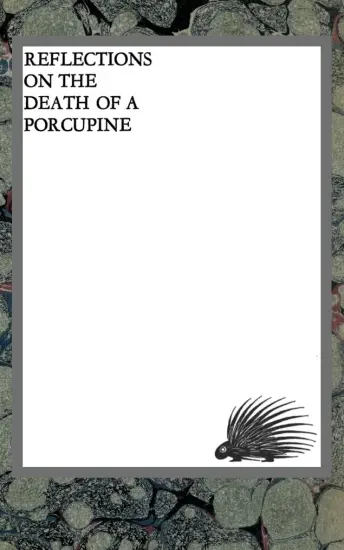
THE CLASSIC COLLECTION · 1925
"Reflections on the Death of a Porcupine and Other Essays" by D. H. Lawrence is a collection of essays written in the early 20th century. The work explores themes of existence, oppositional forces in life, and the struggles inherent in the human condition, emphasizing the complex interplay between light and darkness, life and death. Lawrence's unique perspective on nature and humanity invites readers to reflect on deeper philosophical questions. The opening portion of the book sets the tone with a discussion on oppositional forces symbolized by the lion and the unicorn, who perpetually contest for a crown that represents ultimate truth or purpose. It delves into the necessity of both light and darkness in understanding existence and asserts that the conflict between opposing forces is essential for meaning-making within life. Lawrence explores these themes using rich metaphors and existential musings, suggesting that individuals are often caught in self-imposed prisons of egoism that prevent true growth or connection. The urgent desire for fulfillment within this conflict underscores the overall philosophical depth and complexity of the essays ahead.
Introduction adapted from the source catalogue; source summaries may be automatically generated.
Free to read · English · 52,527 words · No account needed
MAKE TIME FOR A GOOD BOOK
On by default. Untick to stop anonymous reading totals. Each page counts after 10 seconds in view. How this works.
Anonymous counting is on unless you have switched it off.
We are the foam and the foreshore, that which, between the oceans, is not, but that which supersedes the oceans in utter reality, and gleams in absolute Eternity.
The Beginning is-not, nor the eternity which lies behind us, save in part. Partial also is the eternity which lies in front. But that which is not partial, but whole, that which is not relative, but absolute, is the clash of the two into one, the foam of being thrown up into consummation.
It is the music which comes when the cymbals clash one upon the other: this is absolute and timeless. The cymbals swing back in one or the other direction of time, towards one or the other relative eternity. But absolute, timeless, beyond time or eternity, beyond space or infinity, is the music that was the consummation of the two cymbals in opposition.
It is that which comes when night clashes on day, the rainbow, the yellow and rose and blue and purple of dawn and sunset, which leaps out of the breaking of light upon darkness, of darkness upon light, absolute beyond day or night; the rainbow, the iridescence which is darkness at once and light, the two-in-one; the crown that binds them both.
It is the lovely body of foam that walks for ever between the two seas, perfect and consummate, the revealed consummation, the oneness that has taken being out of the two.
We say the foam is evanescent, the wind passes over it and it is gone--he who would save his life must lose it.
But if indeed the foam were-not, if the two seas fell apart, if the sea fell departed from the land, and the land from the sea, if the two halves, day and night, were ripped asunder, without attraction or opposition, what then? Then there would be between them nothingness, utter nothingness. Which is meaningless.
So that the foam and the iridescence, the music that comes from the cymbals, all formed things that come from perfect union in opposition, all beauty and all truth and being, all perfection, these are the be-all and the end-all, absolute, timeless, beyond time or eternity, beyond the Limit or the Infinite.
This lovely body of foam, this iris between the two floods, this music between the cymbals, this truth between the surge of facts, this supreme reason between conflicting desires, this holy spirit between the opposite divinities, this is the Absolute made visible between the two Infinities, the Timelessness into which are assumed the two Eternities.
Your reading position is saved on this browser. Take it to another device with a library code. Reading pages adapt to text, rather than matching a printed edition.
D. H. (David Herbert) Lawrence
D. H. (David Herbert) Lawrence
D. H. (David Herbert) Lawrence
D. H. (David Herbert) Lawrence
BEHIND THE BOOK
This eBook is for the use of anyone anywhere in the United States and most other parts of the world at no cost and with almost no restrictions whatsoever. You may copy it, give it away or re-use it under the terms of the Project Gutenberg License included with this eBook or online at www.gutenberg.org. If you are not located in the United States, you will have to check the laws of the country where you are located before using this eBook. Read the source licence.
The original source file, including credits and licence, is retained by this library. Request an original-format copy at no charge. Please include the book title and Project Gutenberg identifier #73691.
KEEP YOUR CURIOSITY GOING

David Patterson (Spirit) Hatch

David Patterson (Spirit) Hatch

David Patterson (Spirit) Hatch
Coulson Kernahan

Ralph Waldo Emerson

Maurice Baring