THE CLASSIC COLLECTION✦A journey in search of ChristmasCLASSIC FREE BOOKS
A journey in search of Christmas
Owen Wister
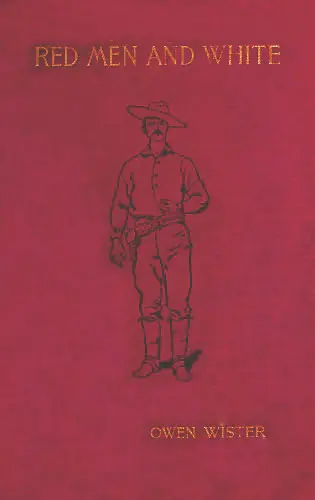
THE CLASSIC COLLECTION · 1895
"Red Men and White" by Owen Wister is a collection of short stories written in the late 19th century. The narrative explores the complexities of life on the Western frontier, particularly focusing on the interactions between white settlers and Native American tribes. The stories are connected thematically and feature overlapping characters, suggesting a rich and intertwined tapestry of life during a pivotal time in American history. The opening of the collection sets the stage for these narratives by highlighting the dynamic circumstances of the Crow Indians and their evolving relationship with white settlers and soldiers. It introduces characters like young Cheschapah, a Crow Indian who struggles between his ambition for leadership and duty to his people, and Lieutenant Stirling whose observations about the Indians reveal deeper nuances. As tensions arise with the Sioux tribe visiting the Crows and the calculations of superstitions that could ignite conflict, a stark portrait of life on the frontier is painted—a world of fragile peace overshadowed by the threat of violence, cultural misunderstanding, and the quest for identity and recognition. This sets the tone for a thoughtful exploration of the intersections of cultures, conflict, and human ambition that defines the Wild West.
Introduction adapted from the source catalogue; source summaries may be automatically generated.
Free to read · English · 79,787 words · No account needed
MAKE TIME FOR A GOOD BOOK
On by default. Untick to stop anonymous reading totals. Each page counts after 10 seconds in view. How this works.
Anonymous counting is on unless you have switched it off.
Nothing could have been more to Ballard's mind as he calculated the fleeting minutes than this peaceful, pompous farce. "Draw your bill, gentlemen," he said. "I would not object if I could."
The Statutes of the United States were procured from among the pistols and opened at the proper page. Gascon Claiborne, upon another sheet of paper headed "Territory of Idaho, Council Chamber," set about formulating some phrases which began "Whereas," and Gratiot des Peres read aloud to him from the statutes. Ballard conversed apart with Hewley; in fact, there was much conversing aside.
"'Third March, 1863, c. 117, s. 8, v. 12, p. 811,'" dictated Des Peres.
"Skip the chaptuhs and sections," said Claiborne. "We only require the
date."
"'Third March, 1863. The sessions of the Legislative Assemblies of the several Territories of the United States shall be limited to forty days' duration.'"
"Wise provision that," whispered Ballard. "No telling how long a poker
game might last."
But Hewley could not take anything in this spirit. "Genuine business was not got through till yesterday," he said.
"'The members of each branch of the Legislature,'" read Des Peres, "'shall receive a compensation of six dollars per day during the sessions herein provided for, and they shall receive such mileage as now provided by law: Provided, That the President of the Council and the Speaker of the House of Representatives shall each receive a compensation of ten dollars a day.'"
At this the President of the Council waved a deprecatory hand to signify that it was a principle, not profit, for which he battled. They had completed their Whereases, incorporating the language of the several sections as to how the appropriation should be made, who disbursed such money, mileage, and, in short, all things pertinent to their bill, when Pete Cawthon made a suggestion.
"Ain't there anything 'bout how much the Gove'nuh gits?" he asks.
"And the Secretary?" added Wingo.
"Oh, you can leave us out," said Ballard.
"Pardon me, Gove'nuh," said Gilet. "You stated that yoh difficulty was not confined to Mr. Wingo or any individual gentleman, but was general. Does it not apply to yo'self, suh? Do you not need any bill?"
"Oh no," said Ballard, laughing. "I don't need any bill."
"And why not?" said Cawthon. "You've jist ez much earned yoh money ez us
fellers."
"Quite as much," said Ballard. "But we're not alike--at present."
Gilet grew very stately. "Except certain differences in political opinions, suh, I am not awah of how we differ in merit as public servants of this Territory."
Your reading position is saved on this browser. Take it to another device with a library code. Reading pages adapt to text, rather than matching a printed edition.
Owen Wister
Owen Wister

Caspar Whitney & George Bird Grinnell & Owen Wister
Owen Wister
BEHIND THE BOOK
This eBook is for the use of anyone anywhere in the United States and most other parts of the world at no cost and with almost no restrictions whatsoever. You may copy it, give it away or re-use it under the terms of the Project Gutenberg License included with this eBook or online at www.gutenberg.org. If you are not located in the United States, you will have to check the laws of the country where you are located before using this eBook. Read the source licence.
The original source file, including credits and licence, is retained by this library. Request an original-format copy at no charge. Please include the book title and Project Gutenberg identifier #28675.
KEEP YOUR CURIOSITY GOING
Coulson Kernahan

Maurice Baring
Frances Wright
Cécile Tormay

Frederic Jesup Stimson

W. H. P. (William Henry Pope) Jarvis