THE CLASSIC COLLECTION✦A journey in search of ChristmasCLASSIC FREE BOOKS
A journey in search of Christmas
Owen Wister
THE CLASSIC COLLECTION · 1895
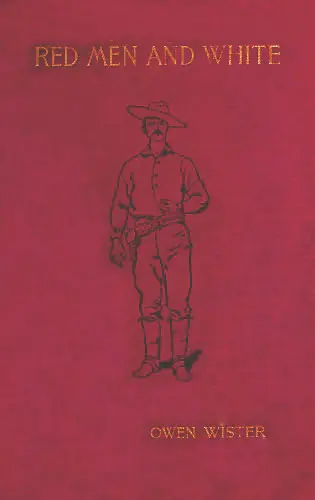
"Red Men and White" by Owen Wister is a collection of short stories written in the late 19th century. The narrative explores the complexities of life on the Western frontier, particularly focusing on the interactions between white settlers and Native American tribes. The stories are connected thematically and feature overlapping characters, suggesting a rich and intertwined tapestry of life during a pivotal time in American history. The opening of the collection sets the stage for these narratives by highlighting the dynamic circumstances of the Crow Indians and their evolving relationship with white settlers and soldiers. It introduces characters like young Cheschapah, a Crow Indian who struggles between his ambition for leadership and duty to his people, and Lieutenant Stirling whose observations about the Indians reveal deeper nuances. As tensions arise with the Sioux tribe visiting the Crows and the calculations of superstitions that could ignite conflict, a stark portrait of life on the frontier is painted—a world of fragile peace overshadowed by the threat of violence, cultural misunderstanding, and the quest for identity and recognition. This sets the tone for a thoughtful exploration of the intersections of cultures, conflict, and human ambition that defines the Wild West.
Introduction adapted from the source catalogue; source summaries may be automatically generated.
Free to read · English · 79,787 words · No account needed
MAKE TIME FOR A GOOD BOOK
On by default. Untick to stop anonymous reading totals. Each page counts after 10 seconds in view. How this works.
Anonymous counting is on unless you have switched it off.
Mr. Hewley did it; and winning the first, he lost the second, third, and fourth in the space of an eager minute, while the Councillors drew their chairs close.
"Let me see," said Wingo, calculating, "if I lose this--why still--" He lost. "But I'll not have to ask you to accept my papuh, suh. Wingo liquidates. Fo'ty days at six dolluhs a day makes six times fo' is twenty-fo'--two hun'red an' fo'ty dolluhs spot cash in hand at noon, without computation of mileage to and from Silver City at fo' dolluhs every twenty miles, estimated according to the nearest usually travelled route." He was reciting part of the statute providing mileage for Idaho legislators. He had never served the public before, and he knew all the laws concerning compensation by heart. "You'll not have to wait fo' yoh money, suh," he concluded.
"Well, Mr. Wingo," said Governor Ballard, "it depends on yourself whether your pay comes to you or not." He spoke cheerily. "If you don't see things my way, our Treasurer will have to wait for his money." He had not expected to break the news just so, but it made as easy a beginning as any.
"See things yoh way, suh?"
"Yes. As it stands at present I cannot take the responsibility of paying
you."
"The United States pays me, suh. My compensation is provided by act of
Congress."
"I confess I am unable to discern your responsibility, Gove'nuh," said F. Jackson Gilet. "Mr. Wingo has faithfully attended the session, and is, like every gentleman present, legally entitled to his emoluments."
"You can all readily become entitled--"
"All? Am I--are my friends--included in this new depa'tyuh?"
"The difficulty applies generally, Mr. Gilet."
"Do I understand the Gove'nuh to insinuate--nay, gentlemen, do not rise! Be seated, I beg." For the Councillors had leaped to their feet.
"Whar's our money?" said Pete Cawthon. "Our money was put in thet yere
box."
Ballard flushed angrily, but a knock at the door stopped him, and he
merely said, "Come in."
A trooper, a corporal, stood at the entrance, and the disordered Council endeavored to look usual in a stranger's presence. They resumed their seats, but it was not easy to look usual on such short notice.
"Captain Paisley's compliments," said the soldier, mechanically, "and will Governor Ballard take supper with him this evening?"
"Thank Captain Paisley," said the Governor (his tone was quite usual), "and say that official business connected with the end of the session makes it imperative for me to be at the State-House. Imperative."
Your reading position is saved on this browser. Take it to another device with a library code. Reading pages adapt to text, rather than matching a printed edition.
Owen Wister

Owen Wister

Caspar Whitney & George Bird Grinnell & Owen Wister
Owen Wister
BEHIND THE BOOK
This eBook is for the use of anyone anywhere in the United States and most other parts of the world at no cost and with almost no restrictions whatsoever. You may copy it, give it away or re-use it under the terms of the Project Gutenberg License included with this eBook or online at www.gutenberg.org. If you are not located in the United States, you will have to check the laws of the country where you are located before using this eBook. Read the source licence.
The original source file, including credits and licence, is retained by this library. Request an original-format copy at no charge. Please include the book title and Project Gutenberg identifier #28675.
KEEP YOUR CURIOSITY GOING
Coulson Kernahan

Maurice Baring
Frances Wright
Cécile Tormay

Frederic Jesup Stimson

W. H. P. (William Henry Pope) Jarvis