THE CLASSIC COLLECTION✦A journey in search of ChristmasCLASSIC FREE BOOKS
A journey in search of Christmas
Owen Wister
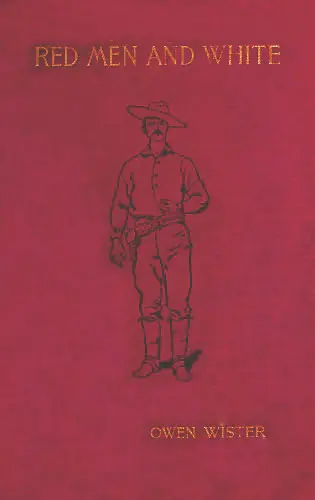
THE CLASSIC COLLECTION · 1895
"Red Men and White" by Owen Wister is a collection of short stories written in the late 19th century. The narrative explores the complexities of life on the Western frontier, particularly focusing on the interactions between white settlers and Native American tribes. The stories are connected thematically and feature overlapping characters, suggesting a rich and intertwined tapestry of life during a pivotal time in American history. The opening of the collection sets the stage for these narratives by highlighting the dynamic circumstances of the Crow Indians and their evolving relationship with white settlers and soldiers. It introduces characters like young Cheschapah, a Crow Indian who struggles between his ambition for leadership and duty to his people, and Lieutenant Stirling whose observations about the Indians reveal deeper nuances. As tensions arise with the Sioux tribe visiting the Crows and the calculations of superstitions that could ignite conflict, a stark portrait of life on the frontier is painted—a world of fragile peace overshadowed by the threat of violence, cultural misunderstanding, and the quest for identity and recognition. This sets the tone for a thoughtful exploration of the intersections of cultures, conflict, and human ambition that defines the Wild West.
Introduction adapted from the source catalogue; source summaries may be automatically generated.
Free to read · English · 79,787 words · No account needed
MAKE TIME FOR A GOOD BOOK
On by default. Untick to stop anonymous reading totals. Each page counts after 10 seconds in view. How this works.
Anonymous counting is on unless you have switched it off.
"All aboa-rd!" said the conductor, and the long train continued its way
to Portland.
The platoon, well content, dispersed homeward to supper, and Jim Hornbrook walked home with his girl.
"For Lord's sake, Louise," he said, "who started that move?"
She told him the history of the morning.
"Well," he said, "you tell Mrs. Campbell, with my respects, that she's just playing with fire. A good woman like her ought to have more sense. Those men are going to have a fair trial."
"She wouldn't listen to me, Jim, not a bit. And, do you know, she really didn't seem to feel sorry--except just for a minute--about that poor woman."
"Louise, why don't you quit her outfit?"
"Resign from the Lyceum? That's so silly of you, Jim. We're not all crazy there; and that," said Miss Sissons, demurely, "is what makes a girl like me so valuable!"
"Well, I'm not stuck on having you travel with that lot."
"They speak better English than you do, Jim dear. Don't! in the street!"
"Sho! It's dark now," said Jim. "And it's been three whole days since--" But Miss Sissons escaped inside her gate and rang the bell. "Now see here, Louise," he called after her, "when I say they're playing with fire I mean it. That woman will make trouble in this town."
"She's not afraid," said Miss Sissons. "Don't you know enough about us yet to know we can't be threatened?"
"You!" said the young man. "I wasn't thinking of you." And so they
separated.
Mrs. Campbell sat opposite the judge at supper, and he saw at once from her complacent reticence that she had achieved some triumph against his principles. She chatted about topics of the day in terms that were ingeniously trite. Then a letter came from their son in Denver, and she forgot her role somewhat, and read the letter aloud to the judge, and wondered wistfully who in Denver attended to the boy's buttons and socks; but she made no reference whatever to Siskiyou jail or those inside it. Next morning, however, it was the judge's turn to be angry.
"Amanda," he said, over the paper again, "you had better stick to socks, and leave criminals alone."
Amanda gazed at space with a calm smile.
"And I'll tell you one thing, my dear," her husband said, more incisively, "it don't look well that I should represent the law while my wife figures" (he shook the morning paper) "as a public nuisance. And one thing more: Look out! For if I know this community, and I think I do, you may raise something you don't bargain for."
Your reading position is saved on this browser. Take it to another device with a library code. Reading pages adapt to text, rather than matching a printed edition.
Owen Wister
Owen Wister

Caspar Whitney & George Bird Grinnell & Owen Wister
Owen Wister
BEHIND THE BOOK
This eBook is for the use of anyone anywhere in the United States and most other parts of the world at no cost and with almost no restrictions whatsoever. You may copy it, give it away or re-use it under the terms of the Project Gutenberg License included with this eBook or online at www.gutenberg.org. If you are not located in the United States, you will have to check the laws of the country where you are located before using this eBook. Read the source licence.
The original source file, including credits and licence, is retained by this library. Request an original-format copy at no charge. Please include the book title and Project Gutenberg identifier #28675.
KEEP YOUR CURIOSITY GOING
Coulson Kernahan

Maurice Baring
Frances Wright
Cécile Tormay

Frederic Jesup Stimson

W. H. P. (William Henry Pope) Jarvis