THE CLASSIC COLLECTION✦A journey in search of ChristmasCLASSIC FREE BOOKS
A journey in search of Christmas
Owen Wister
THE CLASSIC COLLECTION · 1895
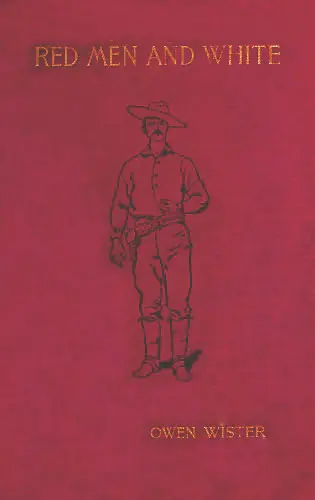
"Red Men and White" by Owen Wister is a collection of short stories written in the late 19th century. The narrative explores the complexities of life on the Western frontier, particularly focusing on the interactions between white settlers and Native American tribes. The stories are connected thematically and feature overlapping characters, suggesting a rich and intertwined tapestry of life during a pivotal time in American history. The opening of the collection sets the stage for these narratives by highlighting the dynamic circumstances of the Crow Indians and their evolving relationship with white settlers and soldiers. It introduces characters like young Cheschapah, a Crow Indian who struggles between his ambition for leadership and duty to his people, and Lieutenant Stirling whose observations about the Indians reveal deeper nuances. As tensions arise with the Sioux tribe visiting the Crows and the calculations of superstitions that could ignite conflict, a stark portrait of life on the frontier is painted—a world of fragile peace overshadowed by the threat of violence, cultural misunderstanding, and the quest for identity and recognition. This sets the tone for a thoughtful exploration of the intersections of cultures, conflict, and human ambition that defines the Wild West.
Introduction adapted from the source catalogue; source summaries may be automatically generated.
Free to read · English · 79,787 words · No account needed
MAKE TIME FOR A GOOD BOOK
On by default. Untick to stop anonymous reading totals. Each page counts after 10 seconds in view. How this works.
Anonymous counting is on unless you have switched it off.
"Mrs. Montgomery, I mean--the murdered man's wife. I--I went to see if I could do anything, for she has some children; but she wouldn't see me," said Miss Sissons. "She said she couldn't talk to anybody."
"Poor thing!" said Mrs. Campbell. "I dare say it was a dreadful shock to her. Yes, dear, we'll attend to her after a while. We'll have her with us right along, you know, whereas these unhappy boys may--may be--may soon meet a cruel death on the scaffold." Mrs. Campbell evaded the phrase "may be hanged" rather skilfully. To her trained oratorical sense it had seemed to lack dignity.
"So young!" said Mrs. Day.
"And both so full of promise, to be cut off!" said Mrs. Parsons.
"Why, they can't hang them both, I should think," said Miss Sissons. "I thought only one killed Mr. Montgomery."
"My dear Louise," said Mrs. Campbell, "they can do anything they want, and they will. Shall I ever forget those ruffians who wanted to lynch the first one? They'll be on the jury!"
The clump returned to their discussion of the flowers, and Miss Sissons presently mentioned she had some errands to do, and departed.
"Would that that girl had more soul!" said Mrs. Parsons.
"She has plenty of soul," replied Mrs. Campbell, "but she's under the
influence of a man. Well, as I was saying, roses and lilies are too
big."
"Oh, why?" said Mrs. Day. "They would please him so."
"He couldn't carry them, Mrs. Day. I've thought it all out. He'll be walked to the jail between strong men. We must have some small bokay to pin on his coat, for his hands will be shackled."
"You don't say!" cried Mrs. Slocum. "How awful! I must get to that train. I've never seen a man in shackles in my life."
So violets were selected; Mrs. Campbell brought some in the afternoon from her own borders, and Mrs. Parsons furnished a large pin. She claimed also the right to affix the decoration upon the prisoner's breast because she had suggested the idea of flowers; but the other ladies protested, and the president seemed to think that they all should draw lots. It fell to Mrs. Day.
"Now I declare!" twittered the little matron. "I do believe I'll never
dare."
"You must say something to him," said Amanda; "something fitting and
choice."
"Oh dear no, Mrs. Campbell. Why, I never--my gracious! Why, if I'd known I was expected--Really, I couldn't think--I'll let you do it!"
"We can't hash up the ceremony that way, Mrs. Day," said Amanda, severely. And as they all fell arguing, the whistle blew.
Your reading position is saved on this browser. Take it to another device with a library code. Reading pages adapt to text, rather than matching a printed edition.
Owen Wister

Owen Wister

Caspar Whitney & George Bird Grinnell & Owen Wister
Owen Wister
BEHIND THE BOOK
This eBook is for the use of anyone anywhere in the United States and most other parts of the world at no cost and with almost no restrictions whatsoever. You may copy it, give it away or re-use it under the terms of the Project Gutenberg License included with this eBook or online at www.gutenberg.org. If you are not located in the United States, you will have to check the laws of the country where you are located before using this eBook. Read the source licence.
The original source file, including credits and licence, is retained by this library. Request an original-format copy at no charge. Please include the book title and Project Gutenberg identifier #28675.
KEEP YOUR CURIOSITY GOING
Coulson Kernahan

Maurice Baring
Frances Wright
Cécile Tormay

Frederic Jesup Stimson

W. H. P. (William Henry Pope) Jarvis