THE CLASSIC COLLECTION✦A journey in search of ChristmasCLASSIC FREE BOOKS
A journey in search of Christmas
Owen Wister
THE CLASSIC COLLECTION · 1895
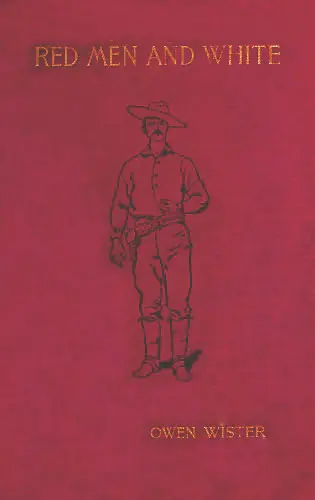
"Red Men and White" by Owen Wister is a collection of short stories written in the late 19th century. The narrative explores the complexities of life on the Western frontier, particularly focusing on the interactions between white settlers and Native American tribes. The stories are connected thematically and feature overlapping characters, suggesting a rich and intertwined tapestry of life during a pivotal time in American history. The opening of the collection sets the stage for these narratives by highlighting the dynamic circumstances of the Crow Indians and their evolving relationship with white settlers and soldiers. It introduces characters like young Cheschapah, a Crow Indian who struggles between his ambition for leadership and duty to his people, and Lieutenant Stirling whose observations about the Indians reveal deeper nuances. As tensions arise with the Sioux tribe visiting the Crows and the calculations of superstitions that could ignite conflict, a stark portrait of life on the frontier is painted—a world of fragile peace overshadowed by the threat of violence, cultural misunderstanding, and the quest for identity and recognition. This sets the tone for a thoughtful exploration of the intersections of cultures, conflict, and human ambition that defines the Wild West.
Introduction adapted from the source catalogue; source summaries may be automatically generated.
Free to read · English · 79,787 words · No account needed
MAKE TIME FOR A GOOD BOOK
On by default. Untick to stop anonymous reading totals. Each page counts after 10 seconds in view. How this works.
Anonymous counting is on unless you have switched it off.
Something new was happening among the Crow Indians. A young pretender had appeared in the tribe. What this might lead to was unknown alike to white man and to red; but the old Crow chiefs discussed it in their councils, and the soldiers at Fort Custer, and the civilians at the agency twelve miles up the river, and all the white settlers in the valley discussed it also. Lieutenants Stirling and Haines, of the First Cavalry, were speculating upon it as they rode one afternoon.
"Can't tell about Indians," said Stirling. "But I think the Crows are too reasonable to go on the war-path."
"Reasonable!" said Haines. He was young, and new to Indians.
"Just so. Until you come to his superstitions, the Indian can reason as straight as you or I. He's perfectly logical."
"Logical!" echoed Haines again. He held the regulation Eastern view that the Indian knows nothing but the three blind appetites.
"You'd know better," remarked Stirling, "if you'd been fighting 'em for fifteen years. They're as shrewd as AEsop's fables."
Just then two Indians appeared round a bluff--one old and shabby, the other young and very gaudy--riding side by side.
"That's Cheschapah," said Stirling. "That's the agitator in all his feathers. His father, you see, dresses more conservatively."
The feathered dandy now did a singular thing. He galloped towards the two officers almost as if to bear them down, and, steering much too close, flashed by yelling, amid a clatter of gravel.
"Nice manners," commented Haines. "Seems to have a chip on his
shoulder."
But Stirling looked thoughtful. "Yes," he muttered, "he has a chip."
Meanwhile the shabby father was approaching. His face was mild and sad, and he might be seventy. He made a gesture of greeting. "How!" he said, pleasantly, and ambled on his way.
"Now there you have an object-lesson," said Stirling. "Old Pounded Meat has no chip. The question is, are the fathers or the sons going to run the Crow Nation?"
"Why did the young chap have a dog on his saddle?" inquired Haines.
"I didn't notice it. For his supper, probably--probably he's getting up a dance. He is scheming to be a chief. Says he is a medicine-man, and can make water boil without fire; but the big men of the tribe take no stock in him--not yet. They've seen soda-water before. But I'm told this water-boiling astonishes the young."
"You say the old chiefs take no stock in him yet?"
"Ah, that's the puzzle. I told you just now Indians could reason."
"And I was amused."
"Because you're an Eastern man. I tell you, Haines, if it wasn't my business to shoot Indians I'd study them."
Your reading position is saved on this browser. Take it to another device with a library code. Reading pages adapt to text, rather than matching a printed edition.
Owen Wister

Owen Wister

Caspar Whitney & George Bird Grinnell & Owen Wister
Owen Wister
BEHIND THE BOOK
This eBook is for the use of anyone anywhere in the United States and most other parts of the world at no cost and with almost no restrictions whatsoever. You may copy it, give it away or re-use it under the terms of the Project Gutenberg License included with this eBook or online at www.gutenberg.org. If you are not located in the United States, you will have to check the laws of the country where you are located before using this eBook. Read the source licence.
The original source file, including credits and licence, is retained by this library. Request an original-format copy at no charge. Please include the book title and Project Gutenberg identifier #28675.
KEEP YOUR CURIOSITY GOING
Coulson Kernahan

Maurice Baring
Frances Wright
Cécile Tormay

Frederic Jesup Stimson

W. H. P. (William Henry Pope) Jarvis