THE CLASSIC COLLECTION✦A journey in search of ChristmasCLASSIC FREE BOOKS
A journey in search of Christmas
Owen Wister
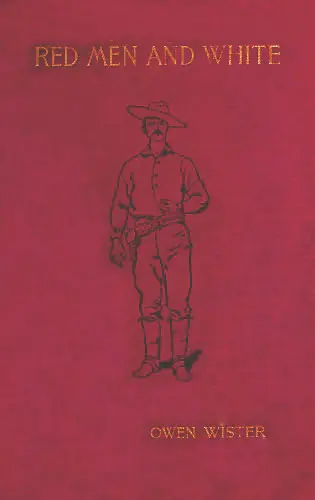
THE CLASSIC COLLECTION · 1895
"Red Men and White" by Owen Wister is a collection of short stories written in the late 19th century. The narrative explores the complexities of life on the Western frontier, particularly focusing on the interactions between white settlers and Native American tribes. The stories are connected thematically and feature overlapping characters, suggesting a rich and intertwined tapestry of life during a pivotal time in American history. The opening of the collection sets the stage for these narratives by highlighting the dynamic circumstances of the Crow Indians and their evolving relationship with white settlers and soldiers. It introduces characters like young Cheschapah, a Crow Indian who struggles between his ambition for leadership and duty to his people, and Lieutenant Stirling whose observations about the Indians reveal deeper nuances. As tensions arise with the Sioux tribe visiting the Crows and the calculations of superstitions that could ignite conflict, a stark portrait of life on the frontier is painted—a world of fragile peace overshadowed by the threat of violence, cultural misunderstanding, and the quest for identity and recognition. This sets the tone for a thoughtful exploration of the intersections of cultures, conflict, and human ambition that defines the Wild West.
Introduction adapted from the source catalogue; source summaries may be automatically generated.
Free to read · English · 79,787 words · No account needed
MAKE TIME FOR A GOOD BOOK
On by default. Untick to stop anonymous reading totals. Each page counts after 10 seconds in view. How this works.
Anonymous counting is on unless you have switched it off.
This day was over ground yellow and hard with dearth, until afternoon brought a footing of sifting sand heavy to travel in. He had plenty of time for thinking. His ease after the first snapping from his promise had changed to an eagerness to come unawares and catch the man in the steeple-hat. Till that there could be no proofs. Genesmere had along the road nearly emptied his second canteen of its brown-amber drink, wetting the beasts' tongues more than his own. The neighborhood of the next 'dobe-hole might be known by the three miles of cactus you went through before coming on it, a wide-set plantation of the yucca. The posted plants deployed over the plain in strange extended order like legions and legions of figures, each shock-head of spears bunched bristling at the top of its lank, scaly stalk, and out of that stuck the blossom-pole, a pigtail on end, with its knot of bell-flowers seeded to pods ten feet in the air. Genesmere's horse started and nearly threw him, but it was only a young calf lying for shade by a yucca. Genesmere could tell from its unlicked hide that the mother had gone to hunt water, and been away for some time. This unseasonable waif made a try at running away, but fell in a heap, and lay as man and mules passed on. Presently he passed a sentinel cow. She stood among the thorns guarding the calves of her sisters till they should return from getting their water. The desert cattle learn this shift, and the sentinel now, at the stranger's approach, lowered her head, and with a feeble but hostile sound made ready to protect her charge, keeping her face to the passing enemy. Farther along gaunt cows stood or lay under the perpetual yuccas, an animal to every plant. They stared at Genesmere passing on; some rose to look after him; some lifted their heads from the ground, and seeing, laid them down again. He came upon a calf watching its mother, who had fallen in such a position that the calf could not suck. The cow's foreleg was caught over her own head, and so she held herself from rising. The sand was rolled and grooved into a wheel by her circlings; her body heaved and fell with breathing, and the sand was wet where her pivot nostrils had ground it. While Genesmere untangled her and gave her tongue the last of his canteen the calf walked round and round. He placed the cow upon her feet, and as soon as he moved away to his horse the calf came to its mother, who began to lick it. He presently marked ahead the position of the coming 'dobe-hole by the ravens assembled in the air, continually rising and lighting. The white horse and mules quickened their step, and the trail became obliterated by hundreds of hoof-marks leading to the water. As a spider looks in the centre of an empty web, so did the round wallow sit in the middle of the plain, with threaded feet conducting from everywhere to it. Mules and white horse scraped through the scratching mesquite, and the ravens flapped up. To Genesmere their croaking seemed suddenly to fill all space with loud total clamor, for no water was left, only mud. He eased the animals of their loads and saddles, and they rolled in the stiff mud, squeezing from it a faint ooze, and getting a sort of refreshment. Genesmere chewed the mud, and felt sorry for the beasts. He turned both canteens upside down and licked the bungs. A cow had had his last drink. Well, that would keep her alive several hours more. Hardly worth while; but spilled milk decidedly. Milk! That was an idea. He caught animal after animal, and got a few sickly drops. There was no gain in camping at this spot, no water for coffee; so Genesmere moved several hundred yards away to be rid of the ravens and their all-day-long meal and the smell. He lay thinking what to do. Go back? At the rate he could push the animals now that last hole might be used up by the cattle before he got there--and then it was two stages more to the Santa Cruz well. And the man would be gaining just so many more days unhindered at the cabin. Out of the question. Forward, it was one shortish drive to the next hole. If that were dry, he could forsake the trail and make a try by a short-cut for that Tinaja place. And he must start soon, too, as soon as the animals could stand it, and travel by night and rest when the sun got bad. What business had October to be hot like this? So in the darkness he mounted again, and noon found him with eyes shut under a yucca. It was here that he held a talk with Lolita. They were married, and sitting in a room with curtains that let you see flowers growing outside by the window, as he had always intended. Lolita said to him that there was no fool like an old fool, and he was telling her that love could make a man more a fool than age, when she threw the door open, letting in bright light, and said, "No proofs." The bright light was the real sun coming round the yucca on his face, and he sat up and saw the desert. No cows were here, but he noticed the roughened hides and sunk eyes of his own beasts, and spoke to them.
Your reading position is saved on this browser. Take it to another device with a library code. Reading pages adapt to text, rather than matching a printed edition.
Owen Wister
Owen Wister

Caspar Whitney & George Bird Grinnell & Owen Wister
Owen Wister
BEHIND THE BOOK
This eBook is for the use of anyone anywhere in the United States and most other parts of the world at no cost and with almost no restrictions whatsoever. You may copy it, give it away or re-use it under the terms of the Project Gutenberg License included with this eBook or online at www.gutenberg.org. If you are not located in the United States, you will have to check the laws of the country where you are located before using this eBook. Read the source licence.
The original source file, including credits and licence, is retained by this library. Request an original-format copy at no charge. Please include the book title and Project Gutenberg identifier #28675.
KEEP YOUR CURIOSITY GOING
Coulson Kernahan

Maurice Baring
Frances Wright
Cécile Tormay

Frederic Jesup Stimson

W. H. P. (William Henry Pope) Jarvis