THE CLASSIC COLLECTION✦A journey in search of ChristmasCLASSIC FREE BOOKS
A journey in search of Christmas
Owen Wister
THE CLASSIC COLLECTION · 1895
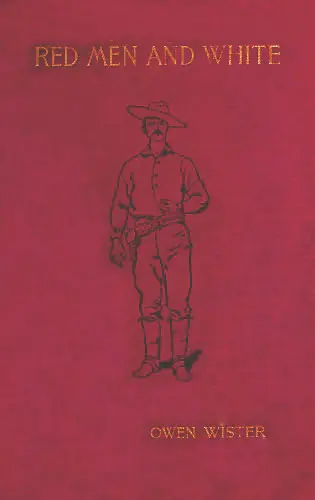
"Red Men and White" by Owen Wister is a collection of short stories written in the late 19th century. The narrative explores the complexities of life on the Western frontier, particularly focusing on the interactions between white settlers and Native American tribes. The stories are connected thematically and feature overlapping characters, suggesting a rich and intertwined tapestry of life during a pivotal time in American history. The opening of the collection sets the stage for these narratives by highlighting the dynamic circumstances of the Crow Indians and their evolving relationship with white settlers and soldiers. It introduces characters like young Cheschapah, a Crow Indian who struggles between his ambition for leadership and duty to his people, and Lieutenant Stirling whose observations about the Indians reveal deeper nuances. As tensions arise with the Sioux tribe visiting the Crows and the calculations of superstitions that could ignite conflict, a stark portrait of life on the frontier is painted—a world of fragile peace overshadowed by the threat of violence, cultural misunderstanding, and the quest for identity and recognition. This sets the tone for a thoughtful exploration of the intersections of cultures, conflict, and human ambition that defines the Wild West.
Introduction adapted from the source catalogue; source summaries may be automatically generated.
Free to read · English · 79,787 words · No account needed
MAKE TIME FOR A GOOD BOOK
On by default. Untick to stop anonymous reading totals. Each page counts after 10 seconds in view. How this works.
Anonymous counting is on unless you have switched it off.
"You believe Father Rafael," Luis said, always in a low voice; "but it was only Indians, after all, who told the mission fathers at the first."
"That was very long ago," said she, "and there has always been water in
the Tinaja Bonita."
Boy and girl had set the jar down, and forgotten it and why they had come. Luis looked uneasily at the circular pool, and up from this creviced middle of the canon to the small high tops of the mountains rising in the free sky.
"This is an evil place," he said. "As for the water--no one, no three, can live long enough to be sure."
But it was part of Lolita's religion. "I am sure," said she.
The young Mexican's eyes rested on the face of the girl beside him, more beautiful just then with some wave of secret fear and faith.
"Come away with me, Lolita!" he pleaded, suddenly. "I can work. I can be a man. It is fearful for you to live here alone."
"Alone, Luis?" His voice had called her from her reverie back to her gay, alert self. "Do you consider Uncle Ramon nobody to live with?"
"Yes. Nobody--for you."
"Promise me never to tell that to uncle. He is so considerate that he might make me marry somebody for company. And then, you know, my husband would be certain to be stupid about your coming to see me, querido."
"Why do you always mock me, Lolita?"
"Mock you? What a fancy! Oh, see how the sun's going! If we do not get our water, your terrible Tinaja will go dry before supper. Come, Luis, I carried the olla. Must I do everything?"
He looked at her disconsolate. "Ah!" he vibrated, revelling in deep
imaginary passion.
"Go! go!" she cried, pushing him. "Take your olla."
Upon the lightest passing puff of sentiment the Southern breast can heave with every genuine symptom of storm, except wreck. Of course she stirred his gregarious heart. Was she not lovely and he twenty-two? He went down the natural stairs and came slowly up with the water, stopping a step below her. "Lolita," he said, "don't you love me at all? not a very little?"
"You are my dearest, oldest friend, Luis," she said, looking at him with such full sweetness that his eyes fell. "But why do you pretend five beans make ten?"
"Of course they only make ten with gringos."
She held up a warning finger.
"Oh yes, oh yes! Strangers make fine lovers!" With this he swelled to a fond, dangerous appearance, and muttered, "It is not difficult to kill a man, Lolita."
Your reading position is saved on this browser. Take it to another device with a library code. Reading pages adapt to text, rather than matching a printed edition.
Owen Wister

Owen Wister

Caspar Whitney & George Bird Grinnell & Owen Wister
Owen Wister
BEHIND THE BOOK
This eBook is for the use of anyone anywhere in the United States and most other parts of the world at no cost and with almost no restrictions whatsoever. You may copy it, give it away or re-use it under the terms of the Project Gutenberg License included with this eBook or online at www.gutenberg.org. If you are not located in the United States, you will have to check the laws of the country where you are located before using this eBook. Read the source licence.
The original source file, including credits and licence, is retained by this library. Request an original-format copy at no charge. Please include the book title and Project Gutenberg identifier #28675.
KEEP YOUR CURIOSITY GOING
Coulson Kernahan

Maurice Baring
Frances Wright
Cécile Tormay

Frederic Jesup Stimson

W. H. P. (William Henry Pope) Jarvis