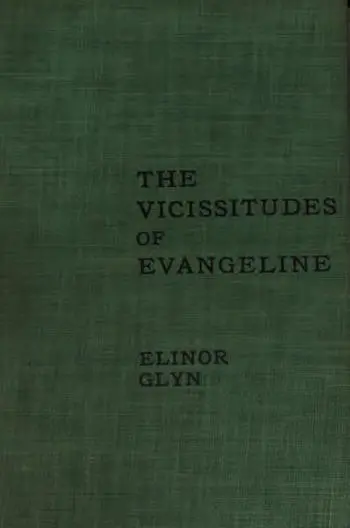
The Vicissitudes of Evangeline
Elinor Glyn
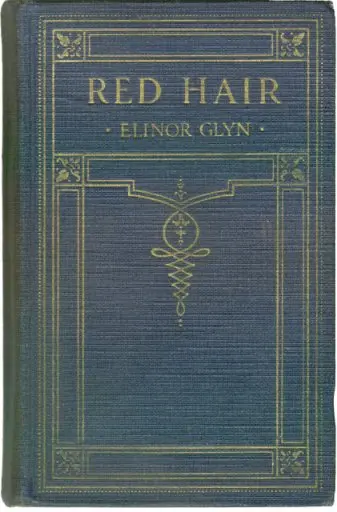
THE CLASSIC COLLECTION · 1905
"Red Hair" by Elinor Glyn is a novel written in the early 20th century. The narrative centers around Evangeline, a young woman who finds herself unexpectedly thrust into the role of an adventuress after the death of her guardian, Mrs. Carruthers. With little to support herself financially, Evangeline contemplates her precarious future while navigating societal expectations and her own desires for independence and adventure. The opening of "Red Hair" introduces Evangeline as she grapples with her newfound status following the passing of Mrs. Carruthers. Reflecting on her life, she reveals a tumultuous relationship with her guardian, who had initially promised her a fortune but instead leaves her with nothing. As she prepares for a meeting with Christopher Carruthers, Mrs. Carruthers’ heir, she contemplates her options: marriage to a man she does not know or embracing a life of adventure on her own terms. Her striking red hair and captivating beauty become symbols of her defiance against a life of marital constraint. In a humorous and pragmatic tone, Evangeline explores her distinct position in society as she dreams of living freely, setting the stage for her struggles between societal norms and personal desires.
Introduction adapted from the source catalogue; source summaries may be automatically generated.
Free to read · English · 48,736 words · No account needed
MAKE TIME FOR A GOOD BOOK
On by default. Untick to stop anonymous reading totals. Each page counts after 10 seconds in view. How this works.
Anonymous counting is on unless you have switched it off.
"Then won't you have some breakfast? Beastly cold, I fear," politeness forced him to utter. "No, Ianthe never writes to me. I had not heard any news for a fortnight, and I have not seen her yet."
Manners have been drummed into me from early youth, so I said, politely, "You only arrived from Paris late last night, did you not?"
"I got in about seven o'clock, I think," he replied.
"We had to leave so early--we were going to the opera," I said.
"A Wagner that begins at unearthly hours, I suppose?" he murmured,
absently.
"No, it was 'Carmen,' but we dined first with my--my--guardian, Mr.
Carruthers."
"Oh!"
We both ate for a little. The tea was greenish black--and lukewarm. No
wonder he has dyspepsia.
"Are the children in, I wonder?" he hazarded, presently.
"Yes," I said. "I went to the nursery and saw them as I came down."
At that moment the three angels burst into the room, but came forward decorously and embraced their parent. They do not seem to adore him as they do Lady Ver.
"Good-morning, papa," said the eldest, and the other two repeated it in chorus. "We hope you have slept well and had a nice passage across the sea."
They evidently had been drilled outside.
Then, nature getting uppermost, they patted him patronizingly.
"Daddie, darling, have you brought us any new dolls from Paris?"
"And I want one with red hair, like Evangeline," said Yseult, the
youngest.
Sir Charles seemed bored and uncomfortable; he kissed his three exquisite bits of Dresden china, so like and yet unlike himself--they have Lady Ver's complexion, but brown eyes and golden hair like his.
"Yes; ask Harbottle for the packages," he said. "I have no time to talk to you. Tell your mother I will be in for lunch," and making excuses to me for leaving so abruptly--an appointment in the City--he shuffled out of the room.
I wonder how Lady Ver makes his heart beat! I don't wonder she
prefers--Lord Robert.
"Why is papa's nose so red?" said Yseult.
"Hush!" implored Mildred. "Poor papa has come off the sea."
"I don't love papa," said Corisande, the middle one. "He's cross, and sometimes he makes darling mummie cry."
"We must always love papa," chanted Mildred, in a lesson voice. "We must always love our parents, and grandmamma, and grandpapa, and aunts and cousins--amen." The "amen" slipped out unawares, and she looked confused, and corrected herself when she had said it.
"Let's find Harbottle. Harbottle is papa's valet," Corisande said, "and he is much thoughtfuller than papa. Last time he brought me a Highland boy doll, though papa had forgotten I asked for it."
Your reading position is saved on this browser. Take it to another device with a library code. Reading pages adapt to text, rather than matching a printed edition.
Elinor Glyn
Elinor Glyn
Elinor Glyn
Elinor Glyn
BEHIND THE BOOK
This eBook is for the use of anyone anywhere in the United States and most other parts of the world at no cost and with almost no restrictions whatsoever. You may copy it, give it away or re-use it under the terms of the Project Gutenberg License included with this eBook or online at www.gutenberg.org. If you are not located in the United States, you will have to check the laws of the country where you are located before using this eBook. Read the source licence.
The original source file, including credits and licence, is retained by this library. Request an original-format copy at no charge. Please include the book title and Project Gutenberg identifier #17821.
KEEP YOUR CURIOSITY GOING
Coulson Kernahan

Maurice Baring
Frances Wright
Cécile Tormay

Frederic Jesup Stimson

W. H. P. (William Henry Pope) Jarvis