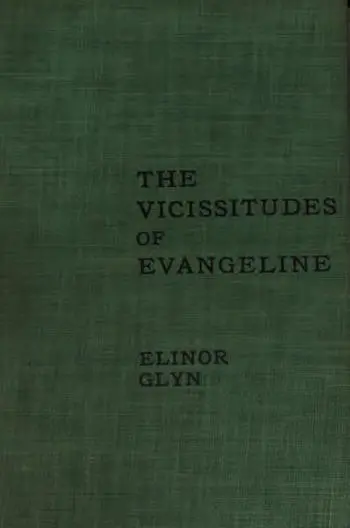
The Vicissitudes of Evangeline
Elinor Glyn
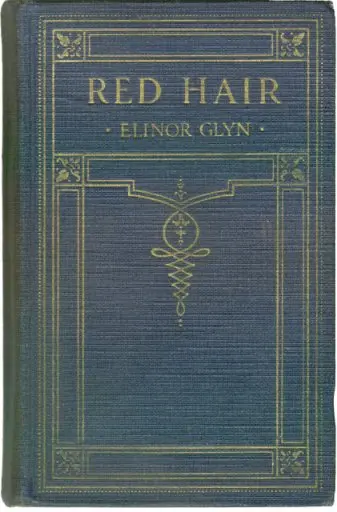
THE CLASSIC COLLECTION · 1905
"Red Hair" by Elinor Glyn is a novel written in the early 20th century. The narrative centers around Evangeline, a young woman who finds herself unexpectedly thrust into the role of an adventuress after the death of her guardian, Mrs. Carruthers. With little to support herself financially, Evangeline contemplates her precarious future while navigating societal expectations and her own desires for independence and adventure. The opening of "Red Hair" introduces Evangeline as she grapples with her newfound status following the passing of Mrs. Carruthers. Reflecting on her life, she reveals a tumultuous relationship with her guardian, who had initially promised her a fortune but instead leaves her with nothing. As she prepares for a meeting with Christopher Carruthers, Mrs. Carruthers’ heir, she contemplates her options: marriage to a man she does not know or embracing a life of adventure on her own terms. Her striking red hair and captivating beauty become symbols of her defiance against a life of marital constraint. In a humorous and pragmatic tone, Evangeline explores her distinct position in society as she dreams of living freely, setting the stage for her struggles between societal norms and personal desires.
Introduction adapted from the source catalogue; source summaries may be automatically generated.
Free to read · English · 48,736 words · No account needed
MAKE TIME FOR A GOOD BOOK
On by default. Untick to stop anonymous reading totals. Each page counts after 10 seconds in view. How this works.
Anonymous counting is on unless you have switched it off.
While they are all very kind here, there is that asphyxiating atmosphere of stiffness and decorum which affects every one who comes to Tryland. A sort of "the gold must be tried by fire and the heart must be wrung by pain" kind of suggestion about everything.
They are extraordinarily cheerful, because it is a Christian virtue, cheerfulness; not because they are brimming over with joy, or that lovely feeling of being alive and not minding much what happens, you feel so splendid, like I get on fine days.
Everything they do has a reason, or a moral, in it. This party is because pheasants have to be killed in November, and certain people have to be entertained, and their charities can be assisted through them. Oh, if I had a big house, and were rich, I would have lovely parties, with all sorts of nice people, because I wanted to give them a good time and laugh myself. Lady Verningham was talking to me just before tea, when the second train-load arrived.
I tried to be quite indifferent, but I did feel dreadfully excited when Lord Robert walked in. Oh, he looked such a beautiful creature, so smart, and straight, and lithe!
Lady Katherine was frightfully stiff with him; it would have discouraged most people, but that is the lovely part about Lord Robert, he is always absolutely sans gene!
He saw me at once, of course, and came over as straight as a die the
moment he could.
"How do, Robert?" said Lady Verningham, giving him her fingers in such an attractive way. "Why are you here, and why is our Campie not? Thereby hangs some tale, I feel sure."
"Why, yes," said Lord Robert, and he held her hand. Then he looked at me with his eyebrow up. "But won't you introduce me to Miss Travers? To my great surprise she seems to have forgotten me."
I laughed, and Lady Verningham introduced us, and he sat down beside us, and every one began tea.
Lady Verningham had such a look in her eye!
"Robert, tell me about it," she said.
"I hear they have five thousand pheasants to slay," Lord Robert said, looking at her with his innocent smile.
"Robert, you are lying," she said, and she laughed. She is so pretty when she laughs; not very young, over thirty I should think, but such a charm--as different as different can be from the whole Montgomerie family.
I hardly spoke; they continued to tease one another, and Lord Robert ate most of a plate of bread-and-butter that was near.
"I am damed hungry, Lady Ver!" he said. She smiled at him; she evidently
likes him very much.
Your reading position is saved on this browser. Take it to another device with a library code. Reading pages adapt to text, rather than matching a printed edition.
Elinor Glyn
Elinor Glyn
Elinor Glyn
Elinor Glyn
BEHIND THE BOOK
This eBook is for the use of anyone anywhere in the United States and most other parts of the world at no cost and with almost no restrictions whatsoever. You may copy it, give it away or re-use it under the terms of the Project Gutenberg License included with this eBook or online at www.gutenberg.org. If you are not located in the United States, you will have to check the laws of the country where you are located before using this eBook. Read the source licence.
The original source file, including credits and licence, is retained by this library. Request an original-format copy at no charge. Please include the book title and Project Gutenberg identifier #17821.
KEEP YOUR CURIOSITY GOING
Coulson Kernahan

Maurice Baring
Frances Wright
Cécile Tormay

Frederic Jesup Stimson

W. H. P. (William Henry Pope) Jarvis