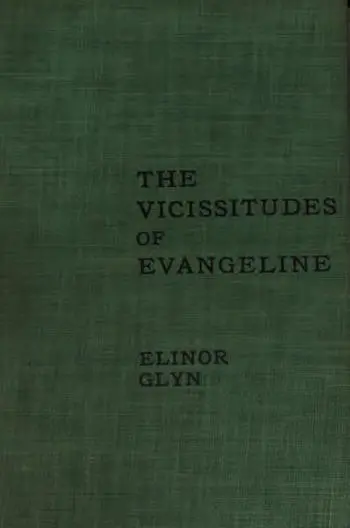
The Vicissitudes of Evangeline
Elinor Glyn
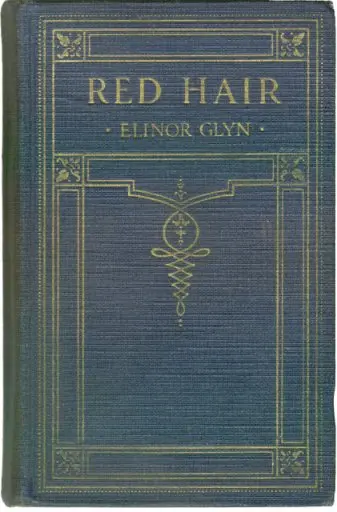
THE CLASSIC COLLECTION · 1905
"Red Hair" by Elinor Glyn is a novel written in the early 20th century. The narrative centers around Evangeline, a young woman who finds herself unexpectedly thrust into the role of an adventuress after the death of her guardian, Mrs. Carruthers. With little to support herself financially, Evangeline contemplates her precarious future while navigating societal expectations and her own desires for independence and adventure. The opening of "Red Hair" introduces Evangeline as she grapples with her newfound status following the passing of Mrs. Carruthers. Reflecting on her life, she reveals a tumultuous relationship with her guardian, who had initially promised her a fortune but instead leaves her with nothing. As she prepares for a meeting with Christopher Carruthers, Mrs. Carruthers’ heir, she contemplates her options: marriage to a man she does not know or embracing a life of adventure on her own terms. Her striking red hair and captivating beauty become symbols of her defiance against a life of marital constraint. In a humorous and pragmatic tone, Evangeline explores her distinct position in society as she dreams of living freely, setting the stage for her struggles between societal norms and personal desires.
Introduction adapted from the source catalogue; source summaries may be automatically generated.
Free to read · English · 48,736 words · No account needed
MAKE TIME FOR A GOOD BOOK
On by default. Untick to stop anonymous reading totals. Each page counts after 10 seconds in view. How this works.
Anonymous counting is on unless you have switched it off.
"I don't think I shall let you. I am more than ever convinced you ought to have some one to take care of you--you are not of the type that makes it altogether safe to roam about alone."
"Oh! as for my type," I said, languidly, "I know all about that. Mrs. Carruthers said no one with this combination of color could be good, so I am not going to try. It will be quite simple."
He rose quickly from his chair and stood in front of the great log fire, such a comical expression on his face.
"You are the quaintest child I have ever met," he said.
"I am not a child, and I mean to know everything I can."
He went over towards the sofa again and arranged the cushions--great, splendid, fat pillows of old Italian brocade, stiff with gold and silver.
"Come!" he pleaded. "Sit here beside me, and let us talk; you are miles away there, and I want to--make you see reason."
I rose at once and came slowly to where he pointed. I settled myself deliberately. There was one cushion of purple and silver right under the light, and there I rested my head.
"Now talk!" I said, and half closed my eyes.
Oh, I was enjoying myself! The first time I have ever been alone with a real man! They--the old ambassadors and politicians and generals--used always to tell me I should grow into an attractive woman--now I meant to try what I could do.
Mr. Carruthers remained silent, but he sat down beside me, and looked and looked right into my eyes.
"Now talk, then," I said again.
"Do you know, you are a very disturbing person," he said, at last, by way
of a beginning.
"What is that?" I asked.
"It is a woman who confuses one's thoughts when one looks at her. I do not now seem to have anything to say, or too much----"
"You called me a child."
"I should have called you an enigma."
I assured him I was not the least complex, and that I only wanted everything simple, and to be left in peace, without having to get married or worry to obey people.
We had a nice talk.
"You won't leave here on Saturday," he said, presently, apropos of nothing. "I do not think I shall go myself to-morrow. I want you to show me all over the gardens, and your favorite haunts."
"To-morrow I shall be busy packing," I said, gravely, "and I do not think I want to show you the gardens; there are some corners I rather loved; I believe it will hurt a little to say good-bye."
Your reading position is saved on this browser. Take it to another device with a library code. Reading pages adapt to text, rather than matching a printed edition.
Elinor Glyn
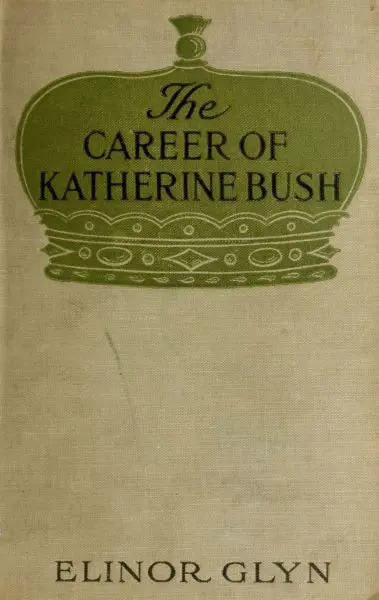
Elinor Glyn
Elinor Glyn
Elinor Glyn
BEHIND THE BOOK
This eBook is for the use of anyone anywhere in the United States and most other parts of the world at no cost and with almost no restrictions whatsoever. You may copy it, give it away or re-use it under the terms of the Project Gutenberg License included with this eBook or online at www.gutenberg.org. If you are not located in the United States, you will have to check the laws of the country where you are located before using this eBook. Read the source licence.
The original source file, including credits and licence, is retained by this library. Request an original-format copy at no charge. Please include the book title and Project Gutenberg identifier #17821.
KEEP YOUR CURIOSITY GOING
Coulson Kernahan

Maurice Baring
Frances Wright
Cécile Tormay

Frederic Jesup Stimson

W. H. P. (William Henry Pope) Jarvis